Showing posts with label lavender. Show all posts

Tuesday, February 14, 2017

Herbs and Romance for Valentine's Day

"There's a few things I've learned in life: always throw salt over your left shoulder, keep rosemary by your garden gate, plant lavender for good luck, and fall in love whenever you can." ~Alice Hoffman, Practical Magic


"My gardens sweet, enclosed with walles strong, embarked with benches to sytt and take my rest. The Knotts so enknotted, it cannot be exprest. With arbours and alys so pleasant and so dulce, the pestylant ayers with flavours to repulse." ~Thomas Cavendish, 1532.

 "Good morrow, good Yarrow, good morrow to thee. Send me this night my true love to see, The clothes that he'll wear, the colour of his hair. And if he'll wed me." ~Danaher, 1756

lavenderfield-300x199

"There’s rosemary and rue. These keep Seeming and savor all the winter long. Grace and remembrance be to you."- William Shakespeare

Thyme Creeping Red
I know a bank where the wild thyme blows, Where oxlips and the nodding violet grows,
Quite over-canopied with luscious woodbine, With sweet musk-roses and with eglantine:
There sleeps Titania sometime of the night,  Lull'd in these flowers with dances and delight.
A Midsummer Night's Dream
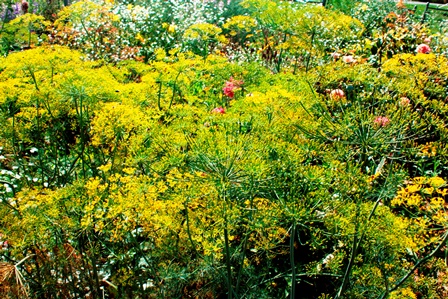
dill with white aster and other herbs and flowers in our garden(Dill in our garden by Daughter Elise)
 When daisies pied and violets blue And lady-smocks all silver-white  And cuckoo-buds of yellow hue. Do paint the meadows with delight.
Love's Labours Lost

lavender 3
"And lavender, whose spikes of azure bloom shall be, ere-while, in arid bundles bound to lurk admist the labours of her loom, and crown her kerchiefs witl mickle rare perfume."
~William Shenstone The School Mistress 1742

herb garden
"Those herbs which perfume the air most delightfully,  not passed by as the rest, but, being trodden upon and crushed, are three;  that is, burnet, wild thyme and watermints. Therefore, you are to set whole alleys of them, to have the pleasure when you walk or tread." -  Frances Bacon 
"How could such sweet and wholesome hours Be reckoned but with herbs and flowers?" -  Andrew Marvel

Thursday, September 29, 2016

'Lavender is of ‘especiall good use for all griefes and paines of the head' ~ John Parkinson, 1640

O’Keeffe (A Beggar on Horseback, 1798) ~ “My dear, have some lavender, or you’d best have a thimble full of wine, your spirits are quite down, my sweeting.”


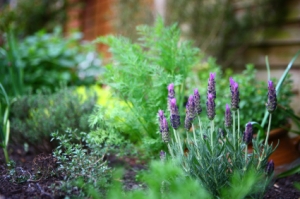
I love lavender, such a wonderful fragrance, among the best in the world. Every year we plant more seedlings, in an effort to keep them going. Lavender is one of those herbs we have difficulty getting through our harder winters and so may or may not come back. Of the different kinds we’ve grown, Lavender Munstead seems to be the hardiest. Being dwarf, it doesn’t get too big to interplant among other herbs and roses. We are trying a new tiny variety this season that has bloomed for weeks, so shall see if it survives. Its name escapes me, but the grower can be found again next spring. The French variety from Provence has the most exquisite fragrance but isn’t very hardy. If possible, provide a sunny sheltered location out of strong north-west winds for lavender and the plants will be longer lived. Prune back dead growth in the spring. We will be planting more, that's a given.


Lavender flowers are easily dried, make delightful sachets, and are an essential ingredient in potpourri. I suppose one could ‘make do’ with rose petals, but I like a mix of both along with other herbs, spices, and essential oils. In addition to its highly valued scent, lavender has a history of medicinal use and a rich lore. I rely on the essential oil in the house, even sprinkle drops on the dog’s brush several times a week. Lavender oil repels insects and doesn’t harm the dog as some essential oils can when used directly on pets. Be extremely careful around cats.

Turner (Herbal, 1545) ~ ”I judge that the flowers of lavender quilted in a cappe and dayly worn are good for all diseases of the head that come of a cold cause and that they comfort the braine very well.”

The following is from A Modern Herbal:

“The fragrant oil to which the odour of Lavender flowers is due is a valuable article of commerce, much used in perfumery, and to a lesser extent in medicine. The fine aromatic smell is found in all parts of the shrub, but the essential oil is only produced from the flowers and flower-stalks. Besides being grown for the production of this oil, Lavender is widely sold in the fresh state as ‘bunched Lavender,’ and as ‘dried Lavender,’ the flowers are used powdered, for sachet making and also for pot-pourri…

ENGLISH LAVENDER (Lavandula vera), the common narrow-leaved variety, grows 1 to 3 feet high (in gardens, occasionally somewhat taller), The majority of the oil yielded by the flowers is contained in the glands on the calyx. The two-lipped corolla is of a beautiful bluish-violet colour.

French Lavender oil is distilled from two distinct plants, found in the mountain districts of Southem France, both included under the name of L. officinalis by the sixteenth-century botanists, and L. vera by De Candolle. The oils from the two plants are very similar, but the former yields oils with the higher percentage of esters.

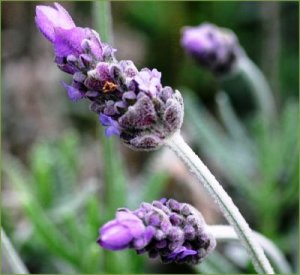
(image from our garden)

The SPIKE LAVENDER (L. spica, D.C., or latifolia, Vill.) is a coarser, broadleaved variety of the Lavender shrub, also found in the mountain districts of France and Spain, The flowers yield three times as much of the essential oil – known as Spike oil – as can be got from our narrowleaved plant, but it is of a second-rate quality, less fragrant than that of the true Lavender, its odour resembling a mixture of the oils of Lavender and Rosemary. Parkinson in his Garden of Pleasure says the L. spica ‘is often called the Lesser Lavender or minor, and is called by some, Nardus Italica.’ Some believe that this is the Spikenard mentioned in the Bible.

History: Dr. Fernie, in Herbal Simples, says: ‘By the Greeks the name Nardus is given to Lavender, from Naarda, a city of Syria near the Euphrates, and many persons call the plant “Nard.” St. Mark mentions this as Spikenard, a thing of great value…. In Pliny’s time, blossoms of the Nardus sold for a hundred Roman denarii (or L.3 2s. 6d.) the pound. This Lavender or Nardus was called Asarum by the Romans, because it was not used in garlands or chaplets. It was formerly believed that the asp, a dangerous kind of viper, made Lavender its habitual place of abode, so that the plant had to be approached with great caution.’

L. Stoechas Another species of LAVENDER, L. Stoechas, known also as French Lavender, forms a pretty little shrub, with narrow leaves and very small, dark violet flowers. It is very abundant on the islands of Hyères, which the Ancient Romans called the ‘Stoechades,’ after this plant. This was probably the Lavender so extensively used in classical times by the Romans and the Libyans, as a perfume for the bath (whence probably the plant derived its name – from the Latin, lavare, to wash). It is plentiful in Spain and Portugal and is only used as a rule for strewing the floors of churches and houses on festive occasions, or to make bonfires on St. John’s Day, when evil spirits are supposed to be abroad, a custom formerly observed in England with native plants.

The odour is more akin to Rosemary than to ordinary Lavender. The flowers of this species were used medicinally in England until about the middle of the eighteenth century, the plant being called by our old authors, ‘Sticadore.’ It was one of the ingredients of the ‘Four Thieves’ Vinegar’ famous in the Middle Ages. 

The Dwarf Lavender is more compact than the other forms and has flowers of a deeper colour. It makes a neat edging in the fruit or kitchen garden, where the larger forms might be in the way, and the flowers, borne abundantly, are useful for cutting.

(Image from our garden)

All the forms of Lavender are much visited by bees and prove a good source of honey.

Lavender was familiar to Shakespeare, but was probably not a common plant in his time, for though it is mentioned by Spencer as ‘The Lavender still gray’ and by Gerard as growing in his garden, it is not mentioned by Bacon in his list of sweet-smelling plants. It is now found in every garden, but we first hear of it being cultivated in England about 1568. It must soon have become a favourite, however, for among the long familiar gardenplants which the Pilgrim Fathers took with them to their new home in America, we find the names of Lavender, Rosemary and Southernwood, though John Josselyn, in his Herbal, says that ‘Lavender Cotton groweth pretty well,’ but that ‘Lavender is not for the Climate.’

Medicinal Action and Uses: Lavender was used in earlier days as a condiment and for flavouring dishes ‘to comfort the stomach.’ Gerard speaks of Conserves of Lavender being served at table. It has aromatic, carminative and nervine properties. Though largely used in perfumery, it is now not much employed internally, except as a flavouring agent, occurring occasionally in pharmacy to cover disagreeable odours in ointments and other compounds.
Red Lavender lozenges are employed both as a mild stimulant and for their pleasant taste.

The essential oil, or a spirit of Lavender made from it, proves admirably restorative and tonic against faintness, palpitations of a nervous sort, weak giddiness, spasms and colic. It is agreeable to the taste and smell, provokes appetite, raises the spirits and dispels flatulence. The dose is from 1 to 4 drops on sugar or in a spoonful or two of milk.

A few drops of the essence of Lavender in a hot footbath has a marked influence in relieving fatigue. Outwardly applied, it relieves toothache, neuralgia, sprains, and rheumatism. In hysteria, palsy and similar disorders of debility and lack of nerve power, Lavender will act as a powerful stimulant.

‘It profiteth them much,’ says Gerard, ‘that have the palsy if they be washed with the distilled water from the Lavender flowers, or are anointed with the oil made from the flowers and olive oil in such manner as oil of roses is used.’
Culpepper says that: ‘a decoction made with the flowers of Lavender, Horehound, Fennel and Asparagus root, and a little Cinnamon, is very profitably used to help the falling-sickness (epilepsy) and the giddiness or turning of the brain.’

Salmon in his Herbal (1710) says that: ‘it is good also against the bitings of serpents, mad-dogs and other venomous creature, being given inwardly and applied poultice-wise to the parts wounded. The spirituous tincture of the dried leaves or seeds, if prudently given, cures hysterick fits though vehement and of long standing.’

In some cases of mental depression and delusions, oil of Lavender proves of real service, and a few drops rubbed on the temple will cure nervous headache.

A tea brewed from Lavender tops, made in moderate strength, is excellent to relieve headache from fatigue and exhaustion, giving the same relief as the application of Lavender water to the temples. An infusion taken too freely, will, however, cause griping and colic, and Lavender oil in too large doses is a narcotic poison and causes death by convulsions.

Lavender's use in the swabbing of wounds obtained further proof during the War, and the French Academy of Medicine is giving attention to the oil for this and other antiseptic surgical purposes. The oil is successfully used in the treatment of sores, varicose ulcers, burns and scalds. In France, it is a regular thing for most households to keep a bottle of Essence of Lavender as a domestic remedy against bruises, bites and trivial aches and pains, both external and internal.


Lavender Water can easily be prepared at home. Into a quart bottle are put 1 OZ. essential oil of Lavender, one drop of Musk and 1 1/2 pint spirits of wine. These three ingredients are well mixed together by shaking. The mixture is left to settle, shaken again in a few days, then poured into little perfume bottles fitted with air-tight stoppers. This is another recipe from an old family book:
‘Put into a bottle half a pint of spirit of wine and two drachms of oil of lavender. Mix it with rose-water, five ounces, orange-flower water, two ounces, also two drachms of musk and six ounces of distilled water.’

This is stated to be ‘a pleasant and efficacious cordial and very useful in languor and weakness of the nerves, lowness of spirits, faintings, etc.’
Lavender Vinegar. A refreshing toilet preparation is made by mixing 6 parts of Rosewater, 1 part of spirits of Lavender and 2 parts of Orleans vinegar.

It can also be prepared from freshly gathered flower-tops. These are dried, placed in a stoppered bottle and steeped for a week in Orleans vinegar. Every day the bottle must be shaken, and at the end of the week the liquid is drained off and filtered through white blotting paper."

There are many, many ways to enjoy lavender and benefit from this wonderful herb. I hope you are inspired to put in a few plants this year, or grow one in a pot.

Nonfiction Herbal
Nonfiction Herbal
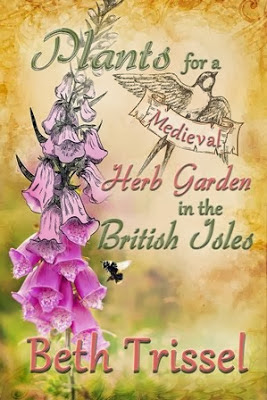
My herbal, Plants for A Medieval Herb Garden in the British Isles, is in print and kindle at Amazon: https://www.amazon.com/Plants-Medieval-Garden-British-Isles-ebook/dp/B00IOGHYVU
 

An illustrated collection of plants that could have been grown in a Medieval Herb or Physic Garden in the British Isles. The major focus of this work is England and Scotland, but also touches on Ireland and Wales. Information is given as to the historic medicinal uses of these plants and the rich lore surrounding them. Journey back to the days when herbs figured into every facet of life, offering relief from the ills of this realm and protection from evil in all its guises.


Thursday, May 9, 2013

"As Rosemary is to the Spirit, so Lavender is to the Soul."


‘Hot lavender, mints, savory, marjoram;
The marigold, that goes to bed wi’ the sun,
and with him rise weeping.’ ~Shakespeare, Winter’s Tale
If you set it,
the cats will eat it,
If you sow it,
the cats don’t know it.
~Philip Miller, The Gardener’s Dictionary, Referring to Catnip
Salt is a preservative. It really holds flavor. For example, if you chop up some fresh herbs, or even just garlic, the salt will extract the moisture and preserve the flavor. ~ Sally Schneider
The Herbs ought to be distilled when they are in their greatest vigor, and so ought the Flowers also. ~Nicholas Culpeper
The intense perfumes of the wild herbs as we trod them underfoot made us feel almost drunk. ~Jacqueline du Pre
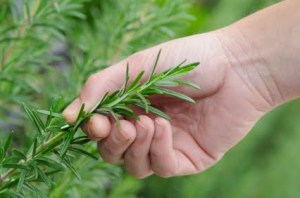
I plant rosemary all over the garden, so pleasant is it to know that at every few steps one may draw the kindly branchlets through one’s hand, and have the enjoyment of their incomparable incense; and I grow it against walls, so that the sun may draw out its inexhaustible sweetness to greet me as I pass ….
-  Gertrude Jekyll
“There’s fennel for you, and columbines; there’s rue for you: and here’s some for me; we may call it herb of grace o’ Sundays. O! you must wear your rue with a difference.  There’s a daisy; I would give you some violets, but they withered all when my father died.” ~Shakespeare, Hamlet
Thine eyes are springs in whose serene And silent waters heaven is seen. Their lashes are the herbs that look On their young figures in the brook. ~William C. Bryant
Waters are distilled out of Herbs, Flowers, Fruits, and Roots.
~Nicholas Culpeper
“We have finally started to notice that there is real curative value in local herbs and remedies. In fact, we are also becoming aware that there are little or no side effects to most natural remedies, and that they are often more effective than Western medicine.”  ~Anne Wilson Schaef
The basil tuft, that waves
Its fragrant blossom over graves.
~Thomas Moore, Lalla Rookhm, Light of the Harem
“The herb that can’t be got is the one that heals.” ~ Irish Saying
See how Aurora throws her fair Fresh-quilted colours through the air: Get up, sweet-slug-a-bed, and see The dew-bespangling herb and tree. ~ Herrick, Robert ~Corinna’s Going a Maying
As for rosemary, I let it run all over my garden walls, not
only because my bees love it but because it is the herb
sacred to remembrance and to friendship, whence a
sprig of it hath a dumb language.
-  Sir Thomas Moore
Eat leeks in oile and ramsines in May,
And all the year after physicians may play.
(Ramsines were old-fashioned broad-leafed leeks.)
My gardens sweet, enclosed with walles strong, embarked with benches to sytt and take my rest. The Knotts so enknotted, it cannot be exprest. With arbours and alys so pleasant and so dulce, the pestylant ayers with flavours to repulse. ~Thomas Cavendish, 1532.
When daisies pied and violets blue, and lady-smocks all silver white. And Cuckoo-buds of yellow hue, do paint the meadows with delight. ~William Shakespeare, 1595.
Women with child that eat quinces will bear wise children. ~Dodoens, 1578.
Gardening with herbs, which is becoming increasingly popular, is indulged in by those who like subtlety in their plants in preference to brilliance.
-   Helen Morgenthau Fox
And because the Breath of Flowers is farre Sweeter in the Aire (where it comes and Gose, like the Warbling of Musick) than in the hand, therefore nothing is more fit for delight, than to know what be the Flowers and the Plants that doe best perfume the Aire. ~ Francis Bacon, 1625
Caesar….saith, that all the Britons do colour themselves with Woad, which giveth a blew colour… John Gerard, 1597
You have got to own your days and live them, each one of them, every one of them, or else the years go right by and none of them belong to you. ~Herb Gardner
Once you get people laughing, they’re listening and you can tell them almost anything. ~ Herb Gardner
(***These last two quotes snuck in here because his name is Herb Gardner, so he came up on my search and I liked them.)
Would You Marry Me?
“According to old wives’ tales, borage was sometimes
smuggled into the drink of  prospective husbands
to give them the courage to propose marriage.”
-  Mary Campbell, A Basket of Herbs
As Rosemary is to the Spirit, so Lavender is to the Soul.
-  Anonymous
As for the garden of mint, the very smell of it alone recovers and refreshes our spirits, as the taste stirs up our appetite for meat. ~   Pliny the Elder
How could such sweet and wholesome hours
Be reckoned but with herbs and flowers?
-  Andrew Marvel
How I would love to be transported into a scented
Elizabethan garden with herbs and honeysuckles,  a knot garden and roses clambering over a simple arbor …. ~Rosemary Verey
With holly and ivy,
So green and so gay,
We deck up our houses
As fresh as the day,
With bays, and rosemary,
And laurel complete;
And every one now
Is a king in conceit. ~Poor Robins Almanac, 1695
There’s rosemary, that’s for remembrance;
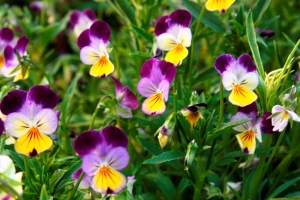
pray, love, remember; and there is pansies,
that’s for thoughts.
-    Shakespeare, Hamlet
The first gatherings of the garden in May of salads, radishes and herbs made me feel like a mother about her baby – how could anything so beautiful be mine.  And this emotion of wonder filled me for each vegetable as it was gathered every year.  There is nothing that is comparable to it, as satisfactory or as thrilling, as gathering the vegetables one has grown.
~  Alice B. Toklas

Thursday, August 9, 2012

Herbal Recipes for Making Old Fashioned Toilet Water

I like to feel connected to those who have gone before me. Herbs have changed very little, if at all, over the centuries. When I hold an aromatic sprig of rosemary in my hand, I am touching the same plant beloved by the ancients. Some heirloom roses go back to the glory days of Rome.

To further that sense of oneness, and for their many uses, I grow a variety of herbs. Thyme, basil, sage, and chives are a few in my kitchen garden. Lavender and scented geraniums are wonderful for their scent alone. Ladies used to waft the delicate perfume of toilet water. 

Below, I have given some recipes that were once popular. These come from a little book entitled Potpourri, by Ann Tucker Fettner.

Basic Toilet Water: To three pints of pure alcohol add one and one-quarter ounces of lavender oil, three-quarters ounce of oil of bergamont, three-quarters ounce of tincture of ambergris. Mix together and bottle.
Rose Water: Boil two quarts of distilled water and remove from the stove. Add one-eighth ounce of rose oil, four drops of clove oil, and one pint of alcohol. Let this stand for several days before bottling.
Geranium Water: To two pints of pure alcohol add four ounces of rose water, five drops tincture of musk, one ounce tincture of orris root and one ounce of geranium oil. Allow to age.

Wednesday, July 18, 2012

Preserve The Fragrance of Lavender and Roses


“It is at the edge of a petal that love waits.” ~William Carlos Williams

For gift giving, fund-raising, or just plain fun, consider making fragrant potpourri. Begin in the spring or summer  by drying rose petals, an essential ingredient. Other flowers such as bachelor buttons, asters, straw flowers and statice add color. Any blossoms that dry well can be used. Mints, lavender, and lemongrass are excellent herbs for fragrance. Save the peelings from citrus fruit. Additional scent comes from manufacturers who sell potpourri supplies.
Order ground orris root, lavender, and essential oils. Sachet bags can be made from circular scraps of breathable fabric all tied up with ribbons. Decorative jars also make attractive holders. Baskets filled with fragrant sachets are an appealing presentation if fund-raising is your goal. Here are some potpourri making directions from my experience and the book, Potpourri, by Ann Tucker Fettner.
“When the world wearies, and society ceases to satisfy,there is always the garden.”—MINNIE AUMONIER
After you’ve collected and dried an ample quantity of blossoms and herbal leaves, mix in your other ingredients. Use a large bowl, not plastic, but ceramic or pottery. To hold the scent, you will need a fixative, often calamus or orris root. Generally, you use a tablespoon of a fixative for every quart of dried material. Add any spices you’ve chosen, cinnamon bark broken fine, rubbed mace, ground cardamom seeds, by sprinkling them over the petals and fixatives. If you like, add the crushed citrus peel, maybe some crumbled vanilla bean, and mix well with your hands.
The ingredients must be absolutely dry or the blend will molder. To all of this, add your favorite essential oils, rose, lavender, geranium, or tincture of musk or amber. Experiment with different blends. Don’t combine all the oils in the same batch. The possibilities are endless.
When you’re satisfied that the mixture is well blended, let it age in a crock for several weeks. Don’t have a crock? Brown paper grocery bags will do. Store the mixture out of sunlight in an airy corner or attic. Stir occasionally, then package prettily and enjoy.
“Flowers are love’s truest language.”
—PARK BENJAMIN

Tuesday, May 8, 2012

"I know a bank where the wild thyme blows," Herbal Quotes & Images


“My gardens sweet, enclosed with walles strong, embarked with benches to sytt and take my rest. The Knotts so enknotted, it cannot be exprest. With arbours and alys so pleasant and so dulce, the pestylant ayers with flavours to repulse.”

“Good morrow, good Yarrow, good morrow to thee. Send me this night my true love to see, The clothes that he’ll wear, the colour of his hair. And if he’ll wed me.” ~Danaher, 1756

“Lavender is for lovers true, Which evermore be faine; Desiring always for to have Some pleasure for their paine: And when that they obtained have The love that they require, Then have they all their perfect joie, And quenched is the fire.” ~Lavender and Turner (Herbal, 1545)

“There’s rosemary and rue. These keep
Seeming and savor all the winter long.
Grace and remembrance be to you.”
- William Shakespeare
I know a bank where the wild thyme blows,
Where oxlips and the nodding violet grows,
Quite over-canopied with luscious woodbine,
With sweet musk-roses and with eglantine: There sleeps Titania sometime of the night,
Lull’d in these flowers with dances and delight.

When daisies pied and violets blue
And lady-smocks all silver-white
And cuckoo-buds of yellow hue
Do paint the meadows with delight,
Love’s Labours Lost
 
“ladies fair, I bring to you
lavender with spikes of blue;
sweeter plant was never found
growing on our English ground.”
~Caryl Battersby

“And lavender, whose spikes of azure bloom
shall be, ere-while, in arid bundles bound
to lurk admist the labours of her loom,
and crown her kerchiefs witl mickle rare perfume.” ~William Shenstone The School Mistress 1742

“Much Virtue in Herbs, little in Men.”
- Benjamin Franklin (1706-1790)

“Those herbs which perfume the air most delightfully, not passed by as the rest, but, being trodden upon and crushed, are three; that is, burnet, wild thyme and watermints.  Therefore, you are to set whole alleys of them, to have the pleasure when you walk or tread.”
-  Frances Bacon

“How could such sweet and wholesome hours
Be reckoned but with herbs and flowers?”
-  Andrew Marvel

*Royalty free images

Monday, April 16, 2012

"How I would Love to be Transported into a Scented Elizabethan Garden..."


 ‘Hot lavender, mints, savory, marjoram;
The marigold, that goes to bed wi’ the sun, and with him rise weeping.’ 
~ Shakespeare, Winter’s Tale

‘If you set it,
the cats will eat it,

If you sow it,
the cats don’t know it.
‘
~
Philip Miller, The Gardener’s Dictionary, Referring to Catnip

‘Salt is a preservative. It really holds flavor. For example, if you chop up some fresh herbs, or even just garlic, the salt will extract the moisture and preserve the flavor.’ ~ Sally Schneider
‘The Herbs ought to be distilled when they are in their greatest vigor, and so ought the Flowers also.’ 

‘The intense perfumes of the wild herbs as we trod them underfoot made us feel almost drunk.’ ~Jacqueline du Pre
‘I plant rosemary all over the garden, so pleasant is it to know that at every few steps one may draw the kindly branchlets through one’s hand, and have the enjoyment of their incomparable incense; and I grow it against walls, so that the sun may draw out its inexhaustible sweetness to greet me as I pass ….’
-  Gertrude Jekyll
“There’s fennel for you, and columbines; there’s rue for you: and here’s some for me; we may call it herb of grace o’ Sundays. O! you must wear your rue with a difference.  There’s a daisy; I would give you some violets, but they withered all when my father died.” ~Shakespeare, Hamlet

‘Thine eyes are springs in whose serene And silent waters heaven is seen. Their lashes are the herbs that look On their young figures in the brook.’ ~William C. Bryant
Waters are distilled out of Herbs, Flowers, Fruits, and Roots.
~Nicholas Culpeper
“We have finally started to notice that there is real curative value in local herbs and remedies. In fact, we are also becoming aware that there are little or no side effects to most natural remedies, and that they are often more effective than Western medicine.”  ~Anne Wilson Schaef

‘The basil tuft, that waves
Its fragrant blossom over graves.’
~Thomas Moore, Lalla Rookhm, Light of the Harem
 
“The herb that can’t be got is the one that heals.” ~ Irish Saying

‘See how Aurora throws her fair Fresh-quilted colours through the air: Get up, sweet-slug-a-bed, and see The dew-bespangling herb and tree.’ ~ Herrick, Robert ~Corinna’s Going a Maying

‘As for rosemary, I let it run all over my garden walls, not
only because my bees love it but because it is the herb
sacred to remembrance and to friendship, whence a
sprig of it hath a dumb language.’
-  Sir Thomas Moore
‘Eat leeks in oile and ramsines in May,
And all the year after physicians may play.’
(Ramsines were old-fashioned broad-leafed leeks.)

‘My gardens sweet, enclosed with walles strong, embarked with benches to sytt and take my rest. The Knotts so enknotted, it cannot be exprest. With arbours and alys so pleasant and so dulce, the pestylant ayers with flavours to repulse.’ ~Thomas Cavendish, 1532.
'
‘When daisies pied and violets blue, and lady-smocks all silver white. And Cuckoo-buds of yellow hue, do paint the meadows with delight.’ ~ William Shakespeare, 1595.

‘Women with child that eat quinces will bear wise children.’ ~Dodoens, 1578.

‘Gardening with herbs, which is becoming increasingly popular, is indulged in by those who like subtlety in their plants in preference to brilliance.’
-   Helen Morgenthau Fox

‘And because the Breath of Flowers is farre Sweeter in the Aire (where it comes and Gose, like the Warbling of Musick) than in the hand, therefore nothing is more fit for delight, than to know what be the Flowers and the Plants that doe best perfume the Aire.’ 
~ Francis Bacon, 1625
‘Caesar….saith, that all the Britons do colour themselves with Woad, which giveth a blew colour… ‘ ~John Gerard, 1597

‘You have got to own your days and live them, each one of them, every one of them, or else the years go right by and none of them belong to you.’~Herb Gardner

‘Once you get people laughing, they’re listening and you can tell them almost anything.’~ Herb Gardner

“According to old wives’ tales, borage was sometimes
smuggled into the drink of  prospective husbands
to give them the courage to propose marriage.’
-  Mary Campbell, A Basket of Herbs

‘As Rosemary is to the Spirit, so Lavender is to the Soul.‘
-  Anonymous


‘As for the garden of mint, the very smell of it alone recovers and refreshes our spirits, as the taste stirs up our appetite for meat.’ ~   Pliny the Elder
‘How could such sweet and wholesome hours
Be reckoned but with herbs and flowers?’
-  Andrew Marvel


‘There’s rosemary, that’s for remembrance;
pray, love, remember; and there is pansies,
that’s for thoughts.’ ~Shakespeare, Hamlet

‘The first gatherings of the garden in May of salads, radishes and herbs made me feel like a mother about her baby – how could anything so beautiful be mine.  And this emotion of wonder filled me for each vegetable as it was gathered every year.  There is nothing that is comparable to it, as satisfactory or as thrilling, as gathering the vegetables one has grown.’
~  Alice B. Toklas

‘How I would love to be transported into a scented
Elizabethan garden with herbs and honeysuckles, a knot garden and roses clambering over a simple arbor ….’ ~Rosemary Verey


Royalty free images