Showing posts with label Herbal quotes. Show all posts

Thursday, May 9, 2013

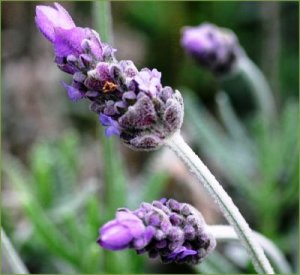
"As Rosemary is to the Spirit, so Lavender is to the Soul."


‘Hot lavender, mints, savory, marjoram;
The marigold, that goes to bed wi’ the sun,
and with him rise weeping.’ ~Shakespeare, Winter’s Tale
If you set it,
the cats will eat it,
If you sow it,
the cats don’t know it.
~Philip Miller, The Gardener’s Dictionary, Referring to Catnip
Salt is a preservative. It really holds flavor. For example, if you chop up some fresh herbs, or even just garlic, the salt will extract the moisture and preserve the flavor. ~ Sally Schneider
The Herbs ought to be distilled when they are in their greatest vigor, and so ought the Flowers also. ~Nicholas Culpeper
The intense perfumes of the wild herbs as we trod them underfoot made us feel almost drunk. ~Jacqueline du Pre
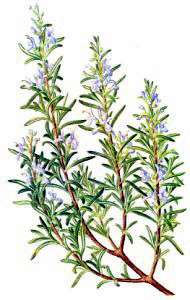
I plant rosemary all over the garden, so pleasant is it to know that at every few steps one may draw the kindly branchlets through one’s hand, and have the enjoyment of their incomparable incense; and I grow it against walls, so that the sun may draw out its inexhaustible sweetness to greet me as I pass ….
-  Gertrude Jekyll
“There’s fennel for you, and columbines; there’s rue for you: and here’s some for me; we may call it herb of grace o’ Sundays. O! you must wear your rue with a difference.  There’s a daisy; I would give you some violets, but they withered all when my father died.” ~Shakespeare, Hamlet
Thine eyes are springs in whose serene And silent waters heaven is seen. Their lashes are the herbs that look On their young figures in the brook. ~William C. Bryant
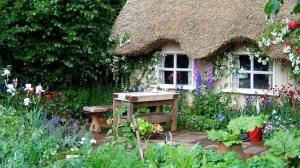
Waters are distilled out of Herbs, Flowers, Fruits, and Roots.
~Nicholas Culpeper
“We have finally started to notice that there is real curative value in local herbs and remedies. In fact, we are also becoming aware that there are little or no side effects to most natural remedies, and that they are often more effective than Western medicine.”  ~Anne Wilson Schaef
The basil tuft, that waves
Its fragrant blossom over graves.
~Thomas Moore, Lalla Rookhm, Light of the Harem
“The herb that can’t be got is the one that heals.” ~ Irish Saying
See how Aurora throws her fair Fresh-quilted colours through the air: Get up, sweet-slug-a-bed, and see The dew-bespangling herb and tree. ~ Herrick, Robert ~Corinna’s Going a Maying
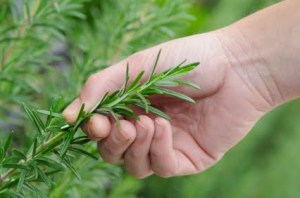
As for rosemary, I let it run all over my garden walls, not
only because my bees love it but because it is the herb
sacred to remembrance and to friendship, whence a
sprig of it hath a dumb language.
-  Sir Thomas Moore
Eat leeks in oile and ramsines in May,
And all the year after physicians may play.
(Ramsines were old-fashioned broad-leafed leeks.)
My gardens sweet, enclosed with walles strong, embarked with benches to sytt and take my rest. The Knotts so enknotted, it cannot be exprest. With arbours and alys so pleasant and so dulce, the pestylant ayers with flavours to repulse. ~Thomas Cavendish, 1532.
When daisies pied and violets blue, and lady-smocks all silver white. And Cuckoo-buds of yellow hue, do paint the meadows with delight. ~William Shakespeare, 1595.
Women with child that eat quinces will bear wise children. ~Dodoens, 1578.
Gardening with herbs, which is becoming increasingly popular, is indulged in by those who like subtlety in their plants in preference to brilliance.
-   Helen Morgenthau Fox
And because the Breath of Flowers is farre Sweeter in the Aire (where it comes and Gose, like the Warbling of Musick) than in the hand, therefore nothing is more fit for delight, than to know what be the Flowers and the Plants that doe best perfume the Aire. ~ Francis Bacon, 1625
Caesar….saith, that all the Britons do colour themselves with Woad, which giveth a blew colour… John Gerard, 1597
You have got to own your days and live them, each one of them, every one of them, or else the years go right by and none of them belong to you. ~Herb Gardner
Once you get people laughing, they’re listening and you can tell them almost anything. ~ Herb Gardner
(***These last two quotes snuck in here because his name is Herb Gardner, so he came up on my search and I liked them.)
Would You Marry Me?
“According to old wives’ tales, borage was sometimes
smuggled into the drink of  prospective husbands
to give them the courage to propose marriage.”
-  Mary Campbell, A Basket of Herbs
As Rosemary is to the Spirit, so Lavender is to the Soul.
-  Anonymous
As for the garden of mint, the very smell of it alone recovers and refreshes our spirits, as the taste stirs up our appetite for meat. ~   Pliny the Elder
How could such sweet and wholesome hours
Be reckoned but with herbs and flowers?
-  Andrew Marvel
How I would love to be transported into a scented
Elizabethan garden with herbs and honeysuckles,  a knot garden and roses clambering over a simple arbor …. ~Rosemary Verey
With holly and ivy,
So green and so gay,
We deck up our houses
As fresh as the day,
With bays, and rosemary,
And laurel complete;
And every one now
Is a king in conceit. ~Poor Robins Almanac, 1695
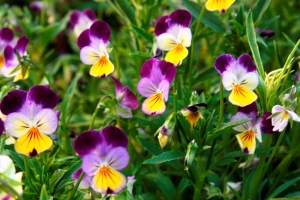
There’s rosemary, that’s for remembrance;
pray, love, remember; and there is pansies,
that’s for thoughts.
-    Shakespeare, Hamlet
The first gatherings of the garden in May of salads, radishes and herbs made me feel like a mother about her baby – how could anything so beautiful be mine.  And this emotion of wonder filled me for each vegetable as it was gathered every year.  There is nothing that is comparable to it, as satisfactory or as thrilling, as gathering the vegetables one has grown.
~  Alice B. Toklas

Tuesday, June 5, 2012

For Protection Against Spells and Enchantment

The sacred herb, Angelica, as its name alone implies, has a lofty status in the world of herbal lore. I used this herb in my historical fantasy romance novel The Bearwalker’s Daughter. 

I’ve grown Angelica in the garden, a large aromatic plant with lacy white umbels, but it died out and needs to be replaced. An ornamental, angelica makes a nice addition to a perennial herb and flower border, but be certain to allow plenty of room; it reaches a height of 4 to 6 feet.  The flowers are also appealing to butterflies, another plus. This year, I’d like to put in some plants.  I tend to overlook it in the spring planting madness.

“According to one legend, (European-angelica) Angelica was revealed in a dream by an angel to cure the plague (hence the name Angelica or Archangel). All parts of the plant were believed effective against evil spirits and witchcraft. It was held in such esteem that it was called ‘The Root of the Holy Ghost.’

In America it was used by the Iroquois and other tribes as Witchcraft Medicine, an infusion of smashed roots were used as wash to remove ghosts from the house.”  This quote is from an interesting site called Alternative Nature Online Herbal.  You can also view lovely pics of Angelic there.
From Real Magick: Magickal Use and Lore:
“As seen by its name, angelica has been associated with the Archangel Michael. It comes into bloom near his feast day and has been connected to the Christian observance of the Annunciation. Angelica is known for its protection against evil spells.”

From Rodale’s Illustrated Encyclopedia of Herbs: “Throughout history angelica has been a standout herb…supposed to ward off evil spirits and witches. Peasants would weave necklaces of the leaves for their children to wear to protect them. The juice of the roots was used to make Carmelite water, considered a ‘sovereign remedy’ and drunk to endure a long life and to protect against the poisons and spells of witches.”
Here I want to point out that the hysteria over witchcraft peaked in the Middle Ages, but endured well beyond.  


How many unfortunates were burnt at the stake as a result of witch hunts is uncertain but they numbered in the thousands.  Most confessions were gained as the result of torture, although the suggestion has been made that the side effects of some potent herbs made people think they could actually fly and that they possessed special powers.  

And who’s to say that some individuals didn’t have special powers.  But once condemned, few were powerful enough to keep themselves from a bad end.  Note that no witches were ever burned in North America, not even at the Salem Witch Trials.  By then, hanging was the preferred method of execution, far more civilized.  Burning was so sixteenth century.

From A Modern Herbal: (Bear in mind that this was written in the early 20th century, so not all that ‘modern.’  Ms. Grieve has a great deal to say about Angelica–I’ve touched on portions.)
Garden Angelica. Archangelica officinalis.

Parts Used: root, leaves, seeds.

History: Its virtues are praised by old writers, and the name itself, as well as the folk-lore of all North European countries, testify to the great antiquity of a belief in its merits as a protection against contagion, for purifying the blood, and for curing every conceivable malady: it was held a sovereign remedy for poisons agues and all infectious maladies.

The author goes on to say, “After the introduction of Christianity, the plant became linked in the popular mind with some archangelic patronage, and associated with the spring-time festival of the Annunciation. According to one legend, Angelica was revealed in a dream by an angel to cure the plague. Another explanation of the name of this plant is that it blooms on the day of Michael the Archangel (May 8, old style), and is on that account a preservative against evil spirits and witchcraft: all parts of the plant were believed efficacious against spells and enchantment. It was held in such esteem that it was called ‘The Root of the Holy Ghost.’

*Medieval herb garden pictured above

Angelica is unique amongst the Umbelliferae (*which means plants with umbel shaped flowers, think Queen Ann’s Lace) for its pervading aromatic odour, a pleasant perfume, entirely differing from Fennel, Parsley, Anise, Caraway or Chervil. One old writer compares it to Musk, others liken it to Juniper. Even the roots are fragrant, and form one of the principal aromatics of European growth- the other parts of the plant have the same flavour, but their active principles are considered more perishable.

Cultivation: Cultivate in ordinary deep, moist loam, in a shady position, as the plant thrives best in a damp soil and loves to grow near running water.

Parts Used: The roots and leaves for medicinal purposes, also the seeds. The stems and seeds for use in confectionery and flavouring and the preparation of liqueurs.  The dried leaves, on account of their aromatic qualities, are used in the preparation of hop bitters.  Angelica roots should be dried rapidly and placed in air-tight receptacles. They will then retain their medicinal virtues for many years.


The flavour of Angelica suggests that of Juniper berries, and it is largely used in combination with Juniper berries, or in partial substitution for them by gin distillers.

Medicinal Action and Uses: 
Angelica is a good remedy for colds, coughs, pleurisy, wind, colic, rheumatism and diseases of the urinary organs, though it should not be given to patients who have a tendency towards diabetes, as it causes an increase of sugar in the urine.  It is generally used as a stimulating expectorant, combined with other expectorants the action of which is facilitated, and to a large extent diffused, through the whole of the pulmonary region.  It is a useful agent for feverish conditions, acting as a diaphoretic.

An infusion may be made by pouring a pint of boiling water on an ounce of the bruised root, and two tablespoonsful of this should be given three or four times a day, or the powdered root administered in doses of 10 to 30 grains. The infusion will relieve flatulence, and is also of use as a stimulating bronchial tonic, and as an emmenagogue…used for indigestion, general debility and chronic bronchitis. For external use, the fresh leaves of the plant are crushed and applied as poultices in lung and chest diseases.
The following is extracted from an old family book of herbal remedies:
‘Boil down gently for three hours a handful of Angelica root in a quart of water; then strain it off and add liquid Narbonne honey or best virgin honey sufficient to make it into a balsam or syrup and take two tablespoonsful every night and morning, as well as several times in the day. If there be hoarseness or sore throat, add a few nitre drops.’

Angelica stems are also grateful to a feeble stomach, and will relieve flatulence promptly when chewed. An infusion of Angelica leaves is a very healthful, strengthening tonic and aromatic stimulant, the beneficial effect of which is felt after a few days’ use.

The yellow juice yielded by the stem and root becomes, when dry, a valuable medicine in chronic rheumatism and gout.

Taken in medicinal form, Angelica is said to cause disgust for spirituous liquors.  (*It occurs to me that this might be beneficial to alcoholics). It is a good vehicle for nauseous medicines and forms one of the ingredients in compound spirit of Aniseed. Gerard, among its many virtues that he extols, says ‘it cureth the bitings of mad dogs and all other venomous beasts.’~

Cadfael, starring Derek Jacobi, is a fascinating mystery series set in the old Norman England town of Shrewsbury featuring a Crusader turned monk, skilled in the use of herbs and solving murders. A healer atoning for the lives he took as a soldier, Brother Cadfael is often in his herborium at the monastery, busy with his mortar and pestle or distilling some potent elixir. Dried herbs hang in bunches from the rafters overhead, fill baskets and shelves alongside glass vials, crocks and other medicinal vessels made of pottery… kewl stuff.  He also loves to be among the herbs in his garden.  But mysteries often summon him from these simple joys.

The opening theme features sacred Medieval music, haunting voices from ages past. The show is available at netflix, some in instant streaming.  Listen to the clip below…intriguing.


Friday, March 2, 2012

To Ward off Demons and Prevent Bad Dreams~Herbal Lore


“There’s rosemary and rue. These keep
Seeming and savor all the winter long.
Grace and remembrance be to you.”
- William Shakespeare

I love rosemary both for its scent and wonderful history.  I’m never without at least one modest plant.  My current specimen is making a come back from a winter in my chilly sun room, and I’m rooting a few cuttings.

Rodale’s Illustrated Encyclopedia of Herbs says:  “For centuries people thought that a rosemary plant would grow no higher than 6 feet in 35 years so as not to stand taller than Christ.  Another story tells that the flowers were originally thought to be white but changed to blue when the Virgin Mary hung her cloak on a bush while fleeing from Herod’s soldiers with the Christ child.

Rosemary possessed powers of protection against evil spirits, or so people thought.  In the Middle Ages, men and women would place sprigs under their pillows to ward off demons and prevent bad dreams.

“There’s rosemary that’s for remembrance. Pray, you love, remember.” ~ Hamlet
Rosemary is one of my favorite herbs, mostly just because. I rarely cook with it, but love its scent and the wealth of history behind it. Known as the herb of remembrance from the time of ancient Greece, it appears in that immortal verse by Shakespeare.  

My fascination with herbs plays a significant role in my historical/light paranormal romance Somewhere My Love, as does Hamlet, for that matter.  I always wanted to write a murder mystery with a focus on herbs and parallels to a Shakespearean play, and so I did.

Regarding Rosemary, Maud Grieve in A Modern Herbal says,
“The Ancients were well acquainted with the shrub, which had a reputation for strengthening the memory. On this account it became the emblem of fidelity for lovers.

 It holds a special position among herbs from the symbolism attached to it. Not only was it used at weddings, but also at funerals, for decking churches and banqueting halls at festivals, as incense in religious ceremonies, and in magical spells.

At weddings, it was entwined in the wreath worn by the bride, being first dipped into scented water.  Anne of Cleves, (*4th wife of Henry V111 and one who survived him), we are told, wore such a wreath at her wedding. A Rosemary branch, richly gilded and tied with silken ribands of all colours, was also presented to wedding guests, as a symbol of love and loyalty. Together with an orange stuck with cloves it was given as a New Year’s gift…
In early times, Rosemary was freely cultivated in kitchen gardens and came to represent the dominant influence of the house mistress, ‘Where Rosemary flourished, the woman ruled.’

The Treasury of Botany says:
‘There is a vulgar belief in Gloucestershire and other counties, that Rosemary will not grow well unless where the mistress is “master”; and so touchy are some of the lords of creation upon this point, that we have more than once had reason to suspect them of privately injuring a growing rosemary in order to destroy this evidence of their want of authority.’

Rosemary was one of the cordial herbs used to flavour ale and wine. It was also used in Christmas decoration.
“Down with the rosemary and so,
Down with the baies and mistletoe,
Down with the holly, ivie all
Wherewith ye deck the Christmas Hall.” —HERRICK
.
“As for rosemary, I let it run all over my garden walls, not only because my bees love it but because it is the herb sacred to remembrance and to friendship, whence a sprig of it hath a dumb language.”
- Sir Thomas More (1478-1535) British writer, statesman and philosopher

Miss Ainslie gathered a bit of rosemary, crushing it between her white fingers. “See,” she said, “some of us are like that it takes a blow to find the sweetness in our souls.”
Lavender and Old Lace

-Myrtle Reed (1874–1911)