Showing posts with label Herbal Cures. Show all posts

Wednesday, January 18, 2017

The Curative Powers of Elderberry

elderflowerIt’s also known as American Elder, Black Elder, and Tree of Music to give a few of its many names. There are different varieties, some that grow no larger than bushy shrubs while others obtain the height of huge trees. Native Americans used the long, straight, hollowed stems that became woody with age for arrows.

They pushed all the soft and poisonous pith out of the stems with hot sticks. Indians also bored holes in them to make flutes which gave Elder its name ‘tree of music.’ Hunters lured elk closer with elderberry whistles. I referred to this use of elder in my American historical romance novel Red Birds Song.
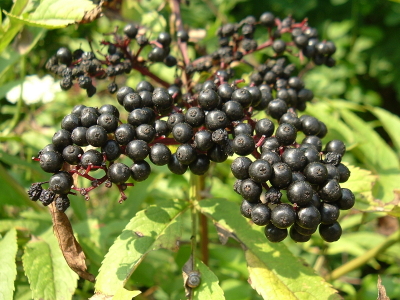
elderberriesThe fruit was believed to have a cooling, gentle, laxative and urine increasing effect. Elderberry wine was thought to be a tonic. The berries are said to aid arthritis. The juice simmered until thick was used as a cough syrup and for colds. The rest of the medicinal was used with great caution and some parts avoided entirely. The inner bark of elder stems and the roots were generally regarded as too dangerous to experiment with, however women drank very small amounts of elderberry bark tea for bad menstrual cramps, to ease the pain of labor and help the child along. I used a potent dose of elderberry bark tea in my historical Native American romance novel, Through the Fire.
Indians and settlers believed that small amounts of potentially poisonous plants could be beneficial under certain circumstances to stimulate the body to heal or maybe because it was fighting off the poison. Native Americans shared their storehouse of knowledge regarding herbal treatments with colonists who used these remedies in combination with those lauded cures they brought with them. Elderberry was also a vital plant in the Old World.
From Rodale’s Illustrated Encyclopedia of Herbs:
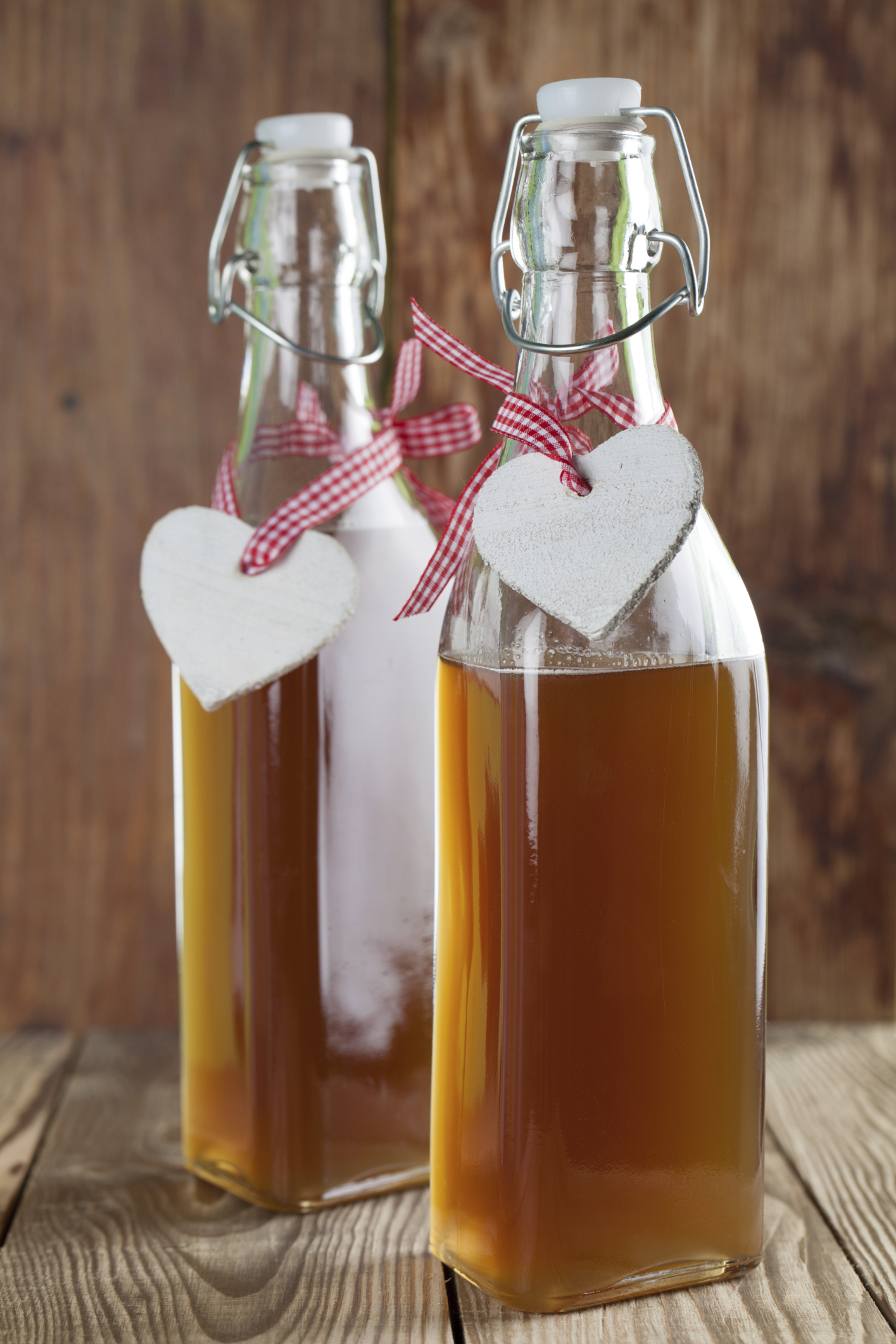
Elderberry Syrup“One of the human race’s earliest plant companions (found in Stone Age sites) the elderberry has developed reputations for great powers of good…as well as great powers of evil. In some parts of the world, no prudent carpenter would make a cradle of elderberry wood for fear of bringing harm to the baby. The elderflower has been involved in human history for centuries, and one story suggests that it takes its name from a unique medicinal dimension. The generic name Sambucus may come from the Greek Sambuke, a musical instrument made from elderberry wood. For centuries the plant has had the reputation of healing the body, but in elderberry’s golden age, it made music to heal the spirit.
During its long association with humanity, the elderberry’s traditions have become an incredible jumble of conflicting currents. It provided the wood for Christ’s cross; it was the home of the goddess Freya. If seen in a dream, it meant illness was on the way; it was such a healthful plant that seventeenth century herbalist John Evelyn called it a remedy ‘against all infirmities whatever.’  It would ward off witches if gathered on the last day of April and put up on the windows and doors of houses; it was very attractive to witches and thus should be avoided after dark.
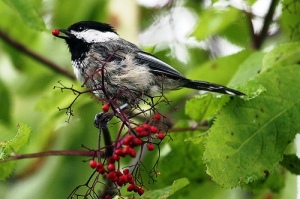
bird eating elderberriesElderberries worked their way into every aspect of living from dyeing hair black to showing berries just at the right time to signal the beginning of wheat sowing. Shakespeare had something to say about it. One of his characters called it ‘the stinking elder.’ The Shakers used it as a medicinal. The wood of the old stems, hard and fine grained, was prized by the makers of mathematical instruments. The list could go on and on for pages; elderberries stand in our gardens as old friends.”
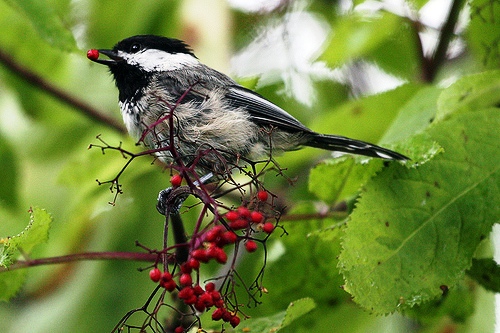
“Elderberry, or elder, has been used for centuries to treat wounds, when applied to the skin. It is also taken by mouth to treat respiratory illnesses such as cold and flu. In many countries, including Germany, elder flower is used to treat colds and flu. Some evidence suggests that chemicals in elder flower and berries may help reduce swelling in mucous membranes, such as the sinuses, and help relieve nasal congestion. Elder may have anti-inflammatory, antiviral, and anticancer properties.”
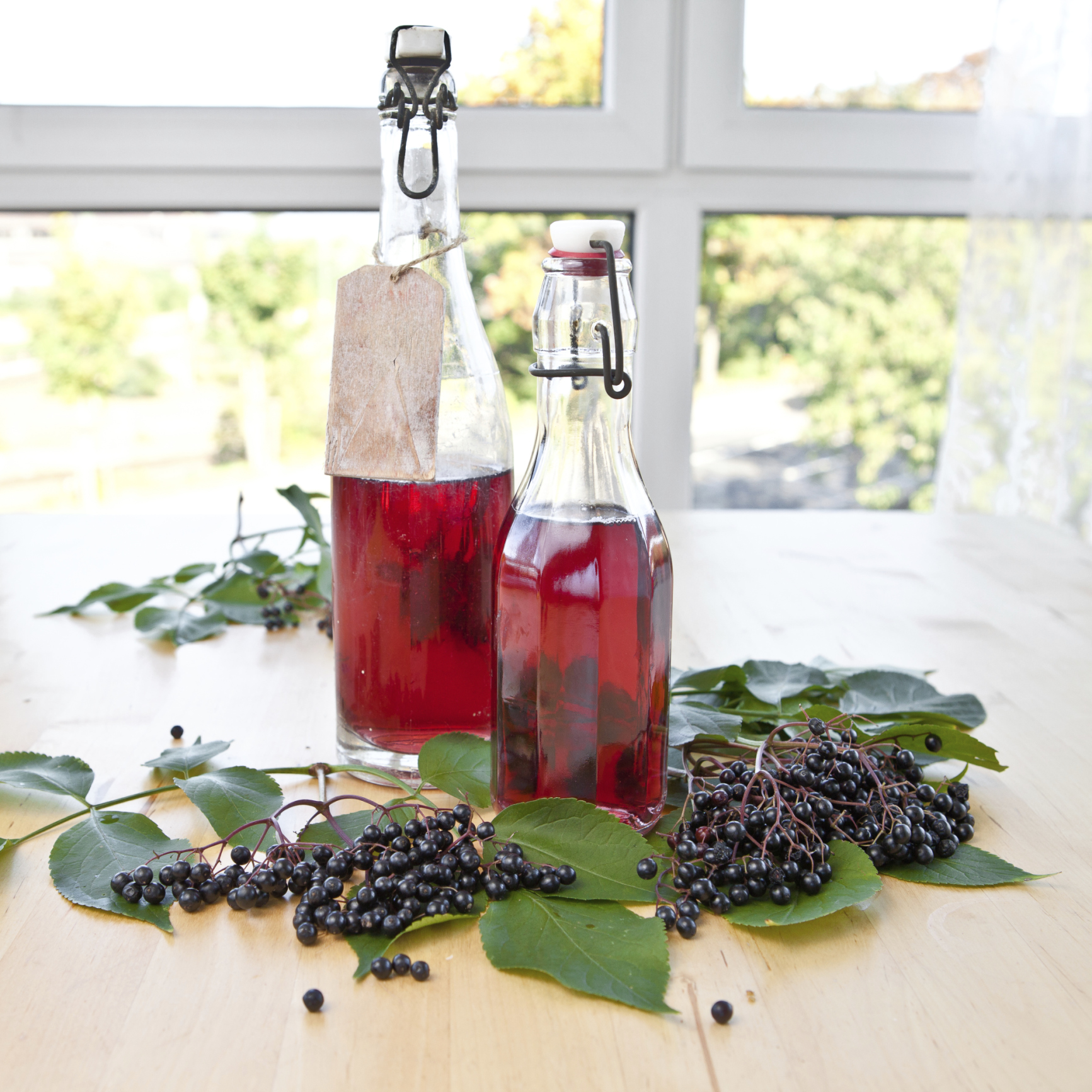
*Image of elderberry syrup, also below
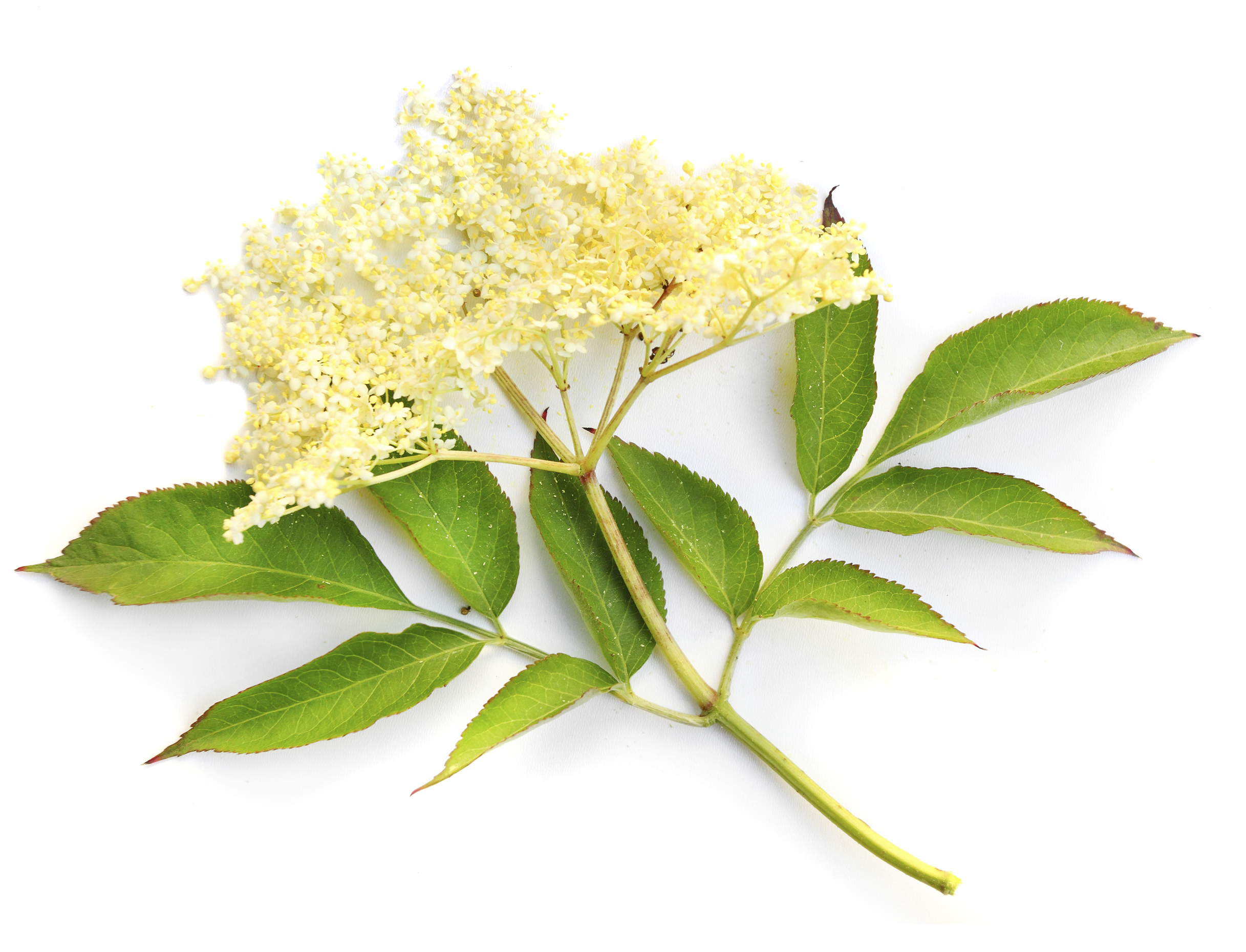
477900653Plant Description
“European elder is a large shrub or small tree that grows up to 30 feet tall in wet or dry soil in a sunny location. Elder is native to Europe, Africa, and parts of Asia, but it has become widespread in the United States. Deciduous leaves grow in opposite pairs and have five to seven leaflets. Flowers are white and flat-topped with five primary rays. Berries are green, turning red, then black when ripe.”
Parts Used: “The berries and flowers are used as medicine. Berries must be cooked before they are taken. Raw berries contain a chemical similar to cyanide.”
Available Forms: “Elderberry is available as a liquid, syrup, and tincture, as well as in capsule and lozenge forms. Dried elder flower is usually standardized to at least 0.8% flavonoids. Sambucol is standardized to 38% elderberry extract for adults and 19% for children. Sinupret contains 18 mg of elder flower.”
How to Take It: “Do not give elderberry or any product containing elder to a child without first talking to your pediatrician.”
462282533
To Make Your Own Elderberry Syrup:

Thursday, September 29, 2016

'Lavender is of ‘especiall good use for all griefes and paines of the head' ~ John Parkinson, 1640

O’Keeffe (A Beggar on Horseback, 1798) ~ “My dear, have some lavender, or you’d best have a thimble full of wine, your spirits are quite down, my sweeting.”


I love lavender, such a wonderful fragrance, among the best in the world. Every year we plant more seedlings, in an effort to keep them going. Lavender is one of those herbs we have difficulty getting through our harder winters and so may or may not come back. Of the different kinds we’ve grown, Lavender Munstead seems to be the hardiest. Being dwarf, it doesn’t get too big to interplant among other herbs and roses. We are trying a new tiny variety this season that has bloomed for weeks, so shall see if it survives. Its name escapes me, but the grower can be found again next spring. The French variety from Provence has the most exquisite fragrance but isn’t very hardy. If possible, provide a sunny sheltered location out of strong north-west winds for lavender and the plants will be longer lived. Prune back dead growth in the spring. We will be planting more, that's a given.


Lavender flowers are easily dried, make delightful sachets, and are an essential ingredient in potpourri. I suppose one could ‘make do’ with rose petals, but I like a mix of both along with other herbs, spices, and essential oils. In addition to its highly valued scent, lavender has a history of medicinal use and a rich lore. I rely on the essential oil in the house, even sprinkle drops on the dog’s brush several times a week. Lavender oil repels insects and doesn’t harm the dog as some essential oils can when used directly on pets. Be extremely careful around cats.

Turner (Herbal, 1545) ~ ”I judge that the flowers of lavender quilted in a cappe and dayly worn are good for all diseases of the head that come of a cold cause and that they comfort the braine very well.”

The following is from A Modern Herbal:

“The fragrant oil to which the odour of Lavender flowers is due is a valuable article of commerce, much used in perfumery, and to a lesser extent in medicine. The fine aromatic smell is found in all parts of the shrub, but the essential oil is only produced from the flowers and flower-stalks. Besides being grown for the production of this oil, Lavender is widely sold in the fresh state as ‘bunched Lavender,’ and as ‘dried Lavender,’ the flowers are used powdered, for sachet making and also for pot-pourri…

ENGLISH LAVENDER (Lavandula vera), the common narrow-leaved variety, grows 1 to 3 feet high (in gardens, occasionally somewhat taller), The majority of the oil yielded by the flowers is contained in the glands on the calyx. The two-lipped corolla is of a beautiful bluish-violet colour.

French Lavender oil is distilled from two distinct plants, found in the mountain districts of Southem France, both included under the name of L. officinalis by the sixteenth-century botanists, and L. vera by De Candolle. The oils from the two plants are very similar, but the former yields oils with the higher percentage of esters.

(image from our garden)

The SPIKE LAVENDER (L. spica, D.C., or latifolia, Vill.) is a coarser, broadleaved variety of the Lavender shrub, also found in the mountain districts of France and Spain, The flowers yield three times as much of the essential oil – known as Spike oil – as can be got from our narrowleaved plant, but it is of a second-rate quality, less fragrant than that of the true Lavender, its odour resembling a mixture of the oils of Lavender and Rosemary. Parkinson in his Garden of Pleasure says the L. spica ‘is often called the Lesser Lavender or minor, and is called by some, Nardus Italica.’ Some believe that this is the Spikenard mentioned in the Bible.

History: Dr. Fernie, in Herbal Simples, says: ‘By the Greeks the name Nardus is given to Lavender, from Naarda, a city of Syria near the Euphrates, and many persons call the plant “Nard.” St. Mark mentions this as Spikenard, a thing of great value…. In Pliny’s time, blossoms of the Nardus sold for a hundred Roman denarii (or L.3 2s. 6d.) the pound. This Lavender or Nardus was called Asarum by the Romans, because it was not used in garlands or chaplets. It was formerly believed that the asp, a dangerous kind of viper, made Lavender its habitual place of abode, so that the plant had to be approached with great caution.’

L. Stoechas Another species of LAVENDER, L. Stoechas, known also as French Lavender, forms a pretty little shrub, with narrow leaves and very small, dark violet flowers. It is very abundant on the islands of Hyères, which the Ancient Romans called the ‘Stoechades,’ after this plant. This was probably the Lavender so extensively used in classical times by the Romans and the Libyans, as a perfume for the bath (whence probably the plant derived its name – from the Latin, lavare, to wash). It is plentiful in Spain and Portugal and is only used as a rule for strewing the floors of churches and houses on festive occasions, or to make bonfires on St. John’s Day, when evil spirits are supposed to be abroad, a custom formerly observed in England with native plants.

The odour is more akin to Rosemary than to ordinary Lavender. The flowers of this species were used medicinally in England until about the middle of the eighteenth century, the plant being called by our old authors, ‘Sticadore.’ It was one of the ingredients of the ‘Four Thieves’ Vinegar’ famous in the Middle Ages. 

The Dwarf Lavender is more compact than the other forms and has flowers of a deeper colour. It makes a neat edging in the fruit or kitchen garden, where the larger forms might be in the way, and the flowers, borne abundantly, are useful for cutting.

(Image from our garden)

All the forms of Lavender are much visited by bees and prove a good source of honey.

Lavender was familiar to Shakespeare, but was probably not a common plant in his time, for though it is mentioned by Spencer as ‘The Lavender still gray’ and by Gerard as growing in his garden, it is not mentioned by Bacon in his list of sweet-smelling plants. It is now found in every garden, but we first hear of it being cultivated in England about 1568. It must soon have become a favourite, however, for among the long familiar gardenplants which the Pilgrim Fathers took with them to their new home in America, we find the names of Lavender, Rosemary and Southernwood, though John Josselyn, in his Herbal, says that ‘Lavender Cotton groweth pretty well,’ but that ‘Lavender is not for the Climate.’

Medicinal Action and Uses: Lavender was used in earlier days as a condiment and for flavouring dishes ‘to comfort the stomach.’ Gerard speaks of Conserves of Lavender being served at table. It has aromatic, carminative and nervine properties. Though largely used in perfumery, it is now not much employed internally, except as a flavouring agent, occurring occasionally in pharmacy to cover disagreeable odours in ointments and other compounds.
Red Lavender lozenges are employed both as a mild stimulant and for their pleasant taste.

The essential oil, or a spirit of Lavender made from it, proves admirably restorative and tonic against faintness, palpitations of a nervous sort, weak giddiness, spasms and colic. It is agreeable to the taste and smell, provokes appetite, raises the spirits and dispels flatulence. The dose is from 1 to 4 drops on sugar or in a spoonful or two of milk.

A few drops of the essence of Lavender in a hot footbath has a marked influence in relieving fatigue. Outwardly applied, it relieves toothache, neuralgia, sprains, and rheumatism. In hysteria, palsy and similar disorders of debility and lack of nerve power, Lavender will act as a powerful stimulant.

‘It profiteth them much,’ says Gerard, ‘that have the palsy if they be washed with the distilled water from the Lavender flowers, or are anointed with the oil made from the flowers and olive oil in such manner as oil of roses is used.’
Culpepper says that: ‘a decoction made with the flowers of Lavender, Horehound, Fennel and Asparagus root, and a little Cinnamon, is very profitably used to help the falling-sickness (epilepsy) and the giddiness or turning of the brain.’

Salmon in his Herbal (1710) says that: ‘it is good also against the bitings of serpents, mad-dogs and other venomous creature, being given inwardly and applied poultice-wise to the parts wounded. The spirituous tincture of the dried leaves or seeds, if prudently given, cures hysterick fits though vehement and of long standing.’

In some cases of mental depression and delusions, oil of Lavender proves of real service, and a few drops rubbed on the temple will cure nervous headache.

A tea brewed from Lavender tops, made in moderate strength, is excellent to relieve headache from fatigue and exhaustion, giving the same relief as the application of Lavender water to the temples. An infusion taken too freely, will, however, cause griping and colic, and Lavender oil in too large doses is a narcotic poison and causes death by convulsions.

Lavender's use in the swabbing of wounds obtained further proof during the War, and the French Academy of Medicine is giving attention to the oil for this and other antiseptic surgical purposes. The oil is successfully used in the treatment of sores, varicose ulcers, burns and scalds. In France, it is a regular thing for most households to keep a bottle of Essence of Lavender as a domestic remedy against bruises, bites and trivial aches and pains, both external and internal.


Lavender Water can easily be prepared at home. Into a quart bottle are put 1 OZ. essential oil of Lavender, one drop of Musk and 1 1/2 pint spirits of wine. These three ingredients are well mixed together by shaking. The mixture is left to settle, shaken again in a few days, then poured into little perfume bottles fitted with air-tight stoppers. This is another recipe from an old family book:
‘Put into a bottle half a pint of spirit of wine and two drachms of oil of lavender. Mix it with rose-water, five ounces, orange-flower water, two ounces, also two drachms of musk and six ounces of distilled water.’

This is stated to be ‘a pleasant and efficacious cordial and very useful in languor and weakness of the nerves, lowness of spirits, faintings, etc.’
Lavender Vinegar. A refreshing toilet preparation is made by mixing 6 parts of Rosewater, 1 part of spirits of Lavender and 2 parts of Orleans vinegar.

It can also be prepared from freshly gathered flower-tops. These are dried, placed in a stoppered bottle and steeped for a week in Orleans vinegar. Every day the bottle must be shaken, and at the end of the week the liquid is drained off and filtered through white blotting paper."

There are many, many ways to enjoy lavender and benefit from this wonderful herb. I hope you are inspired to put in a few plants this year, or grow one in a pot.


Nonfiction Herbal
Nonfiction Herbal
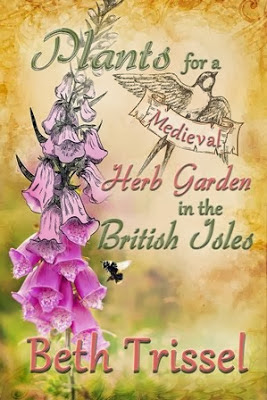
My herbal, Plants for A Medieval Herb Garden in the British Isles, is in print and kindle at Amazon: https://www.amazon.com/Plants-Medieval-Garden-British-Isles-ebook/dp/B00IOGHYVU
 

An illustrated collection of plants that could have been grown in a Medieval Herb or Physic Garden in the British Isles. The major focus of this work is England and Scotland, but also touches on Ireland and Wales. Information is given as to the historic medicinal uses of these plants and the rich lore surrounding them. Journey back to the days when herbs figured into every facet of life, offering relief from the ills of this realm and protection from evil in all its guises.


Monday, May 26, 2014

Rosemary, the Herb of Remembrance


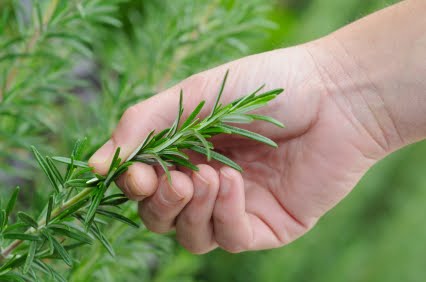
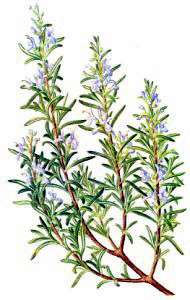
Rosemary“There’s rosemary that’s for remembrance. Pray, you love, remember.” ~ Hamlet
Rosemary is the herb that we leave on graves and a fitting one for Memorial Day. I love the scent of rosemary and the wealth of history behind it. Known as the herb of remembrance from the time of ancient Greece, it appears in that immoral verse by Shakespeare. 
My fascination with herbs plays a significant role in my historical-light paranormal romance novel Somewhere My Love, as does Hamlet, for that matter. I always wanted to write a murder mystery with a focus on herbs and parallels to a Shakespearean play, and so I did. Ghostly, murder mystery, time travel romance novel, Somewhere My Love, is interwoven with Hamlet and herbs.
‘Tis the Season for RosemaryRosemary is considered a tonic, astringent, diaphoretic (increases perspiration), stimulant. Oil of Rosemary has the carminative (induces the expulsion of gas) properties of other volatile oils and is an excellent stomachic and nervine (has a beneficial effect upon the nervous system), curing many cases of headache.
“As for rosmarine, I lette it runne all over my garden walls, not onlie because my bees love it, but because it is  the herb sacred to remembrance,  and, therefore to friendship..” ~Thomas Moore

Rosemary1Beloved by the ancients, rosemary had the reputation for strengthening memory. On this account, it became the emblem of fidelity for lovers. And holds a special position among herbs from the symbolism attached to it. Not only was rosemary used at weddings, but also at funerals, for decking churches and banqueting halls at festivals, as incense in religious ceremonies, and in magical spells. It was entwined in the wreaths worn by brides, being first dipped into scented water. 
Anne of Cleves, fourth wife of Henry VIII, and fortunate to escape with her life due to an annulment, is said to have worn such a wreath at her wedding. Maybe it protected her. She outlived his other wives, two of whom were beheaded, and the sixth one, Catherine Parr, might have been had he hung on much longer. Such were the vagaries of his moods. But I digress.
basket of herbs with rosemaryA rosemary branch, richly decorated and tied with ribbons, was also presented to wedding guests, as a symbol of love and loyalty. Rosemary was one of the cordial herbs used to flavor ale and wine. It was also used in Christmas decoration. Together with an orange stuck with cloves it was given as a New Year‘s gift. Rosemary came to represent the dominant influence of the lady of the house, “Where Rosemary flourished, the woman ruled.” I add, to prove their dominance, some husbands would damage the flourishing plants. (A Modern Herbal)

Monday, November 11, 2013

"Vervain and Dill / Hinder witches from their will.”

In my research of vervain, I have discovered various assertions for this ancient herb that disagree with each other. This is not unusual as different cultures didn’t always agree in their lore, but some herbs vary more than others. I can but report my findings, not having grown vervain myself. Some say it is powerfully fragrant, while other sources say it has no fragrance. This might be due to confusion over the particular variety of vervain under discussion, or the conditions under which it is grown. For the purposes of this post, we are discussing common vervain, verbena Officinalis, also known as Herb of Grace. And  it is seriously, not a pretty plant. But looks can be deceiving. (Image of a medieval pharmacy)

From Mother Earth Living: “Compared with its flashy garden verbena cousins, common vervain (Verbena ­officinalis) is an unprepossessing plain Jane. Yet according to Henry Beston, writing in Herbs and the Earth (1935), "To those interested in magic and religion, there is no herb in the garden more worthy of attention, for this simple plant without fragrance, without an outer look of power, without a flower of significance, was singled out from among all other plants and herbs as the most sacred of the growing things of earth between the Pillars of Hercules and the roots of the Caucasus."
Vervain is one of some 250 species of annuals, herbaceous perennials, and subshrubs in the genus ­Verbena. Although most members of the genus are native to tropical and subtropical America, vervain is native to southern Europe; it probably came to North America with the early English settlers.”


From Rodale’s’ Illustrated Encyclopedia
“Description: A spiky-looking plant, vervain should not be confused with blue vervain (Verbena bastata), although it probably will be since even botanists disagree about vervain identification. Flowers: Tiny, purplish white; tubular with five spreading lobes; four stamens; in rings on tall spikes at top of plant. Leaves: Opposite, oblong to lanceolate, deeply divided; upper leaves attached, lower on leafstalks. Fruit: nutlets. Height: 1-3 ft. Flowering: Throughout summer. Range: Native to Europe; naturalized in North America.

Vervain is a very old companion of the human race.
Even the Egyptians considered it ancient, originating from the tears of the goddess Isis as she wept for the dead god Osiris. Vervain was sacred to the Romans; the Latin name of the genus comes from the classical name for ‘sacred boughs.’ It is associated with the crucifixion: Reportedly the herb was pressed on Christ’s wounds to stop the bleeding. It was sacred, too, to the Persians and the Druids.

Vervain appeared in medieval medicine. The court physician to Theodosius 1, for example, described how vervain cures tumors of the throat. Cut the root in two pieces, he said. Tie one around the patient’s throat and hang the other over a fire. As the heat and smoke dry out one part of the root, the tumor will shrivel, too. To get rid of pimples the medieval way, stand outside with a handful of vervain in a handkerchief. When a shooting star is streaking by, rub the vervain over the pimple, and the blemish will disappear. Don’t use your bare hands, or you’ll simply transfer the pimple to your hand. (Image of medieval pharmacist)

Vervain was still valued in the seventeenth century when London herbalist Nicholas Culpepper praised it. Among vervain’s many virtues, Culpepper reported that ‘used with lard it helps pain in the secret parts.’
Uses: Medicinal: Vervain has been reported to have healing powers: astringent, antispasmodic, diaphoretic, emmenagogue, febrifuge, and for dozens more. There does not seem to be any modern scientific evidence to support the claims, however.

***Toxicity: Vervain is certainly not sacred to modern scientists. They report that a glycoside in vervain causes vomiting, even in moderate doses.

Cosmetic: A bath prepared from vervain is said to be quite soothing.
Cultivation:  Grows easily from seed.
Harvesting and storage: According to the Druids, who used a lot of vervain and were entitled to an opinion, the plant should be collected when neither the sun nor the moon is in the sky. And in exchange for removing such a valuable plant from the earth, honey combs should be left on the ground.”


                                             (English country garden because it's pretty.)

From A Modern Herbal by M. Grieve:
“Description---In England the Common Vervain is found growing by roadsides and in sunny pastures. It is a perennial bearing many small, pale-lilac flowers. The leaves are opposite, and cut into toothed lobes. The plant has no perfume, and is slightly bitter and astringent in taste.
The name Vervain is derived from the Celtic ferfaen, from fer (to drive away) and faen (a stone), as the plant was much used for affections of the bladder, especially calculus. Another derivation is given by some authors from Herba veneris, because of the aphrodisiac qualities attributed to it by the Ancients. Priests used it for sacrifices, and hence the name Herba Sacra. The name Verbena was the classical Roman name for 'altar-plants' in general, and for this species in particular. The druids included it in their lustral water, and magicians and sorcerers employed it largely. It was used in various rites and incantations, and by ambassadors in making leagues. Bruised, it was worn round the neck as a charm against headaches, and also against snake and other venomous bites as well as for general good luck. It was thought to be good for the sight. Its virtues in all these directions may be due to the legend of its discovery on the Mount of Calvary, where it staunched the wounds of the crucified Savior. Hence, it is crossed and blessed with a commemorative verse when it is gathered. It must be picked before flowering, and dried promptly.

Constituents---The plant appears to contain a peculiar tannin, but it has not yet been properly analyzed.

Medicinal Action and Uses---It is recommended in upwards of thirty complaints, being astringent, diaphoretic, antispasmodic, etc. It is said to be useful in intermittent fevers, ulcers, ophthalmia, pleurisy, etc., and to be a good galactogogue. It is still used as a febrifuge in autumn fevers.
As a poultice it is good in headache, ear neuralgia, rheumatism, etc. In this form it colours the skin a fine red, giving rise to the idea that it had the power of drawing the blood outside. A decoction of 2 OZ. to a quart, taken in the course of one day, is said to be a good medicine in purgings, easing pain in the bowels. It is often applied externally for piles. It is used in homoeopathy.”

From a very interesting link about vervain: http://www.globalherbalsupplies.com/herb_information/vervain.htm


Vervain and the Vampire Diaries:

Regarding vervain lore in the Vampire Diaries,  “Vervain (or verbena) is a potent herb, and also a vampire's most common weakness. Vervain if touched by a vampire can cause burning to the skin. If a person is drinking vervain and a vampire bites them, the vampire is affected straight away and weakened by this, the same goes for a person wearing jewelry containing vervain it stops them from being compelled by any vampire.”
For more on the medical side effects and uses of vervain visit: WebMD

Hazlitt's Faiths and Folklore (1905) quotes Aubrey's Miscellanies (1721), to wit:
"Vervain and Dill / Hinder witches from their will.”

Friday, August 10, 2012

'To Be Taken With A Mixture of Pounded Frogs…’ ~Herbal Lore--Beth Trissel


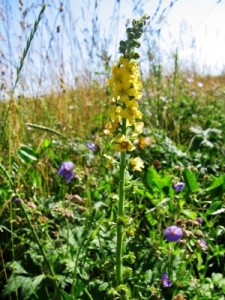
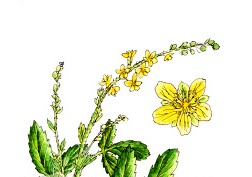
Agrimony:  Used from ancient times to treat many ailments and injuries, it’s also reputed to have magical properties.
“The plant is found abundantly throughout England, on hedge-banks and the sides of fields, in dry thickets and on all waste places. In Scotland it is much more local and does not penetrate very far northward. (It also grows in America)
Agrimony has an old reputation as a popular, domestic medicinal herb, being a simple well-known to all country-folk. It belongs to the Rose order of plants, and its slender spikes of yellow flowers, which are in bloom from June to early September, and the singularly beautiful form of its much-cut-into leaves, make it one of the most graceful of our smaller herbs.
The whole plant is deep green and covered with soft hairs, and has a slightly aromatic scent; even the small root is sweet scented, especially in spring. The spikes of flowers emit a most refreshing and spicy odour like that of apricots. The leaves when dry retain most of their fragrant odour, as well as the flowers, and Agrimony was once much sought after as a substitute or addition to tea, adding a peculiar delicacy and aroma to its flavour. Agrimony is one of the plants from the dried leaves of which in some country districts is brewed what is called ‘a spring drink,’ or ‘diet drink,’ a compound made by the infusion of several herbs and drunk in spring time as a purifier of the blood. In France, where herbal teas or tisanes are more employed than here, it is stated that Agrimony tea, for its fragrancy, as well as for its virtues, is often drunk as a beverage at table.
The long flower-spikes of Agrimony have caused the name of ‘Church Steeples’ to be given the plant in some parts of the country. It also bears the title of ‘Cockeburr,’ ‘Sticklewort’ or ‘Stickwort,’ because its seed-vessels cling by the hooked ends of their stiff hairs to any person or animal coming into contact with the plant. It was, Gerard informs us, at one time called Philanthropos, according to some old writers, on account of its beneficent and valuable properties, others saying that the name arose from the circumstance of the seeds clinging to the garments of passers-by, as if desirous of accompanying them, and Gerard inclines to this latter interpretation of the name.
*Image above is from an interesting  site Herbal Simples, about healing herbs.
The whole plant yields a yellow dye: when gathered in September, the colour given is pale, much like that called nankeen; later in the year the dye is of a darker hue and will dye wool of a deep yellow. As it gives a good dye at all times and is a common plant, easily cultivated, it seems to deserve the notice of dyers.
History: The name Agrimony is from Argemone, a word given by the Greeks to plants which were healing to the eyes, the name Eupatoria refers toMithridates Eupator, a king who was a renowned concoctor of herbal remedies. The magic power of Agrimony is mentioned in an old English medical manuscript:
‘If it be leyd under mann’s heed, He shal sleepyn as he were deed; He shal never drede ne wakyn,Till fro under his heed it be takyn.’ (That’s darn useful to know.)
*Image above is from another interesting herbal site called Every Green Herb.
Agrimony was one of the most famous vulnerary herbs. (Vulnerary *is a plant used in the treatment of wounds). The Anglo-Saxons, who called it Garclive, taught that it would heal wounds, snake bites, warts, etc. In the time of Chaucer, when we find its name appearing in the form of Egrimoyne, it was used with Mugwort and vinegar for ‘a bad back’ and ‘alle woundes’: and one of these old writers recommends it to be taken with a mixture of pounded frogs and human blood, as a remedy for all internal hemorrhages.”
*I have to stop right here and comment.  Pounded frogs and human blood mixed with Agrimony for all internal hemorrhages.  Hmmm…it wonders me, as the Pennsylvania Dutch say, whose blood we’re to mix in.  Probably someone else’s.  And what would the proportions of pounded frog be to the herb and blood?  No exact proportions given.  Just a spoonful of this and a cup of that.  I suspect it would take more than a spoonful of sugar to help that medicine go down.
I also like where the author goes on to say that Agrimony “has had a great reputation for curing jaundice and other liver complaints. Gerard believed in its efficacy. He says: ‘A decoction of the leaves is good for them that havenaughty livers.’”  Got that?  It treats naughty livers.
Pliny called it an ‘herb of princely authoritie.’ Dioscorides stated that it was not only ‘a remedy for them that have bad livers,’ but also ‘for such as are bitten with serpents.’ Dr. Hill, who from 1751 to 1771 published several works on Herbal medicine, recommends ‘an infusion of 6 oz. of the crown of the root in a quart of boiling water, sweetened with honey and half a pint drank three times a day,’ as an effectual remedy for jaundice. It gives tone to the system and promotes assimilation of food.”
Again from A Modern Herbal: It formed an ingredient of the famous arquebusade water as prepared against wounds inflicted by an arquebus, or hand-gun, and was mentioned by Philip de Comines, in his account of the battle of Morat in 1476. In France, the eau de arquebusade is still applied for sprains and bruises, being carefully made from many aromatic herbs.
It was at one time included in the London Materia Medica as a vulnerary herb, but modern official medicine does not recognize its virtues, though it is still fully appreciated in herbal practice as a mild astringent and tonic, useful in coughs, diarrhea and relaxed bowels. By pouring a pint of boiling water on a handful of the dried herb – stem, leaves and flowers – an excellent gargle may be made for a relaxed throat, and a teacupful of the same infusion is recommended, taken cold three or four times in the day for looseness in the bowels, also for passive losses of blood. It may be given either in infusion or decoction.
Constituents: Agrimony contains a particular volatile oil, which may be obtained from the plant by distillation and also a bitter principle. It yields in addition 5 per cent of tannin, so that its use in cottage medicine for gargles and as an astringent applicant to indolent ulcers and wounds is well justified. Owing to this presence of tannin, its use has been recommended in dressing leather.
Agrimony is also considered a very useful agent in skin eruptions and diseases of the blood, pimples, blotches, etc. A strong decoction of the root and leaves, sweetened with honey or sugar, has been taken successfully to cure scrofulous sores, being administered two or three times a day, in doses of a wineglassful, persistently for several months. The same decoction is also often employed in rural districts as an application to ulcers.
Preparation: In North America, it is said to be used in fevers with great success, by the Indians and Canadians.
In former days, it was sometimes given as a vermifuge, (*serving to expel worms and other parasites from the intestinal tract) though that use is obsolete.
In the Middle Ages, it was said to have magic powers, if laid under a man’s head inducing heavy sleep till removed, but no narcotic properties are ascribed to it.
Green (Universal Herbal, 1832) tells us that ‘its root appears to possess the properties of Peruvian bark in a very considerable degree, without manifesting any of its inconvenient qualities, and if taken in pretty large doses, either in decoction or powder, seldom fails to cure the ague.’
Culpepper (1652) recommends it, in addition to the uses already enumerated, for gout, ‘either used outwardly in an oil or ointment, or inwardly, in an electuary or syrup, or concreted juice.’ He praises its use externally, stating how sores may be cured ‘by bathing and fomenting them with a decoction of this plant,’ and that it heals ‘all inward wounds, bruises, hurts and other distempers.’ He continues: ‘The decoction of the herb, made with wine and drunk, is good against the biting and stinging of serpents . . . it also helpeth the colic, cleanseth the breath and relieves the cough. A draught of the decoction taken warm before the fit first relieves and in time removes the tertian and quartian ague.’ It ‘draweth forth thorns, splinters of wood, or any such thing in the flesh. It helpeth to strengthen members that are out of joint.’”
From Herb Magic.com: “AGRIMONY is an herb that is said to turn back jinxes that have already been made, roots that have already been laid, and curses that have already been cast. Combined with Slippery Elm Bark, it is said to break spells involving Slander and Lies…combined with Rue, it is said to send back the Evil Eye (Mal Occhio) even after the Eye has already taken effect. Combined with Salt, it is said to un-make Hexes and Witchcraft.”  They add, “We make no claims for AGRIMONY, and sell it as a Curio only.”
*I make no claims either and am only quoting from and commenting on what I’ve researched.
This is a terrific site: The Medieval Gardener:
Regarding Agrimony it says: “This perennial with its tall yellow spires (to 24 inches) is a native European plant often found growing wild in the Middle Ages. Recorded in the inventories of Charlemagne’s gardens (but not in the Capitulare de Villis ) and the Anglo Saxon dictionary source of Aelfric, it was highly regarded for its general healing and magical powers and was believed by the Anglo Saxons to heal wounds, warts and snake bites. If laid under a pillow, they further believed it had magical powers to induce a deep sleep until removal. Another 14th century reference claims it for the treatment of back problems along with mugwort and vinegar. Agrimony was also used as a strewing herb and, bundled with rue, broom, maidenhair and ground ivy, was used to identify witches. Today we are aware of the tannin content of agrimony and use its lovely apricot scented dried flowers and leaves to make herbal teas as well as astringent infusions, and to attract bees in the garden.” ~ Contributed by B. F. Wedlake
*Image of Agrimony, old Monastic ruins and garden, Pliny, old herbals, Chaucer, The Canterbury Tales