Showing posts with label herbal lore. Show all posts

Tuesday, March 13, 2018

April Online #Herbal Lore Class–Beth Trissel

If you missed my other classes, or want to catch the updated version, I'm giving my Herbal Lore and the Historic Medicinal Uses of Herbs class in April for Charter Oak Romance Writers. Non-members are welcome to join in. Register at this link. Scroll down: http://charteroakromancewriters.com/on-line-classes-2018
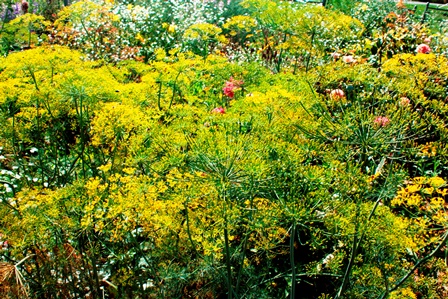
(Dill and heirloom poppies from Monticello in our garden)
This workshop spans centuries of herbs and their lore from the ancients, through the British Isles, Colonial America, Native Americans, the Granny Women and the Mountain People of the Blue Ridge and Alleghenies (general Appalachia).

Mountains are all around us here in the Shenandoah Valley. This area is rich in history and plants, and people who went to great lengths to thwart witches. Seriously.

There's so much fascinating stuff to cover. Too much, so I encourage participants to download and save the files for later. I also welcome discussion and questions. It's more enjoyable with participation.

My aim is for this class to be fun, informative and useful. I often incorporate herbs into my writing and into my life. Some of the more archaic uses are frowned upon today, and/or illegal. I recommend avoiding those practices.
Class members will receive the eBook of my herbal, Plants for A Medieval Herb Garden in the British Isles (also available in print if anyone's interested).
This is my class outline, but I guarantee I will post even more than this. I have a wealth of information to share, and am accumulating more.


Week One:
Introduction to the workshop and meet & greet.


The wisdom of Native Americans. A focus on Native American herbs.
The Granny Women. A focus on the mountain people and old time cures, both herbal and some white magic.


Week Two:
Colonial American herbs (Part One)


Colonial American herbs (Part Two)


Week Three:
Plants for a Medieval Herb Garden in the British Isles


Other related posts on herbs in the British Isles, including the Druids.


Week Four:

‘What can kill can cure’ but definitely kill and watch out for werewolves (Poisonous herbs and those believed to have power against werewolves and vampires)


For protection from spells and enchantment, the sacred, healing herbs
Knock yourself out and Ward off the Plague: Dwale, an Old-English Antiseptic


The Vinegar of the Four Thieves
An opportunity for final sharing from participants. 


“As Rosemary is to the Spirit, so Lavender is to the Soul.”
– Anonymous


Here's the registration link again: http://charteroakromancewriters.com/on-line-classes-2018

Thursday, December 28, 2017

The Herb of Remembrance

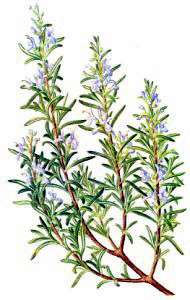
Rosemary is one of my favorite herbs, mostly just because. I rarely cook with it, but I love its scent and the wealth of history behind it. The fragrance is said to stimulate memory so I sniff it frequently and carry  sprigs with me. I have a potted plant growing in my sun space that I've kept going for several years. It stays outdoors in summer (pictured), but our Shenandoah Valley winters are too cold for it to survive. I added a trailing variety this year that is abloom with tiny blue flowers out in my sunspace. Very cheery.

Rosemary, known as the herb of remembrance from the time of ancient Greece, appears in that immoral verse by Shakespeare. My fascination with herbs plays a role in many of my stories, particularly my ghostly murder mystery romance novel Somewhere My Love, as does Hamlet, for that matter. I always wanted to write a murder mystery with a focus on herbs and parallels to a Shakespearean play, and so I did. My new paranormal time travel romance, Somewhere My Lady, with flavors of Somewhere My Love, was released this summer. Somewhere My Lady is book one in my Somewhere in Time series.
A Modern Herbal by Maud Grieve is a wonderful source of herbal lore as well as practical information on the medicinal uses and growing requirements for a host of plants. I have volumes one and two of Ms. Grieve’s work and can easily lose myself in their pages. She refers to her herbal as modern, and in comparison to the ancient herbalists it is, but A Modern Herbal is charmingly quaint and published in the early 20th century.
Regarding Rosemary, she says,
The Ancients were well acquainted with the shrub, which had a reputation for strengthening the memory. On this account it became the emblem of fidelity for lovers. It holds a special position among herbs from the symbolism attached to it. Not only was it used at weddings, but also at funerals, for decking churches and banqueting halls at festivals, as incense in religious ceremonies, and in magical spells.
At weddings, it was entwined in the wreath worn by the bride, being first dipped into scented water. Anne of Cleves (fourth wife of Henry the Eighth and one of two who outlived him) wore such a wreath at her wedding. A Rosemary branch, richly gilded and tied with silken ribands of all colours, was also presented to wedding guests, as a symbol of love and loyalty. Together with an orange stuck with cloves it was given as a New Year‘s gift…
In early times, Rosemary was freely cultivated in kitchen gardens and came to represent the dominant influence of the house mistress ‘Where Rosemary flourished, the woman ruled.’
The Treasury of Botany says:
‘There is a vulgar belief in Gloucestershire and other counties, that Rosemary will not grow well unless where the mistress is “master”; and so touchy are some of the lords of creation upon this point, that we have more than once had reason to suspect them of privately injuring a growing rosemary in order to destroy this evidence of their want of authority.’ (Meanie heads.)
Rosemary was one of the cordial herbs used to flavour ale and wine. It was also used in Christmas decoration.
“Down with the rosemary and so,
Down with the baies and mistletoe,
Down with the holly, ivie all
Wherewith ye deck the Christmas Hall.”—HERRICK.
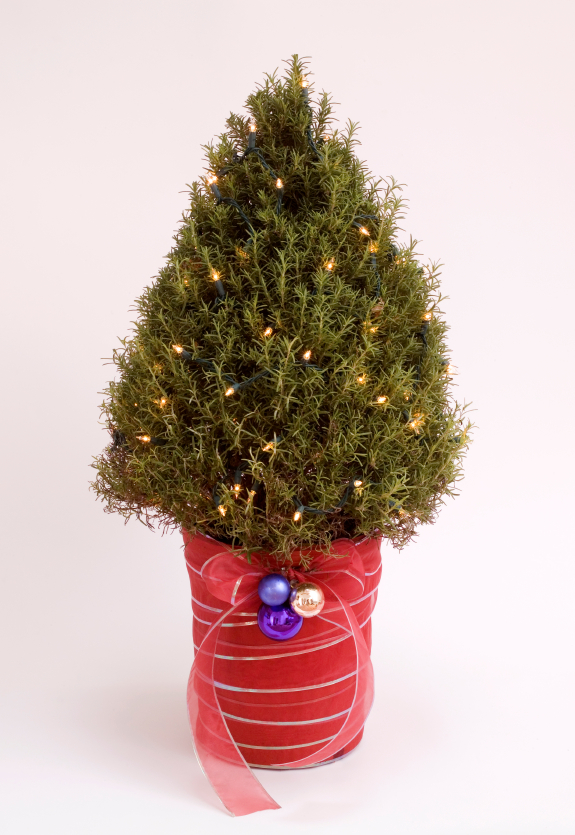
Rosemary Christmas TreeRosemary Christmas Trees
Although an herb, rosemary is often shaped into lovely miniature Christmas trees. The plant is well suited for this purpose as its essential oils produce a scent similar to pine trees and it has a natural evergreen shape and needle-like leaves.
If you purchase a rosemary plant whether as a Christmas tree or for your indoor herb garden, remember it needs good light and moderate watering. Allow the soil to dry before re-watering to avoid root rot. The most common cause of death for potted rosemary is over watering. In spring transfer your rosemary to a clay pot. The clay will help wick excess water out of the soil. Fertilize monthly to maintain health. To this advice I add that you can also kill them by allowing the plant to dry out, so don’t do that either.
Because rosemary is native to the hot, dry hills of the Mediterranean, growing it indoors can be a problem. You may find you get more dense vigorous growth if it is kept outside during most of the year. Trim the plant periodically to preserve the Christmas tree shape. 


Blurb:

Is he real or is he a ghost?


Lorna Randolph is hired for the summer at Harrison Hall in Virginia, where Revolutionary-War reenactors provide guided tours of the elegant old home. She doesn't expect to receive a note and a kiss from a handsome young man who then vanishes into mist.

Harrison Hall itself has plans for Lorna - and for Hart Harrison, her momentary suitor and its 18th century heir. Past and present are bound by pledges of love, and modern science melds with old skills and history as Harrison Hall takes Lorna and Hart through time in a race to solve a mystery and save Hart's life before the Midsummer Ball.
 

"Somewhere My Lady is a fun supernatural romance that will have you slipping in and out of the past and future as if you were a spirit yourself.'' ~Colleen Chesbro at Colleen's Book Reviews

"Quite simply, one of the best paranormal, time slip stories I've ever had the pleasure to read." ~Elaine at Splashes Into Books

Monday, May 1, 2017

'The Darling Buds of May'

2Flowering Crab
As a child growing up during the 19th century, or so it sometimes seems, I remember placing baskets of flowers as a surprise on friend’s doorstep early on a lovely May Day morn. Also, dancing around the May Poll festivities in which, not I, but my younger brother and sister both participated. The little girls with garlands in their hair, decked out in pretty spring dresses. Mom made my sister’s. One year the wind toppled the May Poll and then there’s the time the children got all wound up in the ribbons and over it went.  Humiliating for my young brother who’d practiced so hard and tried to no avail to instruct his fellow dancers to wind them properly. I never did trust that May Poll thing to go as planned and hoped to be crowned May Queen, surrounded by a glad assembly of courtiers. No such luck. But May Day was special and has strong flowery associations in my memory. And wind. It never entered anyone’s mind that this revelry had possible pagan connotations. May Day festivities were simply a spring rite and good fun. (*Flowering crab apple tree in our yard)
How about the rest of you? Any May Queens among us?


“May 1st, often called May Day, just might have more holidays than any other day of the year. It’s a celebration of Spring. It’s a day of political protests. It’s a neopagan festival, a saint’s feast day, and a day for organized labor. In many countries, it is a national holiday. (Royalty free image of birch tree)
Beltane
A Celtic calendar feast ushering in the start of summer. (It also went by a variety of other spellings and names in assorted dialects of Gaelic.)
Bonfires, often created by rubbing sticks together, were common features of Beltane celebrations. Related rituals included driving cattle between two fires, dancing around the fires, and burning witches in effigy. Another tradition was Beltane cakes, which would be broken into several pieces, one of which was blackened. They would be drawn by celebrants at random; the person getting the unlucky blackened piece would face a mock execution.
In recent years, Beltaine has been adopted or revived by neopagan groups as a major seasonal festival.
Bringing in the May: *This is more what I remember.  :)
In medieval England, people celebrated the start of spring by going out to the country or woods “going a-maying” and gathering greenery and flowers, or “bringing in the may.” This was described in “The Court of Love” (often attributed to Chaucer, but not actually written by him) in 1561. Totally irrelevant, but I am a direct descendant of Chaucer on my father’s side.

(Iris and poppies image by my mom)
“And furth goth all the Court, both most and lest,
To feche the floures fressh, and braunche and blome;
And namly, hawthorn brought both page and grome.
With fressh garlandes, partie blewe and whyte,
And thaim rejoysen in their greet delyt.”
Another English tradition is the maypole. Some towns had permanent maypoles that would stay up all year; others put up a new one each May. In any event, the pole would be hung with greenery and ribbons, brightly painted, and otherwise decorated, and served as a central point for the festivities.
May Day was also a time for morris dancing and other dances, often around the maypole. In the 19th century, people began to braid the maypole with ribbons by weaving in and out in the course of a dance. Other later traditions include making garlands for children and the crowning of the May Queen.”
From an interesting site: Herbal Musings
“Beltain, Bealtaine, Beltine, May Day, Cetsamhain (‘first Samhain‘), Walpurgis Night (Beltane Eve), Celtic ‘Flower Festival’
Druidic Name: Beltane
archangel-michael, old stained glass windowChristian Equivalent
Roodmas, Rood Day, Feast of Saint Philip and Saint James, Feast of Saint Walpurga
Beltane is the cross-quarter festival that marks the start of the summer quarter of the year and the end of the spring quarter. This is a time when nature blossoms and felicity and fertility return to the land. In times past, the livestock stockaded at Samhain was returned to summer pastures at Beltane.
…a joyful festival of growth and fecundity that heralds the arrival of summer. It is the festival of the ‘Good Fire’ or ‘Bel-fire’, named after the solar deity Bel. Bel was also known as Beli or Bile in Ireland, with Bile meaning ‘tree’, so Beltane may also mean ‘Tree-fire’. Beltane is the counterpart of Samhain (and is sometimes referred to as Cetsamhain, the ‘first Samhain’), and these two important festivals divide the year into summer and winter halves, just as the two equinoctial celebrations, Ostara and Mabon, divide the year into light and dark halves.
Lighting fires was customary at Beltane, and traditionally a Beltane fire was composed of the nine sacred woods of the Celts. All hearth fires were extinguished on Beltane Eve and then kindled again from the sacred “need fires” lit on Beltane. People would leap through the smoke and flames of Beltane fires and cattle were driven through them for purification, fertility, prosperity and protection.
AngelicaIt is a traditional time for Handfastings (marriages), and for couples to make love outside to bless the crops and the earth. Maypoles were often danced around at Beltane to bring fertility and good fortune. Beltane lore also includes washing in May-day dew for beauty and health, and scrying (peeping) in sacred waters, such as ponds or springs.
The festival is sometimes referred to as Roodmas, a name coined by the medieval Christian Church in an attempt to associate Beltane with the Cross (the Rood) rather than the life-giving symbol of the Maypole. Beltane was also appropriated by the Church as the Feast Day of Saint Walpurga, who was said to protect crops and was often represented with corn.”
(*Royalty free images of the Archangel Michael and the sacred herb Angelica)

Tuesday, February 28, 2017

Herbs and Flowers For A Fairy Garden

Who doesn’t want to attract fairies to their garden? Of all the herbs associated with the little folk, the most important one is thyme, which I love. I’m forever planting more varieties of thyme. In Shakespeare’s A Midsummer Night’s Dream, Titania, the fairy queen, sleeps in a bed of wild thyme growing on a bank. Sure. Why not?

(Thyme in our garden)

Foxglove is also essential for a fairy garden. According to legend, fairies sleep in the bell-shaped flowers, and wear them as gloves. Which use they choose, probably depends upon the size of the fairy. Other common names for foxglove include fairy fingers, fairy thimbles, and fairy cap. However, I'm extremely challenged in growing foxglove in my farm garden(s). The plants soon figure out they're not in their native dappled woodlands. 


(Foxglove)

Another favorite herb is saffron, also known as the saffron crocus, which bloom in the fall. Fairies are said to be especially fond of this culinary herb/spice used for flavoring cakes and dyeing cloth. Other recommended plants are fragrant rosemary and roses. Roses are much loved by fairies for their beauty and divine scent, and by me. And I am never without rosemary. I bring these herbs indoors in pots in late fall. They’re not exuberant about life in my sunspace but generally survive to glory again in summer. Wood anemones are beautiful plants preferred by fairies because the flowers close at the onset of bad weather and at night and offer the tiny beings a safe spot to rest or wait out the bad weather. I have some anemones, also called windflowers. These beauties grace the spring garden.

(Rosemary, Geraniums, and Lavender in my garden)

Not to neglect bluebells, also beloved by fairies. These beautiful blue flowers that carpet woodlands in spring are also known as harebell, Scottish bellflower, and fairies thimble. It was, and maybe still is, widely believed that fairies live among the flowers. Another name for bluebells is Dead Man's bells because fairies were thought to cast spells on those foolish enough to pick or damage the delicate blossoms.

When meandering through drifts of bluebells, it’s wise to stick to the path, or you may stir up the wrath of fairies and release the spells trapped in the blooms. Never a good idea, and one that would be echoed by our resident fairy expert, my 12-year-old niece, Cailin, who warns never step into a circle of flowers or go anywhere without the fairies' permission, or they will get very upset. And you do not want an upset fairy, or fairies, on your hands. Particularly the furious wind fairies, but that’s another story.

(Virginia bluebells and narcissus in my garden) 

A dear author friend of mine who is quite knowledgeable about fairies says they love many kinds of herbs and flowers. She has spotted some tiny ones in photographs of my garden. I’ve read they are drawn to the same plants that attract butterflies and hummingbirds. Keep watch, you never know where they may be.

Tuesday, February 14, 2017

Herbs and Romance for Valentine's Day

"There's a few things I've learned in life: always throw salt over your left shoulder, keep rosemary by your garden gate, plant lavender for good luck, and fall in love whenever you can." ~Alice Hoffman, Practical Magic


"My gardens sweet, enclosed with walles strong, embarked with benches to sytt and take my rest. The Knotts so enknotted, it cannot be exprest. With arbours and alys so pleasant and so dulce, the pestylant ayers with flavours to repulse." ~Thomas Cavendish, 1532.

 "Good morrow, good Yarrow, good morrow to thee. Send me this night my true love to see, The clothes that he'll wear, the colour of his hair. And if he'll wed me." ~Danaher, 1756

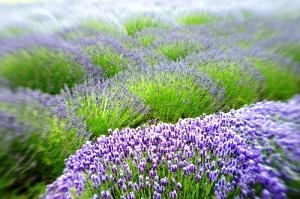
lavenderfield-300x199

"There’s rosemary and rue. These keep Seeming and savor all the winter long. Grace and remembrance be to you."- William Shakespeare

Thyme Creeping Red
I know a bank where the wild thyme blows, Where oxlips and the nodding violet grows,
Quite over-canopied with luscious woodbine, With sweet musk-roses and with eglantine:
There sleeps Titania sometime of the night,  Lull'd in these flowers with dances and delight.
A Midsummer Night's Dream
dill with white aster and other herbs and flowers in our garden(Dill in our garden by Daughter Elise)
 When daisies pied and violets blue And lady-smocks all silver-white  And cuckoo-buds of yellow hue. Do paint the meadows with delight.
Love's Labours Lost

lavender 3
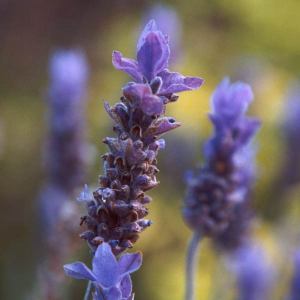
"And lavender, whose spikes of azure bloom shall be, ere-while, in arid bundles bound to lurk admist the labours of her loom, and crown her kerchiefs witl mickle rare perfume."
~William Shenstone The School Mistress 1742

herb garden
"Those herbs which perfume the air most delightfully,  not passed by as the rest, but, being trodden upon and crushed, are three;  that is, burnet, wild thyme and watermints. Therefore, you are to set whole alleys of them, to have the pleasure when you walk or tread." -  Frances Bacon 
"How could such sweet and wholesome hours Be reckoned but with herbs and flowers?" -  Andrew Marvel