Showing posts with label roses. Show all posts

Tuesday, February 28, 2017

Herbs and Flowers For A Fairy Garden

Who doesn’t want to attract fairies to their garden? Of all the herbs associated with the little folk, the most important one is thyme, which I love. I’m forever planting more varieties of thyme. In Shakespeare’s A Midsummer Night’s Dream, Titania, the fairy queen, sleeps in a bed of wild thyme growing on a bank. Sure. Why not?

(Thyme in our garden)

Foxglove is also essential for a fairy garden. According to legend, fairies sleep in the bell-shaped flowers, and wear them as gloves. Which use they choose, probably depends upon the size of the fairy. Other common names for foxglove include fairy fingers, fairy thimbles, and fairy cap. However, I'm extremely challenged in growing foxglove in my farm garden(s). The plants soon figure out they're not in their native dappled woodlands. 


(Foxglove)

Another favorite herb is saffron, also known as the saffron crocus, which bloom in the fall. Fairies are said to be especially fond of this culinary herb/spice used for flavoring cakes and dyeing cloth. Other recommended plants are fragrant rosemary and roses. Roses are much loved by fairies for their beauty and divine scent, and by me. And I am never without rosemary. I bring these herbs indoors in pots in late fall. They’re not exuberant about life in my sunspace but generally survive to glory again in summer. Wood anemones are beautiful plants preferred by fairies because the flowers close at the onset of bad weather and at night and offer the tiny beings a safe spot to rest or wait out the bad weather. I have some anemones, also called windflowers. These beauties grace the spring garden.

(Rosemary, Geraniums, and Lavender in my garden)

Not to neglect bluebells, also beloved by fairies. These beautiful blue flowers that carpet woodlands in spring are also known as harebell, Scottish bellflower, and fairies thimble. It was, and maybe still is, widely believed that fairies live among the flowers. Another name for bluebells is Dead Man's bells because fairies were thought to cast spells on those foolish enough to pick or damage the delicate blossoms.

When meandering through drifts of bluebells, it’s wise to stick to the path, or you may stir up the wrath of fairies and release the spells trapped in the blooms. Never a good idea, and one that would be echoed by our resident fairy expert, my 12-year-old niece, Cailin, who warns never step into a circle of flowers or go anywhere without the fairies' permission, or they will get very upset. And you do not want an upset fairy, or fairies, on your hands. Particularly the furious wind fairies, but that’s another story.

(Virginia bluebells and narcissus in my garden) 

A dear author friend of mine who is quite knowledgeable about fairies says they love many kinds of herbs and flowers. She has spotted some tiny ones in photographs of my garden. I’ve read they are drawn to the same plants that attract butterflies and hummingbirds. Keep watch, you never know where they may be.

Sunday, January 15, 2017

Old English Roses

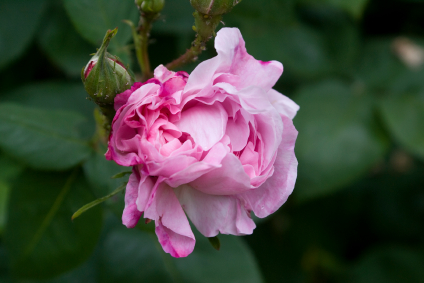
rosebud
(Old fashioned rosebud)
The English Tudor Rose is the heraldic floral emblem of England. The red rose was the badge of the House of Lancaster during the English War of the Roses. The badge for the House of York was the white rose. When Henry V11 took the crown of England from Richard 111 in battle, 1485, he ended that particular war. He introduced the Tudor rose, combining a red rose, representing the House of Lancaster, and a white rose, representing the House of York, as a symbol of unity after the English civil wars of the 15th century which later came to be called the Wars of the Roses.
The exact species of the Lancaster’s Red Rose is uncertain, but it’s thought to be Rosa gallica officinalis, also known as the Apothecary’s Rose, possibly the first cultivated rose. We used to have this ancient variety, but it finally succumbed to a hard winter and needs to be replaced.
Galica Rose
Rosa gallica officinalis
“My wild Irish Rose,
The sweetest flow'r that grows.” ~Chauncey Olcott
I have an old-time rosebud salve that I love made by the American based Rosebud Perfume Company, founded in 1895 by George F. Smith. They still carry the original salve but have expanded their product line; all are gluten-free, a plus for those of us who are severely intolerant.
Roses have an ancient history. The first cultivated rose likely originated in Persia and spread out from there. The part used is the flower, although the hips are also employed in tea, jam, jellies, syrups... The hips are high in vitamin C and antioxidants. Some varieties of roses produce better hips for this use than others. Rosa canina, commonly known as the dog rose, is one that does.
Back to the flowers. The most favored rose for medicinal use is the above mentioned dark red rose, R. gallica, also known as the Provins Rose and the Apothecary’s Rose. Only flower-buds just about to open are collected, and the lighter colored lower portion is cut off from the deep red upper part. For making a confection, they are used in the fresh state. For an infusion, the flowers are thoroughly dried first and stored out of humidity.
Abraham Darby Rose by David Austen
(Abraham Darby Rose from our garden)
The old pink cabbage rose is used for making rose water by distilling the fresh petals. A soothing ointment of rose water (cold cream) is also made by blending melted wax and almond oil with rose-water and rose oil.
Culpepper gives many uses for red, white, and damask rose cordials and conserves in the treatment of internal maladies including fever, jaundice, joint aches, weakness of the heart and stomach, fainting, an aid to digestion and fighting infection, comforting the heart and strengthening the spirit. Rose ointment is recommended for most any skin condition.
In his 18th century Family Herbal, John Hill gives a recipe for Honey of Roses that sounds delightful. He specifies using red roses. And I doubt he means modern cultivars, but old.
Honey of Roses Recipe: “Cut the white heels from some red rose buds, and lay them to dry in a place where there is a draught of air; when they are dried, put half a pound of them into a stone jar, and pour on them three pints of boiling water; stir them well, and let them stand twelve hours; then press off the liquor (liquid) and when it has settled, add to it five pounds of honey; boil it well, and when it is of the consistence of thick syrup, put it by for use. It is good against mouth sores, and on many other occasions.” (Which means it has many other uses.)
Nonfiction Herbal
Nonfiction Herbal
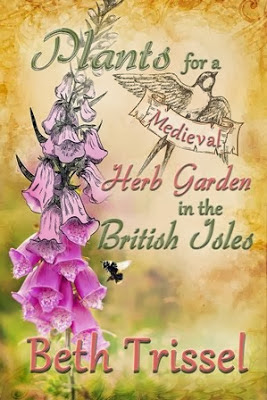
Plants for a Medieval Herb Garden in the British Isles available in kindle and print at Amazon.
An illustrated collection of plants that could have been grown in a Medieval Herb or Physic Garden in the British Isles. The major focus of this work is England and Scotland, but also touches on Ireland and Wales. Information is given as to the historic medicinal uses of these plants and the rich lore surrounding them.
Journey back to the days when herbs figured into every facet of life, offering relief from the ills of this realm and protection from evil in all its guises.~
“It was June, and the world smelled of roses. The sunshine was like powdered gold over the grassy hillside.” ― Maud Hart Lovelace, Betsy-Tacy and Tib
186025443

Thursday, August 9, 2012

Herbal Recipes for Making Old Fashioned Toilet Water

I like to feel connected to those who have gone before me. Herbs have changed very little, if at all, over the centuries. When I hold an aromatic sprig of rosemary in my hand, I am touching the same plant beloved by the ancients. Some heirloom roses go back to the glory days of Rome.

To further that sense of oneness, and for their many uses, I grow a variety of herbs. Thyme, basil, sage, and chives are a few in my kitchen garden. Lavender and scented geraniums are wonderful for their scent alone. Ladies used to waft the delicate perfume of toilet water. 

Below, I have given some recipes that were once popular. These come from a little book entitled Potpourri, by Ann Tucker Fettner.

Basic Toilet Water: To three pints of pure alcohol add one and one-quarter ounces of lavender oil, three-quarters ounce of oil of bergamont, three-quarters ounce of tincture of ambergris. Mix together and bottle.
Rose Water: Boil two quarts of distilled water and remove from the stove. Add one-eighth ounce of rose oil, four drops of clove oil, and one pint of alcohol. Let this stand for several days before bottling.
Geranium Water: To two pints of pure alcohol add four ounces of rose water, five drops tincture of musk, one ounce tincture of orris root and one ounce of geranium oil. Allow to age.