Saturday, November 23, 2013

Some People Could Greatly Benefit from the Visit of Three Spirits


220px-A christmas carolAs the holiday season fast approaches, my mind turns to the invaluable lessons of that time-old classic, A Christmas Carol. Are there people in your life who would bless you and others with the best Christmas gift ever if they turned around, stopped being mean-spirited and thought of others? I find myself praying a transforming event such as occurred to Scrooge might happen for these souls. What a better place our world would be.
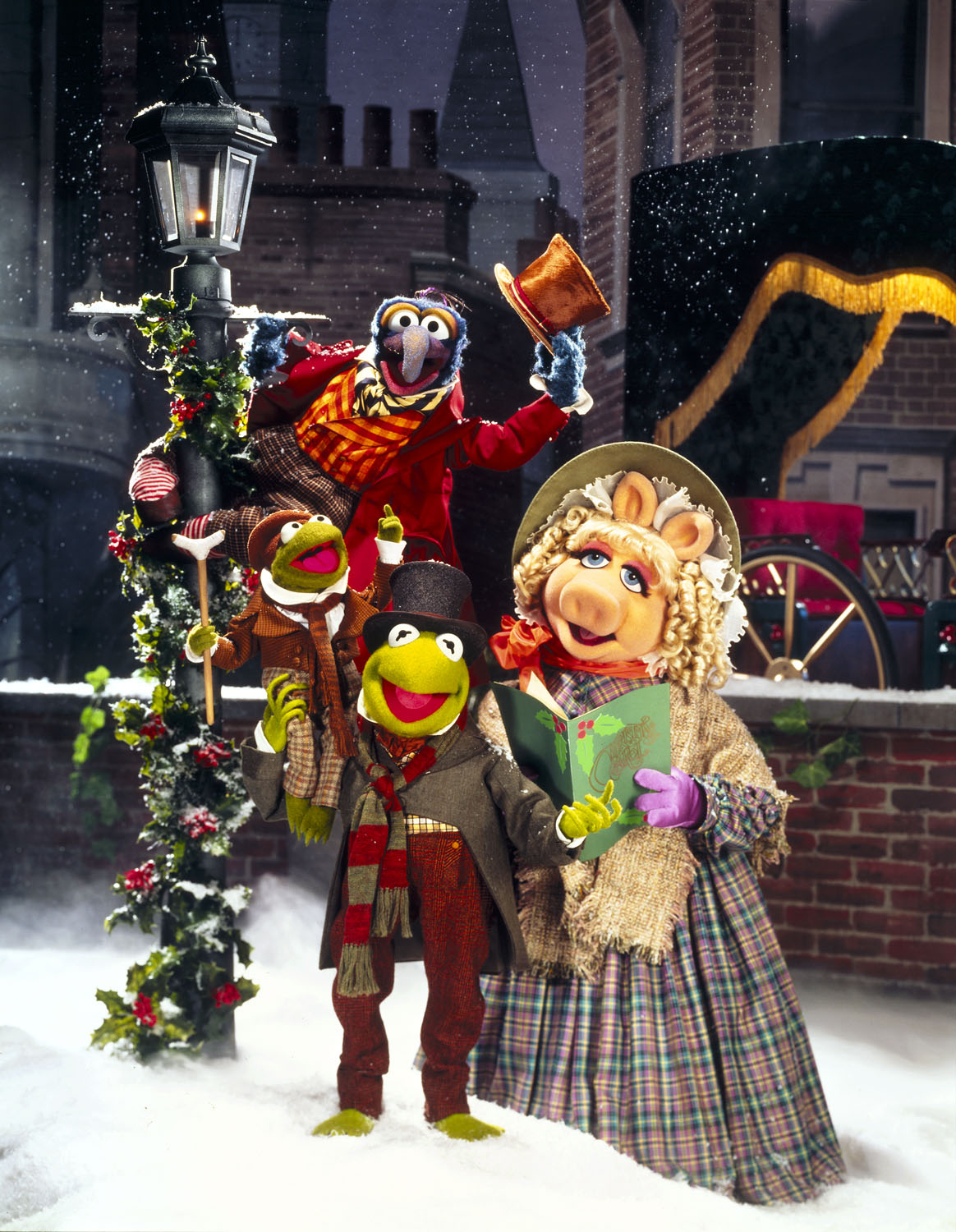
I recently revisited this thought while watching The Muppet Christmas Carol with my darling three-year old grandbaby, Chloe. We sang our way through it. At least, I did. She loves music, though not necessarily my rendition. Everyone’s a critic. It’s never too early to sing your way through that movie. Kermit the Frog is Bob Cratchit and the adored Miss Piggy is his wife. Don’t worry, it all works out in the end. Scrooge is miraculously altered just in time for Christmas. The spirits did it all in one night. If only they got around more.
The Muppet Christms CarolYears ago, when Chloe’s mom, my oldest daughter Alison, was in high school, her English teacher (naïvely) told the class they could call him anytime, should questions arise as to the assignment. This is a small private school, so the camaraderie between teachers and students is greater than in many educational institutions at that level. Conniving Alison and several like-minded friends waited until a few days before Christmas and called this well-meaning teacher at midnight. How he kept his wits about him, awakened at that hour, I have no idea, but he had the presence of mind to ask, “Are you the spirits whose coming was foretold to me?”
Brilliant retort. And he retracted that bit about calling him anytime.
Sally forth good spirits and work your wonders. And God bless us everyone.

Tuesday, November 19, 2013

Mistletoe–So Much More Than A Christmas Plant


Christmas Mistletoe IsolatedMistletoe is steeped in lore from pre-Christian times, so much so that it might be easier to cover powers not attributed to this revered plant than those that are. Viscum album, the genus that grows in Great Britain and much of Europe, is recognized by its smooth-edged oval evergreen leaves borne in pairs along the woody stem, and waxy white berries, thought to be poisonous, in dense clusters of 2 to 6. Mistletoe is rare in Scotland, but references to it arise in Scottish herbals, so perhaps it was brought in from other regions of Britain. A similar species of mistletoe grows in North America with shorter, broader leaves and longer clusters of 10 or more berries. An evergreen parasitic plant, mistletoe grows on the branches of trees and derives all its nourishment from its host. The sticky berries, transferred by birds, attach themselves to the bark and send out roots. Because the plant prefers softer bark, it’s found more commonly on apple trees and is rarer on oaks which made mistletoe discovered on oaks greatly venerated by ancient Celts, Germans, and it was used in ceremonies by early Europeans. Greeks and other early peoples thought it had mystical powers and the plant gained a wealth of folklore over the centuries. Sacred to the Druids, many wondrous attributes are accorded to mistletoe, including medicinal powers, properties to boost fertility, and ward off evil spells.
Druidism, God, Tree, Praying,
From A Modern Herbal: Mistletoe was held in great reverence by the Druids. They went forth clad in white robes to search for the sacred plant, and when it was discovered, one of the Druids ascended the tree and gathered it with great ceremony, separating it from the Oak with a golden knife. The Mistletoe was always cut at a particular age of the moon, at the beginning of the year, and it was only sought for when the Druids declared they had visions directing them to seek it. When a great length of time elapsed without this happening, or if the Mistletoe chanced to fall to the ground, it was considered as an omen that some misfortune would befall the nation. The Druids held that the Mistletoe protected its possessor from all evil, and that the oaks on which it was seen growing were to be respected because of the wonderful cures which the priests were able to effect with it. They sent round their attendant youth with branches of the Mistletoe to announce the entrance of the new year. It is probable that the custom of including it in the decoration of our homes at Christmas, giving it a special place of honour, is a survival of this old custom.
British Oak
The curious basket of garland with which ‘Jack-in-the-Green‘ is even now occasionally invested on May-day is said to be a relic of a similar garb assumed by the Druids for the ceremony of the Mistletoe. When they had found it they danced round the oak to the tune of ‘Hey derry down, down, down derry!’ which literally signified, ‘In a circle move we round the oak. ‘ Some oakwoods in Herefordshire are still called ‘the derry‘; and the following line from Ovid refers to the Druids’ songs beneath the oak:
‘Ad viscum Druidce cantare solebant’
Shakespeare calls it ‘the baleful Mistletoe,’ an allusion to the Scandinavian legend that Balder, the god of Peace, was slain with an arrow made of Mistletoe. He was restored to life at the request of the other gods and goddesses, and Mistletoe was afterwards given into the keeping of the goddess of Love, and it was ordained that everyone who passed under it should receive a kiss, to show that the branch had become an emblem of love, and not of hate.”
Parts Used Medicinally: The leaves and young twigs, collected just before the berries form, and dried in the same manner as described for Holly.
The preparations ordinarily used are a fluid extract and the powdered leaves. A homoeopathic tincture is prepared with spirit from equal quantities of the leaves and ripe berries, but is difficult of manufacture, owing to the viscidity of the sap.”
“Medicinal Action and Uses: Nervine, antispasmodic, tonic and narcotic. Has a great reputation for curing the ‘falling sickness’ epilepsy – and other convulsive nervous disorders. It has also been employed in checking internal haemorrhage.
***Bear in mind that although mistletoe has some possible medicinal qualities and has been used for centuries for various maladies, it is potentially toxic so do not administer it to yourself.
“Mistletoe was thought to be a remarkable and sacred shrub because it seemed to grow from the air and not from the earth. Mistletoe has been considered undesirable because it feeds off other trees; however it is also thought to have a symbiotic relationship because it provides nutrients when the host is in dormancy. It also provides food for a host of animals and birds who consume its leaves and shoots
Over time its folklore has grown to include the belief that the oak mistletoe could extinguish fire, that it held the soul of the host tree and placed in a baby’s cradle would protect the child from faeries.
Mistletoe KissKissing under the mistletoe is also cited in an early work byWashington Irving, “Christmas Eve,” which tells of the festivities surrounding the Twelve Days of Christmas:
“Here were kept up the old games of hoodman blind, shoe the wild mare, hot cockles, steal the white loaf, bob apple, and snap dragon; the Yule-clog and Christmas candle were regularly burnt, and the mistletoe with its white berries hung up, to the imminent peril of all the pretty housemaids.”
Used as good luck charms to ward off evil, its sprigs were also put under the pillows of young girls who thought it would entice dreams of the husband to be.”
“Mistletoe is also said to be a sexual symbol, because of the consistency and color of the berry juice as well as the belief that it is an aphrodisiac, the “soul” of the oak from which it grows. The origin of the tradition of kissing under the mistletoe is vague. However, the tradition may have stemmed from either the Viking association of the plant with Frigga (the goddess of love) or from the ancient belief that mistletoe was related to fertility. Another explanation for the tradition is that it is derived from the festival of Saturnalia, a popular mid-December celebration in ancient Rome.
Christmas Mistletoe IsolatedThe correct mistletoe etiquette is for the man to remove one berry when he kisses a woman. When all the berries are gone, there’s no more kissing permitted underneath that plant.
One legend states that a couple who kisses underneath mistletoe will have good luck, but a couple neglecting to perform the ritual will have bad luck. Specifically, it is believed that a couple kissing under the mistletoe ensure themselves of marriage and a long, happy life, while an unmarried woman not kissed under the mistletoe will remain single for another year.”
***Mistletoe and werewolves: In some ancient lore, mistletoe is considered a repellent and protection from werewolves.
***Royalty free images of mistletoe, Druid, British Oak, couple kissing beneath mistletoe

Friday, November 15, 2013

“Of Cabbages and Kings.” The Wisdom of Lewis Carroll


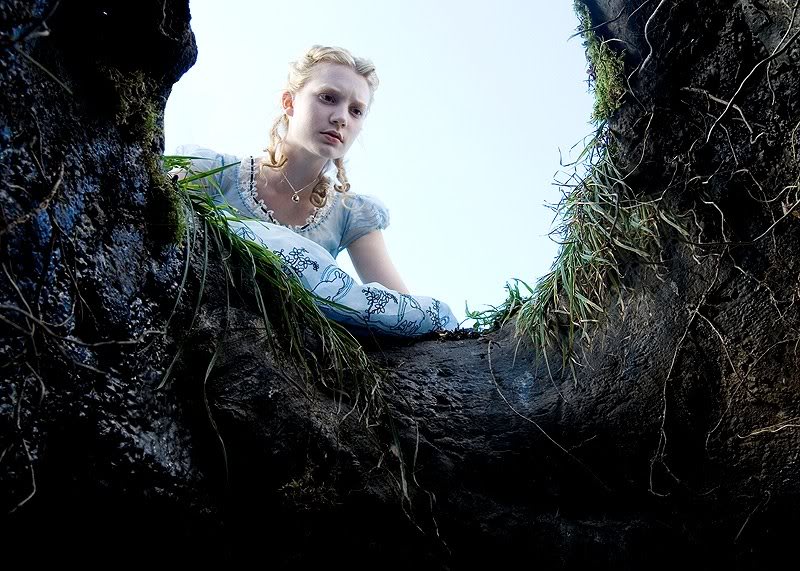
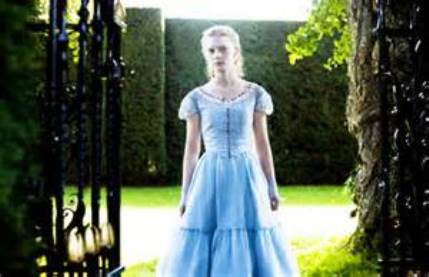
Down the Rabbit HoleDo you feel like you’ve tumbled down the rabbit hole? I do most every time I check the news, which I avoid as much as possible.Lewis Carrol speaks to this present day craziness.
“I don’t think…” then you shouldn’t talk, said the Hatter.”  (Or govern, Beth adds)
“Why, sometimes I’ve believed as many as six impossible things before breakfast.” ~Lewis Carroll, Alice in Wonderland
Me too.
Alice: “How long is forever?”
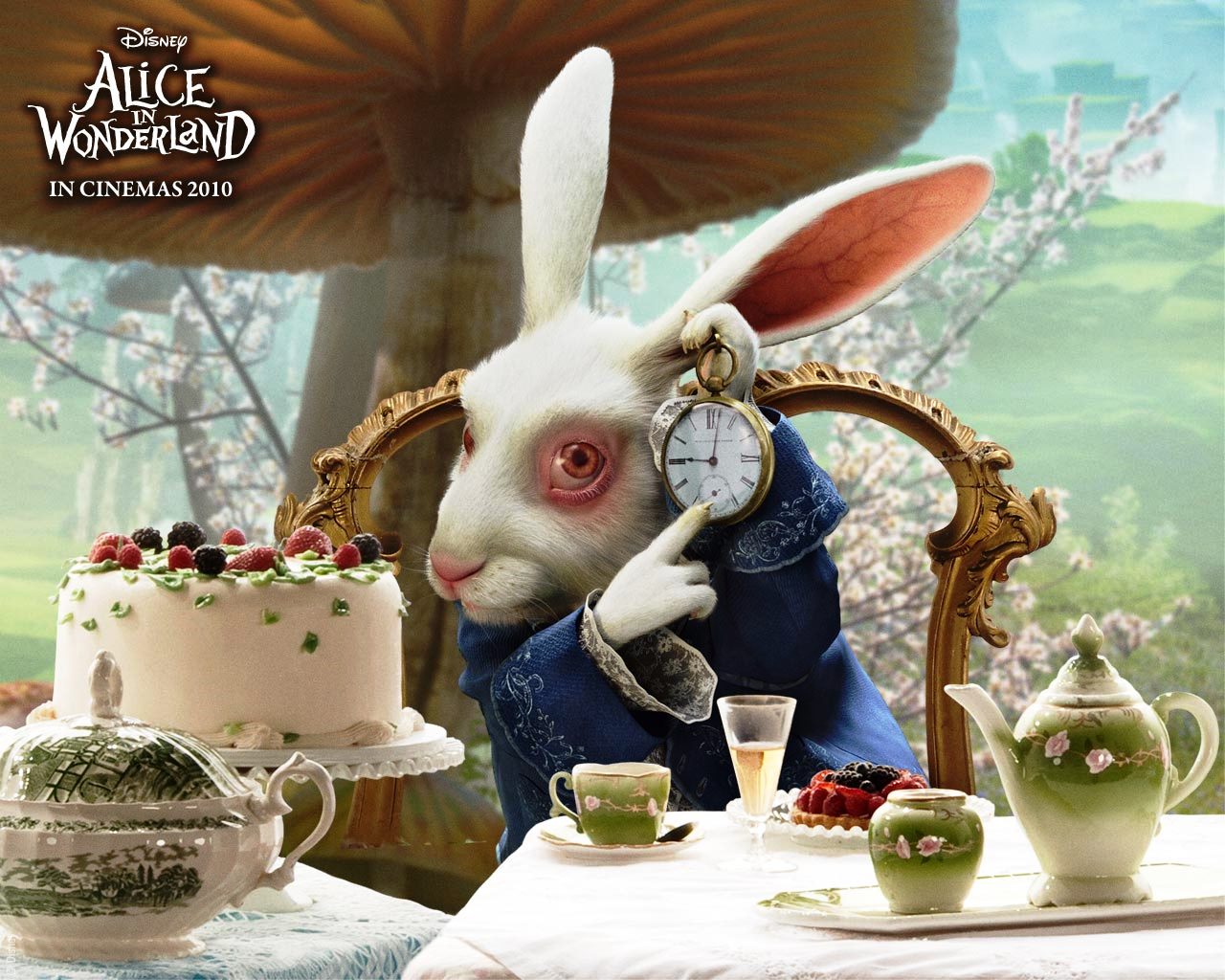
White Rabbit: “Sometimes, just one second.”

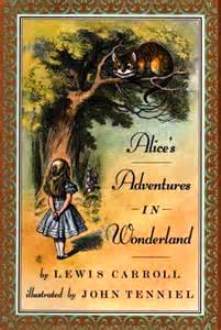
Alice in wonderland book cover“Curiouser and curiouser.”  (Indeed)
“The hurrider I go, the behinder I get.” (Always)
“If you drink much from a bottle marked ‘poison’ it is certain to disagree with you sooner or later.”
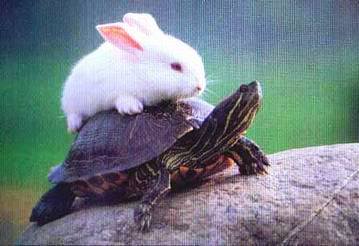
Undoubtedly. And remember to follow the white rabbit. I have a particular fondness for rabbits, and if you follow one as it scampers about, it’s bound to lead to an adventure. (Unless, it’s riding on the back of a turtle.) 
Speaking of which, “No, no! The adventures first, explanations take such a dreadful time.” Alice in Wonderland 
(oh yes. Skip the boring stuff)
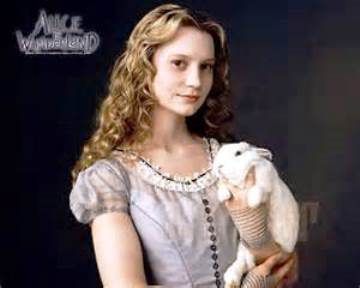
alice“If I had a world of my own, everything would be nonsense. Nothing would be what it is, because everything would be what it isn’t. And contrary wise, what is, it wouldn’t be. And what it wouldn’t be, it would. You see?” ***I totally get that quote. We’re living in it now.
“Begin at the beginning,” the King said, very gravely, “and go on till you come to the end: then stop.” ― Lewis Carroll  
(Fitting quote for Beth in her writing cave
‘But I don’t want to go among mad people,’ Alice remarked. ‘Oh, you can’t help that,’ said the Cat: ‘We’re all mad here.’
Alice-in-Wonderland-1-

“Have I gone mad?

I’m afraid so, but let me tell you something, the best people usually are.” ―Lewis Carroll, Alice in Wonderland
rabbit_turtle

“Would you tell me, please, which way I ought to go from here?”
“That depends a good deal on where you want to get to.”

“I don’t much care where –”

“Then it doesn’t matter which way you go.” (Amen to that)

“I know who I WAS when I got up this morning, but I think I must have been changed several times since then.”  (It happens)

“Have you guessed the riddle yet?” the Hatter said, turning to Alice again.
“No, I give it up,” Alice replied: “What’s the answer?”
“I haven’t the slightest idea,” said the Hatter.” (I’m puzzling over this one)
― Lewis Carroll, Alice in Wonderland

“The time has come,” the walrus said, “to talk of many things: Of shoes and ships – and sealing wax – of cabbages and kings.”  (Such wise words)

“I’m not strange, weird, off, nor crazy, my reality is just different from yours.”

“How puzzling all these changes are! I’m never sure what I’m going to be, from one minute to another.”  (Me either, on some days)

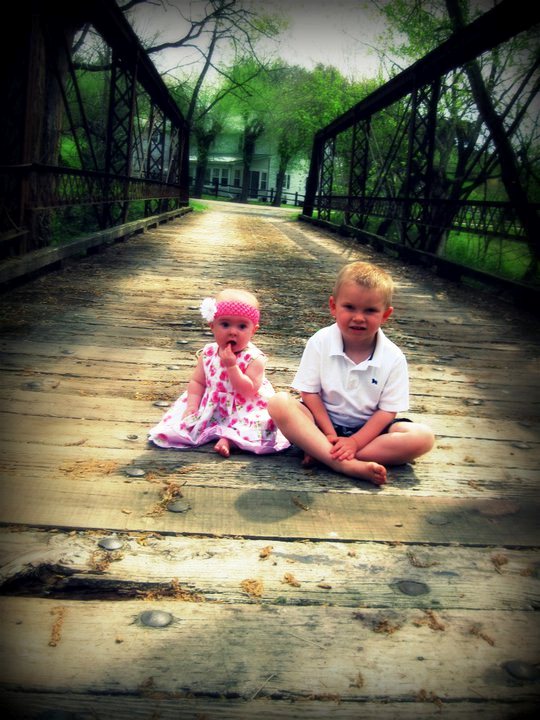
Colin and Chloe spring 2011“I’d give all the wealth that years have piled, the slow result of life’s decay,
To be once more a little child
for one bright summer day.”
― Lewis Carroll

(Image of two grandbabies)

“Twas brillig, and the slithy toves
Did gyre and gimble in the wabe:
All mimsy were the borogoves,
And the mome raths outgrabe.”
― Lewis Carroll, Jabberwocky 

My dear father can recite theJabberwocky.  When the severe windstorm swept through the Shenandoah Valley the summer before last, daughter Elise and I huddled in the dark in our ‘safe’ spot in the house and she read it aloud with a flashlight while the wind raged. Also, other Lewis Carroll quotes. Somehow, it seemed fitting. And so, with this profundity, I leave you.


Thursday, November 14, 2013

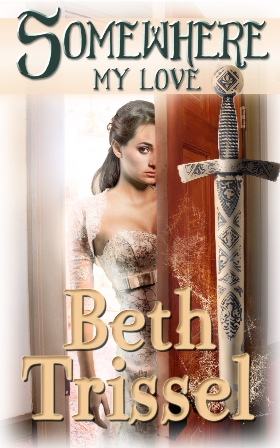
The Ghosts Behind Haunting Mystery Romance Somewhere My Love


NEW SOMEWHERE MY LOVE COVER2
A Night Owl Top Pick: “The story will draw a reader in and will not let go until the very last page. It is a novel that will live in the hearts of its readers for a very long time.”

Volumes and volumes of books have been written about the ghosts of Virginia. Apparently, we have more ghost stories than any other state in the Union. And not because Virginians have a more fertile imagination (although we may) but sadly because the Old Dominion has seen more bloody battles over the centuries than any other. Before you differ with me, think back.

Jamestown (founded 1607) was the site of the oldest successful English settlement and its history is a violent one. It's also kind of creepy. And on we go to the many heart-rending wars fought with the usurped Indians, a number of them waged on Virginia soil. 

Virginia used to be a lot bigger than it is now, too. It spanned states.

And on we march to the Revolution. Anyone heard of Yorktown, to name just one famous battle? And let’s not forget that horrific most uncivil of wars, much of it fought in, you guessed it, Virginia. My ancestors took part in all of these wars, with the possible exception of James Town, although I'm thinking we came across a family account somewhere. Need to check.


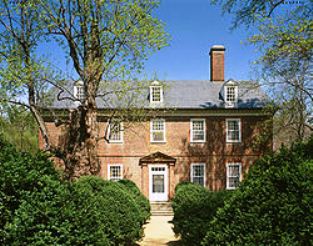
Berkeley_plantation_harrison_homeBack to the ghosts: This plethora of paranormal activity doesn't only feature soldiers caught in an endless fray who haven’t gotten word the war’s over--although some clairvoyant really should make the rounds of old battle fields and direct these poor souls to the light. Many tales center on the myriad of people who dwelt in our richly historic state. The old Virginia homes and plantations have accumulated a wealth of such stories. It was while touring some of these English styled manor homes with my dear mother that the kernel of a story first came to me for Somewhere My Love (Somewhere in Time Series).  
Added to this meld of vintage Virginia is my own heritage. On my father’s side, I descend from old Southern gentry, impoverished after the Civil War, Great Depression, and other misfortunes, including the untimely death of my brilliant grandfather. But the gracious Georgian home his ancestor built (circa 1816) still stands in the countryside near historic Staunton. My ghostly Christmas novella,Somewhere the Bells Ring (Somewhere in Time Series), was inspired by this wonderful old home.

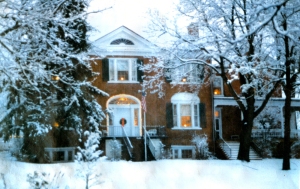
Chapel_HillsmSince childhood, I felt the family home place was haunted and wove stories through my fevered mind, along with my continual search for Narnia which entailed frequent treks into the old wardrobe. But I digress. Frequently. The magnificent ancestral portraits in my family and on display in other Virginia homes held me transfixed, wondering. And it was just such a portrait of a striking dark-haired gentleman who embedded himself in my thoughts. Who was he? Why did he die so young? That other painting of the fair young lady…did she love him?

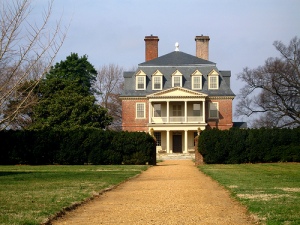
Shirley PlantationOften, the guides at these old homes are brimming with tales. But other times we are left to wonder…and ask ourselves are these folk who’ve gone before us truly gone, or do some still have unfinished business in this realm? And what of the young lovers whose time was tragically cut short, do they somehow find a way? Love conquers all, and so I answer ‘yes.’


*Homes most prominent behind the inspiration for Somewhere My Love:
Berkely Plantation (On the James River & well worth a visit)
Family home place called Chapel Hill (Not open to the public)
Shirley Plantation (On the James River & well worth a visit)

P&E Logo thingBlurb For Somewhere My Love
:


Fated lovers have a rare chance to reclaim the love cruelly denied them in the past, but can they grasp this brief window in time before it’s too late?

Two hundred years ago Captain Cole Wentworth, the master of an elegant Virginian home, was murdered in his chamber where his portrait still hangs. Presently the estate is a family owned museum run by Will Wentworth, a man so uncannily identical to his ancestor that spirit-sensitive tour guide Julia Morrow has trouble recognizing Cole and Will as separate. As Julia begins to remember the events of Cole’s death, she must convince Will that history is repeating, and this time he has the starring role in the tragedy. The blade is about to fall.~

Somewhere My Love Won the Clash of the Covers Contest at Embrace The Shadows!“As I read Somewhere My Love, I recalled the feelings I experienced the first time I read Daphne DuMaurier’s Rebecca long ago. Using the same deliciously eerie elements similar to that Gothic romance, Beth Trissel has captured the haunting dangers, thrilling suspense and innocent passions that evoke the same tingly anticipation and heartfelt romance I so enjoyed then, and still do now.”~joysann for Publisher’s Weekly

***Somewhere My Love is available in kindle and print at Amazon and Barnes & Noble and in eBook at Kobo!


Monday, November 11, 2013

"Vervain and Dill / Hinder witches from their will.”

In my research of vervain, I have discovered various assertions for this ancient herb that disagree with each other. This is not unusual as different cultures didn’t always agree in their lore, but some herbs vary more than others. I can but report my findings, not having grown vervain myself. Some say it is powerfully fragrant, while other sources say it has no fragrance. This might be due to confusion over the particular variety of vervain under discussion, or the conditions under which it is grown. For the purposes of this post, we are discussing common vervain, verbena Officinalis, also known as Herb of Grace. And  it is seriously, not a pretty plant. But looks can be deceiving. (Image of a medieval pharmacy)

From Mother Earth Living: “Compared with its flashy garden verbena cousins, common vervain (Verbena ­officinalis) is an unprepossessing plain Jane. Yet according to Henry Beston, writing in Herbs and the Earth (1935), "To those interested in magic and religion, there is no herb in the garden more worthy of attention, for this simple plant without fragrance, without an outer look of power, without a flower of significance, was singled out from among all other plants and herbs as the most sacred of the growing things of earth between the Pillars of Hercules and the roots of the Caucasus."
Vervain is one of some 250 species of annuals, herbaceous perennials, and subshrubs in the genus ­Verbena. Although most members of the genus are native to tropical and subtropical America, vervain is native to southern Europe; it probably came to North America with the early English settlers.”


From Rodale’s’ Illustrated Encyclopedia
“Description: A spiky-looking plant, vervain should not be confused with blue vervain (Verbena bastata), although it probably will be since even botanists disagree about vervain identification. Flowers: Tiny, purplish white; tubular with five spreading lobes; four stamens; in rings on tall spikes at top of plant. Leaves: Opposite, oblong to lanceolate, deeply divided; upper leaves attached, lower on leafstalks. Fruit: nutlets. Height: 1-3 ft. Flowering: Throughout summer. Range: Native to Europe; naturalized in North America.

Vervain is a very old companion of the human race.
Even the Egyptians considered it ancient, originating from the tears of the goddess Isis as she wept for the dead god Osiris. Vervain was sacred to the Romans; the Latin name of the genus comes from the classical name for ‘sacred boughs.’ It is associated with the crucifixion: Reportedly the herb was pressed on Christ’s wounds to stop the bleeding. It was sacred, too, to the Persians and the Druids.

Vervain appeared in medieval medicine. The court physician to Theodosius 1, for example, described how vervain cures tumors of the throat. Cut the root in two pieces, he said. Tie one around the patient’s throat and hang the other over a fire. As the heat and smoke dry out one part of the root, the tumor will shrivel, too. To get rid of pimples the medieval way, stand outside with a handful of vervain in a handkerchief. When a shooting star is streaking by, rub the vervain over the pimple, and the blemish will disappear. Don’t use your bare hands, or you’ll simply transfer the pimple to your hand. (Image of medieval pharmacist)

Vervain was still valued in the seventeenth century when London herbalist Nicholas Culpepper praised it. Among vervain’s many virtues, Culpepper reported that ‘used with lard it helps pain in the secret parts.’
Uses: Medicinal: Vervain has been reported to have healing powers: astringent, antispasmodic, diaphoretic, emmenagogue, febrifuge, and for dozens more. There does not seem to be any modern scientific evidence to support the claims, however.

***Toxicity: Vervain is certainly not sacred to modern scientists. They report that a glycoside in vervain causes vomiting, even in moderate doses.

Cosmetic: A bath prepared from vervain is said to be quite soothing.
Cultivation:  Grows easily from seed.
Harvesting and storage: According to the Druids, who used a lot of vervain and were entitled to an opinion, the plant should be collected when neither the sun nor the moon is in the sky. And in exchange for removing such a valuable plant from the earth, honey combs should be left on the ground.”


                                             (English country garden because it's pretty.)

From A Modern Herbal by M. Grieve:
“Description---In England the Common Vervain is found growing by roadsides and in sunny pastures. It is a perennial bearing many small, pale-lilac flowers. The leaves are opposite, and cut into toothed lobes. The plant has no perfume, and is slightly bitter and astringent in taste.
The name Vervain is derived from the Celtic ferfaen, from fer (to drive away) and faen (a stone), as the plant was much used for affections of the bladder, especially calculus. Another derivation is given by some authors from Herba veneris, because of the aphrodisiac qualities attributed to it by the Ancients. Priests used it for sacrifices, and hence the name Herba Sacra. The name Verbena was the classical Roman name for 'altar-plants' in general, and for this species in particular. The druids included it in their lustral water, and magicians and sorcerers employed it largely. It was used in various rites and incantations, and by ambassadors in making leagues. Bruised, it was worn round the neck as a charm against headaches, and also against snake and other venomous bites as well as for general good luck. It was thought to be good for the sight. Its virtues in all these directions may be due to the legend of its discovery on the Mount of Calvary, where it staunched the wounds of the crucified Savior. Hence, it is crossed and blessed with a commemorative verse when it is gathered. It must be picked before flowering, and dried promptly.

Constituents---The plant appears to contain a peculiar tannin, but it has not yet been properly analyzed.

Medicinal Action and Uses---It is recommended in upwards of thirty complaints, being astringent, diaphoretic, antispasmodic, etc. It is said to be useful in intermittent fevers, ulcers, ophthalmia, pleurisy, etc., and to be a good galactogogue. It is still used as a febrifuge in autumn fevers.
As a poultice it is good in headache, ear neuralgia, rheumatism, etc. In this form it colours the skin a fine red, giving rise to the idea that it had the power of drawing the blood outside. A decoction of 2 OZ. to a quart, taken in the course of one day, is said to be a good medicine in purgings, easing pain in the bowels. It is often applied externally for piles. It is used in homoeopathy.”

From a very interesting link about vervain: http://www.globalherbalsupplies.com/herb_information/vervain.htm


Vervain and the Vampire Diaries:

Regarding vervain lore in the Vampire Diaries,  “Vervain (or verbena) is a potent herb, and also a vampire's most common weakness. Vervain if touched by a vampire can cause burning to the skin. If a person is drinking vervain and a vampire bites them, the vampire is affected straight away and weakened by this, the same goes for a person wearing jewelry containing vervain it stops them from being compelled by any vampire.”
For more on the medical side effects and uses of vervain visit: WebMD

Hazlitt's Faiths and Folklore (1905) quotes Aubrey's Miscellanies (1721), to wit:
"Vervain and Dill / Hinder witches from their will.”