Showing posts with label Scotland. Show all posts

Saturday, September 10, 2016

The Magick of Fairy Thimbles by Author Patty Koontz

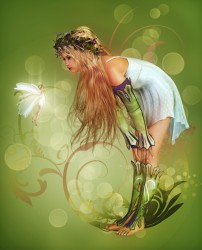
Do you believe in fairies? Wee Darby and I most certainly do! Have you ever noticed a sparkle of tiny lights or gotten a quick glimpse of flickering movements from inside flower petals or beneath a cluster of wildflowers? Or even “thought” you just “might have heard” some giggling or sounds of  flutes playing soft whimsical tunes, while taking a stroll by fragrant, colorful flowers, that made you smile for no reason? If so, the next time you decide to go outside and enjoy the beauty of nature, you might want to take a closer look . . .
chapter-4-copyright
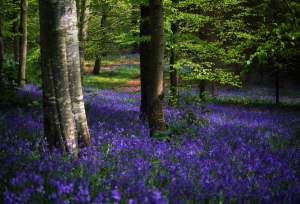
Glens of Antrim, Bluebells, Portglenone Forest, Ireland

Have you ever heard the legend of the Bluebell Fairy Thimbles – then you’re in for a grand surprise when you read about the fairies that live in the fields of bluebells, which grow wild in Ireland and Scotland. Wee Darby and his fairy niece, Pantera, are delighted to share a wee bit about the magical lore...The legend tells of fairies that live among the bluebells growing in charming meadows and visited by hares (rabbits).  And humans, (or Krindles, as the fairies call us from what I’ve learned from Wee Darby), should be careful not to disturb or pick these flowers – you never want to anger the fairies – as they can play tricks on you.  Its been told how people even believed that witches turned themselves into the hares and hid among the precious plants to keep out of sight and danger. Make sure you ask permission first – the next time you get the urge to pick the precious plants . . . .
You might be surprised at just “what” or “who”  you might find...
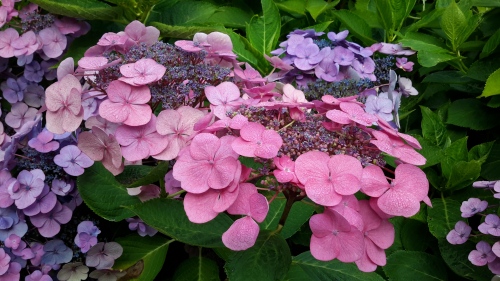
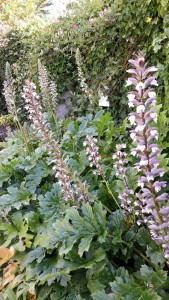
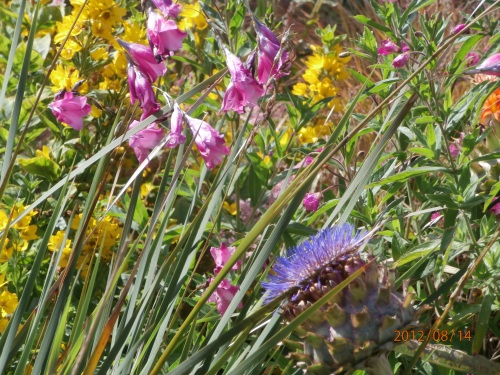
Here’s some lovely flowers I took photos of on my visits to Ireland and Scotland – I felt certain the fairies would love to hide in these...take a closer look, you never know. . .20150927_061611fairy-flowers
OLYMPUS DIGITAL CAMERA
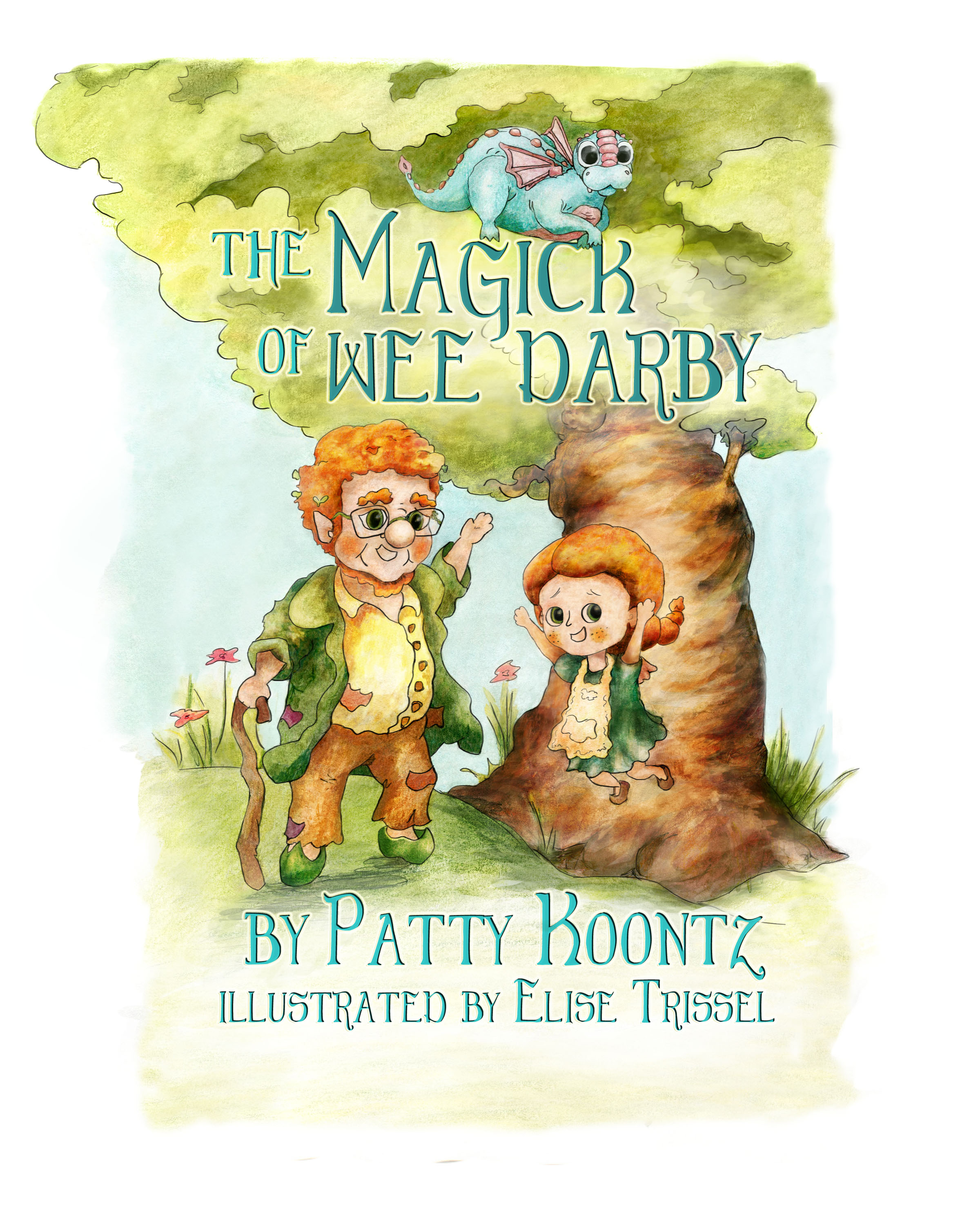
Wee Darby and I are delighted you stopped by, and encourage you to please feel free to leave us comments, and let us know if you enjoy the site. We hope everyone decides to join us again in October, to help us celebrate the release of “The Magick of Wee Darby”! We have quite a few surprises coming up next month – just in time for a Fall Harvest celebration and Halloween! We promise, you won’t want to miss it....Bye for now
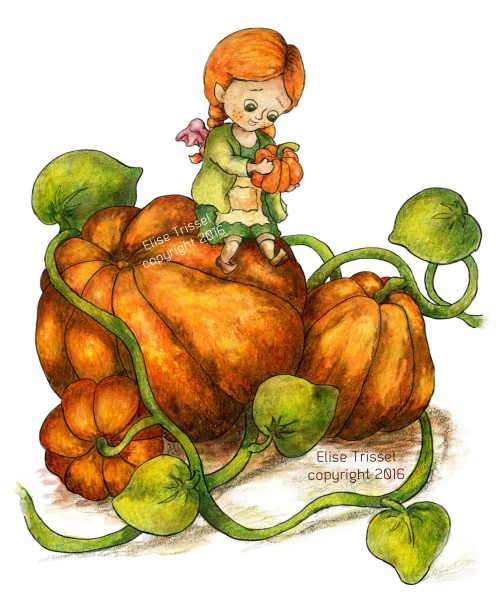
(A Lovely illustration of my wee Pantera, (a fairy with tiny wings, who can’t fly), on her first official visit to a pumpkin patch in America) (drawn by the talented, Elise Trissel)
chapter-7-copyright


To pre-order a copy of The Magick of Wee Darby, click here:
cover_full trim_


Friday, August 1, 2014

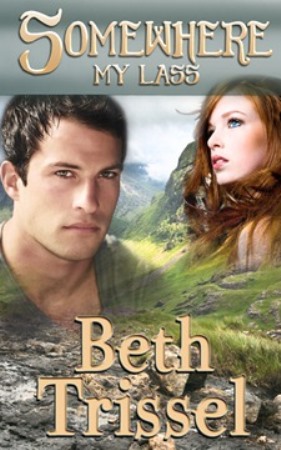
The Story Behind Time Travel Romance Somewhere My Lass

somewhere_my_lass_final resized
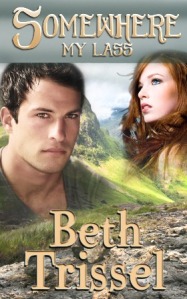
Somewhere My Lass, was an intriguing tale to weave and quite an adventure. It's also one I had no intention of undertaking until the vivid dream that led to the startling intro: the hero, Neil MacKenzie, returns home from work to find his elderly housekeeper lying murdered at the bottom of the winding staircase and a young woman in full Scottish dress slumped at the top. She, however, isn’t dead.

That’s all I had to go on at the start of this venture, but was so intrigued I had to learn their story and pondered all the clues given. An old Victorian house, check, I’m very familiar with those; man wearing modern suit, so the story opens in present day, got it, but the young woman came from the past. Scotland’s past. This will take some doing, I concluded. Being a member of Celtic Hearts Romance Writers, a fabulous online group, was/is a great resource. I’d taken a Scottish history class and reread that trove of material while doing my usual obsessive research. I love gleaning more about the past and used an actual feud in 1602 between the MacKenzies and MacDonalds as a jumping off place.

Both Neil and the heroine, Mora Campbell, were so clear in my mind and a lot of fun to work with—definitely rank among my cast of favorites. The romance between them is one of the best I’ve written. The chemistry just took off. 


Regarding the setting for Somewhere My Lass, until this book all my stories took place in America, past and present. This departure to Scotland was a challenge, but I drew deeply on my English Scots-Irish roots, which I’ve been doing all along. Apart from the prominent Native American characters in some of my work, the others are of English/Scots-Irish backgrounds, with a smidgen of French. My ancestors, too, have a smidgen of French in the meld, a Norman knight who fought with William the Conqueror, and some French Huguenots.

One unique aspect of the story, is that rather than beginning with the hero or heroine going back in time, I brought her forward (as was the case in the dream) before sending them back together. I also included kewl sci-fi features, new for me. I’ve learned a great deal from my journey into Bonnie Old Scotland. I fell in love with the characters, new ones nudge at my mind. The colorful secondary character, Neil’s quirky friend Angus Fergus, has a lot of fans, and his own story now, Somewhere in the Highlands.


In writing Somewhere My Lass,  I was influenced by my beloved Author C S Lewis and his Chronicles of Narnia that I grew up reading. I’m still looking for Narnia. Isn’t everyone? My love of old castles and the Scottish Highlands also lent inspiration.Many of the early Scots-Irish settlers in the Shenandoah Valley, my ancestors among them, chose to live here because of the resemblance the valley and mountains bore to Scotland and Ireland. As near to home as they were likely to find in the New World.

The concept behind my Somewhere in Time series, of which Somewhere My Lass is Book Two (though written to stand alone) is that the story opens in present day, so far my home state of Virginia, and then transports the reader Somewhere else. Either back to an earlier time in the same house, as in Somewhere My Love and Somewhere The Bells Ring, or another place altogether, as in Somewhere My Lass. The wonderful old homes I grew up in and visited over the years are an integral part of the inspiration behind this series. In Somewhere My Lass, I used a compilation of Victorian homes for the mysterious house in historic Staunton, Virginia where the story begins. 


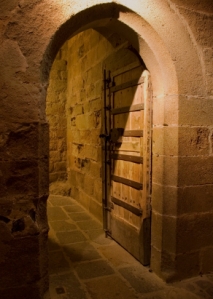
How do they go back and forth in time, you may ask. Why through ‘the door to nowhere,’ of course, a portal to the past. I was acquainted with just such a door as a child. However that was typically Victorian, not the ancient door pictured, a royalty free image, I hasten to add. No, this Medieval door is where one enters on the other side of the portal.

***Somewhere My Lass is on sale in kindle for the lofty price of .99. 

Tuesday, November 19, 2013

Mistletoe–So Much More Than A Christmas Plant


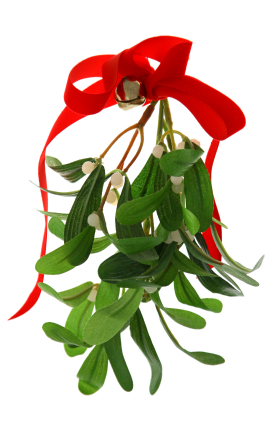
Christmas Mistletoe IsolatedMistletoe is steeped in lore from pre-Christian times, so much so that it might be easier to cover powers not attributed to this revered plant than those that are. Viscum album, the genus that grows in Great Britain and much of Europe, is recognized by its smooth-edged oval evergreen leaves borne in pairs along the woody stem, and waxy white berries, thought to be poisonous, in dense clusters of 2 to 6. Mistletoe is rare in Scotland, but references to it arise in Scottish herbals, so perhaps it was brought in from other regions of Britain. A similar species of mistletoe grows in North America with shorter, broader leaves and longer clusters of 10 or more berries. An evergreen parasitic plant, mistletoe grows on the branches of trees and derives all its nourishment from its host. The sticky berries, transferred by birds, attach themselves to the bark and send out roots. Because the plant prefers softer bark, it’s found more commonly on apple trees and is rarer on oaks which made mistletoe discovered on oaks greatly venerated by ancient Celts, Germans, and it was used in ceremonies by early Europeans. Greeks and other early peoples thought it had mystical powers and the plant gained a wealth of folklore over the centuries. Sacred to the Druids, many wondrous attributes are accorded to mistletoe, including medicinal powers, properties to boost fertility, and ward off evil spells.
Druidism, God, Tree, Praying,
From A Modern Herbal: Mistletoe was held in great reverence by the Druids. They went forth clad in white robes to search for the sacred plant, and when it was discovered, one of the Druids ascended the tree and gathered it with great ceremony, separating it from the Oak with a golden knife. The Mistletoe was always cut at a particular age of the moon, at the beginning of the year, and it was only sought for when the Druids declared they had visions directing them to seek it. When a great length of time elapsed without this happening, or if the Mistletoe chanced to fall to the ground, it was considered as an omen that some misfortune would befall the nation. The Druids held that the Mistletoe protected its possessor from all evil, and that the oaks on which it was seen growing were to be respected because of the wonderful cures which the priests were able to effect with it. They sent round their attendant youth with branches of the Mistletoe to announce the entrance of the new year. It is probable that the custom of including it in the decoration of our homes at Christmas, giving it a special place of honour, is a survival of this old custom.
British Oak
The curious basket of garland with which ‘Jack-in-the-Green‘ is even now occasionally invested on May-day is said to be a relic of a similar garb assumed by the Druids for the ceremony of the Mistletoe. When they had found it they danced round the oak to the tune of ‘Hey derry down, down, down derry!’ which literally signified, ‘In a circle move we round the oak. ‘ Some oakwoods in Herefordshire are still called ‘the derry‘; and the following line from Ovid refers to the Druids’ songs beneath the oak:
‘Ad viscum Druidce cantare solebant’
Shakespeare calls it ‘the baleful Mistletoe,’ an allusion to the Scandinavian legend that Balder, the god of Peace, was slain with an arrow made of Mistletoe. He was restored to life at the request of the other gods and goddesses, and Mistletoe was afterwards given into the keeping of the goddess of Love, and it was ordained that everyone who passed under it should receive a kiss, to show that the branch had become an emblem of love, and not of hate.”
Parts Used Medicinally: The leaves and young twigs, collected just before the berries form, and dried in the same manner as described for Holly.
The preparations ordinarily used are a fluid extract and the powdered leaves. A homoeopathic tincture is prepared with spirit from equal quantities of the leaves and ripe berries, but is difficult of manufacture, owing to the viscidity of the sap.”
“Medicinal Action and Uses: Nervine, antispasmodic, tonic and narcotic. Has a great reputation for curing the ‘falling sickness’ epilepsy – and other convulsive nervous disorders. It has also been employed in checking internal haemorrhage.
***Bear in mind that although mistletoe has some possible medicinal qualities and has been used for centuries for various maladies, it is potentially toxic so do not administer it to yourself.
“Mistletoe was thought to be a remarkable and sacred shrub because it seemed to grow from the air and not from the earth. Mistletoe has been considered undesirable because it feeds off other trees; however it is also thought to have a symbiotic relationship because it provides nutrients when the host is in dormancy. It also provides food for a host of animals and birds who consume its leaves and shoots
Over time its folklore has grown to include the belief that the oak mistletoe could extinguish fire, that it held the soul of the host tree and placed in a baby’s cradle would protect the child from faeries.

Mistletoe KissKissing under the mistletoe is also cited in an early work byWashington Irving, “Christmas Eve,” which tells of the festivities surrounding the Twelve Days of Christmas:
“Here were kept up the old games of hoodman blind, shoe the wild mare, hot cockles, steal the white loaf, bob apple, and snap dragon; the Yule-clog and Christmas candle were regularly burnt, and the mistletoe with its white berries hung up, to the imminent peril of all the pretty housemaids.”
Used as good luck charms to ward off evil, its sprigs were also put under the pillows of young girls who thought it would entice dreams of the husband to be.”
“Mistletoe is also said to be a sexual symbol, because of the consistency and color of the berry juice as well as the belief that it is an aphrodisiac, the “soul” of the oak from which it grows. The origin of the tradition of kissing under the mistletoe is vague. However, the tradition may have stemmed from either the Viking association of the plant with Frigga (the goddess of love) or from the ancient belief that mistletoe was related to fertility. Another explanation for the tradition is that it is derived from the festival of Saturnalia, a popular mid-December celebration in ancient Rome.
Christmas Mistletoe IsolatedThe correct mistletoe etiquette is for the man to remove one berry when he kisses a woman. When all the berries are gone, there’s no more kissing permitted underneath that plant.
One legend states that a couple who kisses underneath mistletoe will have good luck, but a couple neglecting to perform the ritual will have bad luck. Specifically, it is believed that a couple kissing under the mistletoe ensure themselves of marriage and a long, happy life, while an unmarried woman not kissed under the mistletoe will remain single for another year.”
***Mistletoe and werewolves: In some ancient lore, mistletoe is considered a repellent and protection from werewolves.
***Royalty free images of mistletoe, Druid, British Oak, couple kissing beneath mistletoe

Friday, October 25, 2013

What to do when you’re Elf-shot–Herbal Lore


Agrimony
Agrimony:  Used from ancient times to treat many ailments and injuries, it’s also reputed to have magical properties.
From The Scots Herbal by Tess Darwin:
“Agrimony is found in dry grassy places in most areas except the northwest of Scotland. The Gaelic name of this plant,mur-druidhean, may derive from the use of agrimony by healers to treat spiritual troubles. Ferquhar Ferguson, tried for witchcraft on Arran in 1716, admitted using agrimony to cure elf-shotten people.” (Apparently a common affliction). “Ferguson was guided in his treatment by a voice heard while sleeping, which instructed him to pull the plant in the name of the Holy Trinity.”
***Elf-shot are those persons or animals who have fallen ill after being shot by the arrows of malevolent elves. Don’t you hate it when that happens?
Lady's_Mantle_Alchemilla_vulgaris
Another powerful herb for protection is Lady’s Mantle, found in meadows throughout Scotland (and my garden when it’s happy).
From The Scots Herbal by Tess Darwin
“The large leaves collect drops of morning dew and it was a widespread tradition to use this pure water for a refreshing face wash.
It was a powerful remedy for domestic animals that had fallen ill after being shot by malevolent elves. Water containing juice from the plant was both sprinkled on the sick beast and given it to drink.”
agrimony, Herb, acrimony, Herbal Plant, Herbal Medicine,More on Agrimony From A Modern Herbal:
“The plant is found abundantly throughout England,. In Scotland it is more local and does not penetrate very far northward. (It also grows in America)
Agrimony has an old reputation as a popular, domestic medicinal herb, being a simple well-known to all country-folk. It belongs to the Rose order of plants, and its slender spikes of yellow flowers, which are in bloom from June to early September, and the singularly beautiful form of its much-cut-into leaves, make it one of the most graceful of our smaller herbs.
The whole plant is deep green and covered with soft hairs, and has a slightly aromatic scent; even the small root is sweet-scented, especially in spring. The spikes of flowers emit a most refreshing and spicy odour like that of apricots. The leaves when dry retain most of their fragrant odour, as well as the flowers, and Agrimony was once much sought after as a substitute or addition to tea, adding a peculiar delicacy and aroma to its flavour. Agrimony is one of the plants from the dried leaves of which in some country districts is brewed what is called ‘a spring drink,’ or ‘diet drink,’ a compound made by the infusion of several herbs and drunk in spring time as a purifier of the blood.
Agrimony, Flower HerbThe long flower-spikes of Agrimony have caused the name of ‘Church Steeples’ to be given the plant in some parts of the country. It also bears the title of ‘Cockeburr,’ ‘Sticklewort’ or ‘Stickwort,’ because its seed-vessels cling by the hooked ends of their stiff hairs to any person or animal coming into contact with the plant.”
The whole plant yields a yellow dye: when gathered in September, the colour given is pale, much like that called nankeen; later in the year the dye is of a darker hue and will dye wool of a deep yellow. As it gives a good dye at all times and is a common plant, easily cultivated, it seems to deserve the notice of dyers.
History: The name Agrimony is from Argemone, a word given by the Greeks to plants which were healing to the eyes, the name Eupatoria refers to Mithridates Eupator, a king who was a renowned concoctor of herbal remedies. The magic power of Agrimony is mentioned in an old English medical manuscript:
‘If it be leyd under mann’s heed, He shal sleepyn as he were deed; He shal never drede ne wakyn,Till fro under his heed it be takyn.’ (That’s darn useful to know.)
agrimonyAgrimony was one of the most famous vulnerary herbs. (Vulnerary *is a plant used in the treatment of wounds). The Anglo-Saxons, who called it Garclive, taught that it would heal wounds, snake bites, warts, etc. In the time of Chaucer, when we find its name appearing in the form of Egrimoyne, it was used with Mugwort and vinegar for ‘a bad back’ and ‘alle woundes’: and one of these old writers recommends it to be taken with a mixture of pounded frogs and human blood, as a remedy for all internal hemorrhages.”
*I have to stop right here and comment. Pounded frogs and human blood mixed with Agrimony for all internal hemorrhages. Hmmm…it wonders me, as the Pennsylvania Dutch say, whose blood we’re to mix in. Probably someone else’s. And what would the proportions of pounded frog be to the herb and blood?  No exact proportions given. Just a spoonful of this and a cup of that. I suspect it would take more than a spoonful of sugar to help that medicine go down.
I also like where the author goes on to say that Agrimony “has had a great reputation for curing jaundice and other liver complaints. Gerard believed in its efficacy. He says: ‘A decoction of the leaves is good for them that havenaughty livers.’” Got that?  It treats naughty livers.
Constituents: Agrimony contains a particular volatile oil, which may be obtained from the plant by distillation and also a bitter principle. It yields in addition 5 per cent of tannin, so that its use in cottage medicine for gargles and as an astringent applicant to indolent ulcers and wounds is well justified. Owing to this presence of tannin, its use has been recommended in dressing leather.
agrimony_herb_imgAgrimony is also considered a very useful agent in skin eruptions and diseases of the blood, pimples, blotches, etc. A strong decoction of the root and leaves, sweetened with honey or sugar, has been taken successfully to cure scrofulous sores, being administered two or three times a day, in doses of a wineglassful, persistently for several months. The same decoction is also often employed in rural districts as an application to ulcers.
Preparation: In North America, it is said to be used in fevers with great success, by the Indians and Canadians. In former days, it was sometimes given as a vermifuge, (*serving to expel worms and other parasites from the intestinal tract) though that use is obsolete. In the Middle Ages, it was said to have magic powers, if laid under a man’s head inducing heavy sleep till removed, but no narcotic properties are ascribed to it.
TinyFairyFrom Herb Magic.com: “AGRIMONY is an herb that is said to turn back jinxes that have already been made, roots that have already been laid, and curses that have already been cast. Combined with Slippery Elm Bark, it is said to break spells involving Slander and Lies…combined with Rue, it is said to send back the Evil Eye (Mal Occhio) even after the Eye has already taken effect. Combined with Salt, it is said to un-make Hexes and Witchcraft.”  They add, “We make no claims for AGRIMONY, and sell it as a Curio only.”
*I make no claims either and am only quoting from and commenting on what I’ve researched.
This is a terrific site: The Medieval Gardener:
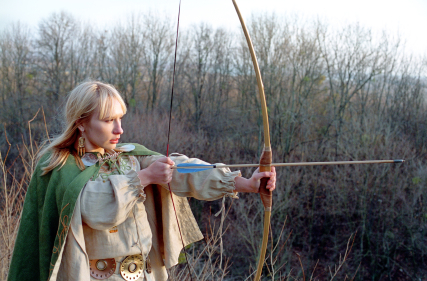
Archery, Women, Medieval, Warrior, Female, Bow, Arrow, Middle Ages, Fighting, History, DressRegarding Agrimony it says: “This perennial with its tall yellow spires (to 24 inches) is a native European plant often found growing wild in the Middle Ages. Recorded in the inventories of Charlemagne’s gardens (but not in the Capitulare de Villis ) and the Anglo Saxon dictionary source of Aelfric, it was highly regarded for its general healing and magical powers and was believed by the Anglo Saxons to heal wounds, warts and snake bites. If laid under a pillow, they further believed it had magical powers to induce a deep sleep until removal. Another 14th century reference claims it for the treatment of back problems along with mugwort and vinegar. Agrimony was also used as a strewing herb and, bundled with rue, broom, maidenhair and ground ivy, was used to identify witches. Today we are aware of the tannin content of agrimony and use its lovely apricot scented dried flowers and leaves to make herbal teas as well as astringent infusions, and to attract bees in the garden.” ~ Contributed by B. F. Wedlake

Wednesday, October 2, 2013

Several Fairy Plants

Wood Anemone: Beautiful plants. I have some anemones, also called wind flowers, that bloom in my spring garden.


From The Scots Herbal by Tess Darwin

“A widespread plant of woods, also found on upland grassland and moorland where it may be a relic indicating previous woodland cover. It provided  a safe refuge for fairies to take their beauty sleep or shelter from rain, as the flower closes at night and at the onset of wet weather.”
Blooms in spring. Note: Poisonous. Contains a bitter oil that causes severe skin irritations and gastric disturbances if ingested. Musky scent. Alternative name ‘Smell fox.’


Butterwort Family: From The Scots Herbal by Tess Darwin

“This was a magical plant in the Scottish islands. People who carried it were protected from witches; cows that had eaten it were immune to elf-arrows. It was woven with other flowers into a magic hoop to place under the milk pail and protect the milk from fairies. There is a story of a woman keeping watch over a newborn baby to prevent fairies stealing it and leaving a changeling—a sickly, fey fairy child—in its place. Two fairies came to the cradle and could not take the child because its mother had eaten butter made from milk of a cow that had eaten butterwort.”


From this informative site on Butterwort (A carnivorous plant): http://www.plantlife.org.uk/scotland/wild_plants/plant_species_scotland/?ent=1220

“The striking triangular leaves, with their rolled edges, appear in a star pattern at the base of this pretty flower.”

The flowers are deep violet-blue with a pointy funnel shape. Butterwort is widely distributed in Scotland, Wales, and the north of England. It likes a damp habitat such as bogs, fens, wet heaths and the crevices between rocks.

Butterworts main use medicinally is for coughs, particularly whooping cough. The leaves are used to curdle milk in order to make butter.

For more on butterwort and several other moorland plants visit: http://www.cairngormsmoorlands.co.uk/moorland_herbalism.htm

Sunday, August 18, 2013

Scottish Time Travel Romance Somewhere My Lass Free in Kindle

somewhere_my_lass_resized 2From Sunday August 18th through Tuesday the 20th, Somewhere My Lass is a free kindle.
Story Description:
Will Mora and Neil be too late to save a love that began centuries before?

'‘The MacDonald comes’ warns Mora Campbell when Neil MacKenzie finds the young Scotswoman lying unconscious at the top of his stairs after he discovers his murdered housekeeper slumped at the bottom. Mora’s claim that she’s his fiancé from 1602 and was chased to the future by clan chieftain, Red MacDonald, through ‘the door to nowhere’ seems utter nonsense. Neil thinks she’s addled from the blow to her head until his life spirals into chaos and the avenging Highlander shows up wanting blood. Mora knows the Neil of the future is truly her beloved Niall who disappeared from the past, but he must also remember. And fast.

Although Niall’s kinsmen believe he’s dead, and Mora is now destined to marry his brother, she’s convinced that if she and Neil return to the past, all will be right. The balance of the present and future are in peril if she marries another, and the Neil of the present will cease to exist. The only problem is how to get back to 1602. An ancient relic, the ultimate geek friend, and a little Celtic magic help pave the way back to the enormous challenge that awaits them. If they’re in time.~

More About The Story Behind Light Paranormal Romance Somewhere My LassYes, it’s time travel with a twist. Somewhere My Lass is book two in my Somewhere in Time series. Somewhere My Love is the first, and the sequel to Somewhere My Lass, Somewhere in the Highlands is out now in Kindle. The stories in this series adhere to a theme, not necessarily a continuation of the characters themselves. Though Somewhere in the Highlands picks up two years after Somewhere My Lass left off.

Somewhere My Lass was an intriguing tale to weave and quite an adventure. It’s also one I had no intention of undertaking until the vivid dream that led to the startling intro: the hero, Neil MacKenzie, returns home to find his elderly housekeeper lying murdered at the bottom of the winding staircase and a young woman in full Scottish dress slumped at the top. She, however, isn’t dead.

ancient doorAnd that’s all I had to go on at the start of this venture, but was so intrigued I had to learn Neil and Mora’s story and pondered all the clues given in the dream. An old Victorian house, check, I’m very familiar with those; man wearing modern suit, so the story opens in present day, got it, but the young woman came from the past. Scotland’s past. That would take some doing, I concluded, and did my usual obsessive research. I love gleaning more about the past and used an actual feud in 1602 between the MacKenzies and MacDonalds as a jumping off place.

Doors play a big role in my ‘Somewhere in Time’ series. Behind every door lies a secret, an intriguing puzzle to be solved, so these romances are also suspenseful mysteries. There will be more stories in this series. Somewhere the Bells Ring is a ghostly Christmas romance that flashes back in time.

Thursday, July 18, 2013

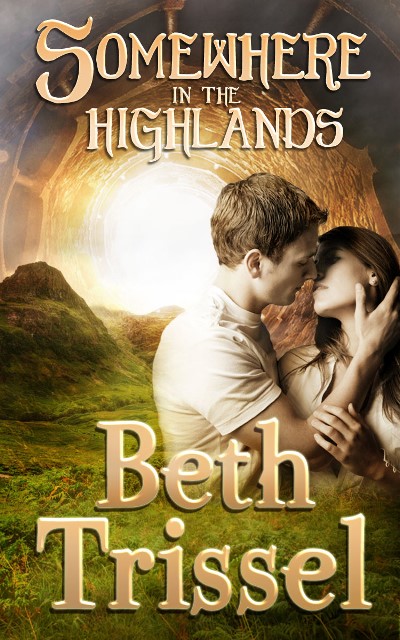
New Release! Romantic Time Travel Adventure Somewhere in the Highlands!


somewhere_in_the_highlands4.jpg 1After a lot of scheming, dreaming, writing, and revising, the long-awaited sequel to my time travel romance, Somewhere My Lass, is out. Yes, there will be another story to continue this saga. Don’t ask me when, but plotting is underway.
About Somewhere in the Highlands: Will the brilliant geek Fergus and lovely but devious Beezus thwart a power mad time traveler wielding a supernatural relic before he kills Fergus’s Highland ancestor?
Blurb:  Retro KeyholeThe MacDonalds are coming! When Elizabeth MacDonald (a.k.a Beezus Mac) thrusts a sealed gold box at Angus Fergus amid panicked requests for him to hide the stolen artifact, she has no idea the ancient cloth it contains bestows unearthly powers.
Red MacDonald knows and he’s hell-bent on traveling 400 years into the future to claim the charmed relic, even kill for it. Protecting Beezus from his old nemesis is only one of Fergus’s problems.
Before they can stop him, Morley MacDonald, descendant of Red MacDonald, snatches the prize and leaps through the time portal to head the MacDonald clan and kill Fergus’s MacKenzie ancestor. If he succeeds, Fergus will cease to exist. Danger grows in the feud between the MacDonalds and the MacKenzies as the pair, along with an ingenious friend and high tech inventions, returns to 1604 Scotland to face these brawny Highlanders and reunite with kin. Will Fergus overcome his mistrust of Beezus and fan the growing spark between them before they battle Morley? If he waits, it may be too late.~
 The Somewhere in Time Series; where the past meets the present.
***Somewhere in the Highlands is available in kindle at Amazon.

Sunday, June 9, 2013

Lore of the Scottish Bluebell Fairy


The Scottish Bluebells (Campanula rotundifolia) are known by various names, most commonly harebell, also Scottish bellflower and fairies thimble, as it was widely thought fairies live among the flowers. I don’t make this stuff up; these fascinating tidbits are from: http://davesgarden.com/guides/articles/view/1615/


“These lovely flowers have been around for centuries. Legend has it that fairies live among them and humans should be wary of disturbing them.”


"The name, Harebell, has its roots in magic. The name came from the fact that Scottish Bluebells are found growing in meadows frequented by hares. Some would argue, the name Harebell was given this flower due to the fact that witches were known to turn themselves into hares and hide among them. Both are interesting stories, one for the non-believer and believer alike.”

The flower is a favorite among poets. Two famous examples listed on the site:
“Sir Walter Scott mentioned it in his 1810 poem, “Lady of the Lake;” “A foot more light, a step more true, Ne’er from the heath-flower dashed the dew; E’en the slight harebell raised its head…”

Emily Bronte wrote, “I lingered round them, under the benign sky; watched the moths fluttering among the heath and harebells; listened to the soft wind breathing through the grass; and wondered how anyone could ever imagine unquiet slumbers, for the sleepers in that quiet earth.” in her book, “Wuthering Heights,” published in 1847.”


"Another name for bluebells is Dead Man’s bells. This is due to the fact that fairies were believed to cast spells on those who dare to pick or damage the beautiful, delicate flowers. The people of Scotland are fond enough of the flower to continue this tradition in the hopes of protecting the little flower.”

Apparently, when meandering through drifts of bluebells, it’s wise to stick to the path, or you may stir up the wrath of fairies and release the spells trapped in the blooms. Never a good idea, and one that would be echoed by our resident fairy expert, my eight year old niece, Cailin, who warns never step into a circle of flowers or go anywhere without the fairies permission. Or they will get very upset. And you do not want an upset fairy, or fairies, on your hands. Particularly the furious wind fairies, but that’s another story.

*Royalty free images