Showing posts with label history. Show all posts

Thursday, January 5, 2017

Writing While in Slug Mode and My Time Travel Romance Series

Sleepy kittyWinter is both a good and challenging time to write. Hibernation calls and chocolate becomes a food group, hot beverages a necessity. My favorite is hot Earl Grey tea, also peppermint. I am not averse to coffee. Caffeine battles the tug to curl up with my drowsy kitties and nap. Occasionally, I succumb, plus we've had a round of plague in the family that set me back.
Despite it all, I'm pleased to say I just submitted the next in my paranormal time travel romance 'Somewhere in Time' series to my Wild Rose Press editor.
Fairy woman walking in the woodsThis latest story, Somewhere My Lady, is a New Adult time travel mystery romance like Somewhere My Love but different.  The novel kicks off my new 'Lady series.' The common theme in all my 'Somewhere' stories is that they open in an old home, so far in Virginia, and then flash back to an earlier era in the same house or somewhere else entirely like the Scottish Highlands.
Old English Manor with red rosesIn Somewhere My Lady, the couple are whisked back and forth between present-day in the elegant colonial home on the James River and its rich past during the American Revolution. The story has mystery, history, ghosts, humor, angst, a lot of paranormal activity, and above all Romance! I'm psyched and look forward to sharing more about it soon. (This is actually a pic of a British manor house, but the best of the James River plantations homes bear a resemblance to one.)
old Victorian homeMeanwhile, I'm at work on the next in my 'Lady' series, which is totally different from the first except that it fits the arching theme in my Somewhere in Time series. This second story takes place in a castle-styled Victorian home in historic Staunton, Virginia, and flashes back to various eras within the span of the house. Another winner, I think. At least, I'm engrossed in the writing. Each of the 'Lady' stories has a strong female lead and hero, and a great supporting cast of characters. I hope you will enjoy them when they take flight later this year.
Door, Old, Fantasy, Halloween, Gothic Style, Mystery, Spooky, Wood, Medieval, Doorway (2)Doors are important in these stories and the question posed is, 'Will you go through that door?'
What awaits you on the other side?
If you haven't read my Somewhere in Time Series, the stories are all available in kindle at Amazon:


Wednesday, July 23, 2014

Now in Print! Plants for a Medieval Herb Garden in the British Isles

Plants for a Medieval Herb Garden in the British Isles CoverAfter exhaustive efforts on my and daughter Elise's part, Plants for a Medieval Herb Garden in the British Isles is available in print at Amazon (also at other outlets).

For those of you who've been patiently waiting, it's here, with over 100 lovely images. Remember, a number of these plants accompanied the colonists to the New World. Many are the herbs we use today, though some of their applications fell into disfavor. Not everyone still seeks a way to avert the Evil Eye, or risks potentially poisonous treatments for a cure.

Book Description: An illustrated collection of plants that could have been grown in a Medieval Herb or Physic Garden in the British Isles. The major focus of this work is England and Scotland, but also touches on Ireland and Wales. Information is given as to the historic medicinal uses of these plants and the rich lore surrounding them. Journey back to the days when herbs figured into every facet of life, offering relief from the ills of this realm and protection from evil in all its guises.~

dill with white aster and heirloom poppiesA Few Amazon Reader Reviews:
A perfect resource for gardeners and history buffs alike.
Dorothy Johnson (South Carolina)
Plants for a medieval herb garden is a fun, easy resource. I have been making my way through its pages and enjoying every minute of it. I've even found some new plants that I'd like to try out in my own garden.

Excellent Source for Herbal Lore,

Beth Trissel delivers detailed and useful information about herbs in the middle ages. Of course, no self-respecting medievalist would be without a thorough knowledge of healing herbs and their uses, and Beth lays it all out for us in alphabetical order.

archangel-michael, old stained glass windowWell-researched Medieval Herbal
I was in the online workshop where Beth first began putting this book together. The information she gave the participants in each session was amazingly detailed and very well-documented. She gave us an early version of this book and I've referred to it more than once as a resource for my own novel writing. When I saw the finished product was out and available, I grabbed my copy immediately. If you're ever lucky enough to attend one of her herbal workshops -- DO IT!! Until then, this is an excellent substitute and one heck of a resource. If you're writing in this time period and location and want to make sure your characters are using historically accurate herbs in the way they were used at the time, you'll definitely want this book. If you're simply interested in learning how herbs were used in Medieval times in the British Isles, if you love knowing the history of the herbs you might use every day, or if you're just learning about using herbs, this is the book for you!


Sunday, November 11, 2012

Scenic, Historic Virginia--Beth Trissel


The rich history of Virginia, the Native Americans and the people who journeyed here from far beyond her borders are at the heart of my inspiration.  Not only have I lived in the Old Dominion for most of my life, but also several previous centuries in the sense that my ancestors were among the earliest settlers of the Shenandoah Valley (1730’s/1740’s). Chapel Hill, circa 1816, the Churchman family home place on my father’s side, is part of the inspiration behind the old homes in my novels, as are the other early plantations I’ve visited like Berkeley, Shirley and Carter’s Grove.  My Scots-Irish forebears settled Augusta County in the southern valley with names like Houston, Patterson, Finley, Moffett and McLeod.  These clannish people often intermarried, so I can tie in with many other early families depending on how I swing through the ancestral tree.
Colonial Virginia encompassed a vast territory.  Initially  Augusta County named for Princess Augusta, wife of Frederick, Prince of Wales, stretched northward from the present day county of Rockingham to include part of Page; to the South it extended the full length of Virginia’s border, and to the northwest it included the present day states of Kentucky, Ohio, Indiana, Illinois, and part of western Pennsylvania, all the territory claimed by Great Britain at that time.
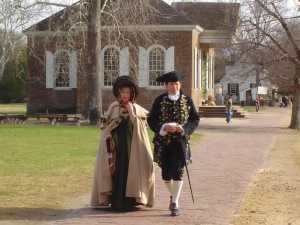
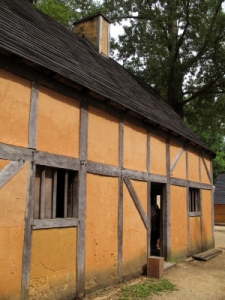
Jamestown, the earliest successful English colony, and  Williamsburg,  a vital center in early America, are both in Virginia.  If you haven’t visited Williamsburg, Jamestown, and Yorktown, you’re in for a real treat.  These sites are wonderfully  restored so it’s like stepping back in time to another age, one that fascinates me.
Virginia is steeped in history.   How could I not be drawn to this wealth of stories here?  They span centuries.  And if the earth could speak what tales it would tell, some of them horrific.
Virginia is also the site of more battles than any other state in the union, encompassing the Indian Wars, the Revolution and that most uncivil of wars, the Civil War.  Not to mention, Virginia has more ghost stories than any other state.  Also fodder for the imagination and yet more stories.

Thursday, September 27, 2012

Lest We Forget--the Wisdom of John Adams


'Liberty, once lost, is lost forever.'
~JOHN ADAMS, letter to Abigail Adams, Jul. 17, 1775


In these troubled times in America, it’s wise to remember where we came from  and what our founders envisioned for this great nation. Being an American is a sacred privilege, our hard-won freedoms, fast eroding, should never be taken for granted, and preserving these inalienable rights, a call to arms for all who cherish liberty. With that in mind, I highly recommend watching the excellent HBO production that came out several years ago featuring the indomitable John Adams–appropriately entitled John Adams. Not to be confused (as I’ve done) with an earlier production, The Adam’s Chronicles (not that this isn't also a worthy series). 
What John Adams and his remarkable wife, Abigail, and their entire family suffered and sacrificed in the forging of America is unbelievable. Not only them, but countless others as well.  I wonder if I’d last a day in that turbulent era, and yet, my forebears did.  So did many of yours.  If your ancestors were not yet in this country at its birth, no doubt they played an important role in making America what it is, or is intended to be, at its finest. Let us not forget, or our children and grandchildren will pay the price. Theirs already is a vastly different America than the nation envisioned by its outstanding founders with their mind-boggling perseverance.
As an author with several stories set in early America, and currently at work on the sequel to my Revolutionary War romance novel Enemy of the King, I’m particularly mindful of our roots.  Join me in the quest to remember.

Wednesday, September 19, 2012

The Vital Storytellers--Beth Trissel


“I come from a family of great readers and storytellers.” Katherine Dunn
So do I, and I’ve given much thought to the inestimable value of the storytellers, both in the family and those with a far broader reach. In each generation, the storytellers remind us who we are, where we’re going, and most importantly to me, where we came from. The keepers of the story pass on that knowledge, those family accounts, the history. Someone must keep the stories alive, lest we forget. I am blessed to come from a family with a rich wealth of genealogy and lines traced back as far as Geoffrey Chaucer, and farther. I know who I am and where I came from and hold it as a sacred trust to pass that on. In this crazy world, it’s more important than ever to remember. So I tell my children, my grandchildren, my nieces…and reach out to the world through my writing. I am one of the storytellers.
“If a nation loses its storytellers, it loses its childhood.”
Peter Handke

Sunday, January 15, 2012

Undiscovered Treasure in the New World


To quote Shakespeare, ‘All that glitters Is not gold,’ but SOME of it is.  The lure of buried treasure, an occasional flight of fancy for some and a soul-selling obsession for others, is an ageless fascination.  No soul bartering here, but I’ve done some research for would be treasure hunters and discovered  there are many yet undiscovered troves in America.  Apparently in every state according to the book Buried Treasures You Can Find by Robert F. Marx.   An interesting and informative read, however the font size decreases to minuscule proportions when Mr. Marx reaches the part of the book where he actually lists possible sites, so don’t expect me to recap without a magnifying glass.  Instead I’ll touch on some of his general  guidelines.  I, for one, would be happy to discover even a single gold doubloon , but it would have to wash ashore.  I’m not scuba diving.
Author Robert Marx has been treasure-seeking ever since he quit his newspaper route as a youth and has recovered an astonishing array of lost, hidden, or mislaid treasure both on land and plucked from the depths of the sea. First of all, he says you need a good metal detector and devotes pages to weighing the merits of various kinds.  Agreed, a premier detector would be fun to have, and considering I live in historic Virginia, I might actually find a Civil War button or something from the past which would thrill me.   Bear in mind that I’m easily delighted.  I once unearthed what I thought were shards of old pottery while planting a peach tree that turned out to be the remnants of an antiquated septic system.  Not very exciting.  However, my determination to dig the hole deeper in search of my imagined find got the tree planted in a hurry.  The most I’ve ever unearthed on our farm are old medicine bottles, but I’m fond of old bottles and have a kitchen windowsill filled with them.
The next step Mr. Marx advises after you’ve conducted a thorough study of metal detectors (I haven’t) and made your purchase is to learn how to use it properly and practice, practice.  Yada, yada,  we’re up to page 63 now–this book is for serious seekers–when he describes some of the most famous still to be discovered caches, also discussing WHY people bury treasure.    I assumed because they didn’t want thieves to find it, but there’s more.  In Colonial America banks were rare and often unavailable so most people buried money on their property.  Indians might suddenly attack  or the British were coming, so they prepared for calamities, possibly dying before recovering their money.
During the Civil War people in the South buried their treasures not only to keep them out of enemy hands but to avoid having to donate to the Confederate Treasury for the war effort.  As before, the ‘safest bank’ was a hole in the ground or some other secret location.  Some of the largest undiscovered treasures occurred during the Civil War: Excerpted from the book Civil War Gold & Other Lost Treasures by W. Craig Gaines. ”The really big lost treasure is that of the Confederate Treasury in custody of Jeff Davis upon leaving Richmond, fleeing the Yankee hordes. Portions of it are believed to be in Greene & Morgan Counties of Georgia. The combined hoard is believed to be between $500,000 and $600,000 in gold, the combined values of the Richmond Bank & Confederate Treasury. Most made it to Washington, Georgia, but an untold amount remains unaccounted for.”
On the Western frontier, there were many cutthroats who preyed on hapless pioneers, and Lord knows those gold prospectors were justifiably paranoid.  So they kept their big strikes secret, some taking that knowledge with them to the grave.  And there were the gamblers, soldiers, saloon keepers…who hid their earnings.  Not to mention the stage-coach robbers who hid their  loot while escaping from the posse,  thinking to return for it later. But they didn’t all.   Get the picture?  Untold treasure is still out there–somewhere.
If you’re seeking a specific cache, and there are some famous ones, Mr. Marx says to first be certain it truly exists and isn’t the stuff of legend.  Would you believe some disreputable people will  try to sell you treasure maps that aren’t actually genuine.  *Shakes head.
Mr. Marx suggests seeking documentation recorded as closely to the time of the original event as possible and that old newspapers and books are a valuable resource.  If you’re just searching out potential historic sites, then he suggests ports, river banks, anywhere construction is moving earth, old homes, ghost towns, abandoned trash dumps from bygone days… Mr. Marx has oodles of suggestions and lists them by state.

Thursday, January 6, 2011

The Madness of King George

The king that Jeremiah Jordan opposed in my American Historical romance, ENEMY OF THE KING, was the long-lived George 111.  Great Britain had a king named George from 1714 until 1830.  Best known as the tyrant king during the American Revolution, George 111 was not directly responsible for the laws that ultimately drove the colonists to rebellion.  However, once the fires of revolution swept through the colonies, his indignant reaction to the challenge of British rule and determination to make an example of his errant subjects caused him to extend the conflict beyond all reason.  Loss of the colonies was a blow from which he never fully recovered.
Also known for his ‘madness,’ George 111 was unable to rule during periods of his reign as the result of an illness that caused mental derangement and ranting, likely a rare blood condition called porphyria.  By 1811 he was so incapacitated Parliament passed the Regency Bill, appointing his eldest son to rule as Prince Regent.  Only one monarch has ruled longer than George 111 and that was his granddaughter Queen Victoria.

On a more positive note, George 111 is also remembered for his virtuous ways and steady leadership through the French Revolutionary and Napoleonic Wars.   Affectionately called Farmer George because of his strong interests in agriculture, he was a keen gardener/gentleman farmer and interested in improving the quality of farm animals. He cultivated crops and let sheep graze on the lands around his home at Kew Gardens.
He met his wife of many years, Queen Charlotte, on their wedding day but remarkably he never took a mistress (in contrast to his grandfather and his sons) and the couple enjoyed a genuinely happy marriage.  They had 15 children.

For more on this unusual monarch, I highly recommend the movie, The Madness of King George.