“Why should a man die whilst sage grows in his garden?” ~ Old English proverb
"No occupation is so delightful to me as the culture of the earth, and no culture comparable to that of the garden." ~Thomas Jefferson
As much as I converse with sages and heroes, they have very little of my love and admiration. I long for rural and domestic scene, for the warbling of birds and the prattling of my children. ~John Adams
"Though an old man, I am but a young gardener."~Thomas Jefferson
"Those who labour in the earth are the chosen people of God."
I love old-fashioned gardens, particularly those with herbs. I grow many heirloom flowers and herbs, even included a lovely garden in my Colonial American historical romance novel set during the American Revolution, Enemy of the King.
Herbs and old-time flowers are in all my stories, more or less, but back to the plants. (Image from our garden. Photo by daughter Elise, as are all others taken of our garden from last year before the big wind tore through and knocked everything down. I'll have to discover whether any of these heirloom apricot hollyhocks survived later this spring.)
 Not only were the colonists acquiring native plants and the knowledge of their uses from American Indians, but they brought cherished plants with them from The Old World (seeds, rootstock). By the mid to latter 1700′s, the variety of herbs and vegetables grown encompassed all those known to the Western World–or potentially could have.
The colonial kitchen garden was planted outside the back door, so these vital herbs were at the ready. In addition to using the herbs fresh, many plants were bound together in bunches and hung upside down to dry from the kitchen rafters. Dried roots were stored for later use. Tinctures and decoctions made from plant leaves and stems were administered in liquid form.
“Throughout colonial New England, on rural farms and in small villages, the dooryard was the focal point for many daily projects. Generally sited to receive the warm southern sun, and protected by the barn and other outbuildings from bitter northwest winds, this area was used for such activities as washing clothes, making soap and candles, chopping wood and processing meat.
The colonial woman’s dooryard garden, along with her larger vegetable gardens, was expected to provide many of the foods, flavorings, medicines and chemicals necessary for a largely self-sufficient household with little cash. Plants such as madder and woad were used to dye cloth, southernwood and pennyroyal served as insect repellents, basil and sage improved and sometimes masked the flavors of food. Since most households were isolated from medical care, herbs such as yarrow, angelica, feverfew and valerian were used to treat common ailments or aided in childbirth.”~

*For more on planting your own dooryard garden refer to the informative link above.
I’ve read of tansy grown outside the back door to repel ants from coming into colonial homes. Tansy is an attractive, robust herb with gold button flowers. Be warned that it needs space, forming dense clumps. The sap attracts ants so maybe the idea is the ants cluster around the tansy and stay out of the house.
Imagine the rich blend of fragrances in a colonial kitchen, the spicy scent of dried herbs mingled with wood smoke from the hearth, the stew simmering in a big iron kettle and savory meat roasting over the flames. Delightful. Also mentioned in my Colonial American romance novel as well as some herbal cures and treatments.
Colonists often mentioned what plants they were growing when they wrote to friends and relatives back home in Europe. Many of these letters survive and have served as a guide to planting the reconstructed gardens. Archaeologists have found seeds from some of the original plants in Williamsburg, and can do soil analysis to tell exactly what type of plant was grown in a particular spot. While most of the trees, shrubs and plants seen today in Williamsburg are authentic to the Colonial period, astute observers will notice an abundance of crepe myrtles, pruned as trees in the Southern tradition. That’s because John D. Rockefeller, who financed the restoration, loved crepe myrtles and wanted them in the restored city. And since he was paying the bills …”
 “Many of Williamsburg’s gardens reflect the Dutch-English patterns, popular during the reign of William and Mary. This garden style, characterized by geometric symmetry within an enclosed space, was common in England in the late 17th and early 18th century. The emerging trend toward naturalistic gardens in contemporary England did not appeal to the settlers in Virginia, where a natural landscape did not need to be re-created. To them, a garden was nature tamed, trimmed and enclosed. Like many travelers, the colonists attempted to reproduce the homes they had left behind. Frequently they brought seeds of favorite plants and bulbs to rebuild a version of their old gardens. Garden paths were made of gravel, crushed oyster shells and bits of broken brick. Walkways paved with brick would have been too expensive.
 Some favorite kitchen and medicinal herbs from Colonial America:
Basil, also called St. Josephwort, was grown for commercial use in Virginia before the American Revolution.
Used as a flavoring, particularly in salads and soups, pea soup, the clove fragrance of basil improved the taste of foods. Also a strewing herb. And the leaves were dried for use in snuff to relieve headaches and colds. I love the fragrance and flavor of basil. Several vintage varieties of basil are emerging from the pots I seeded last week in my small greenhouse.
 BEE BALM:
(Image by daughter Elise)
Used for bee stings. Bee Balm is a member of the mint family. It is native to North America but colonists soon sent seeds to Europe for their friends to plant and enjoy. Tea brewed from its leaves was called Oswego tea and used as a substitute for china tea after the 1773 Boston Tea Party.
I am a big fan of bee balm, growing it with more or less success depending on the season. The flowers really do attract butterflies and hummingbirds. I set out new plants every year and have done so again this spring with high hopes that they will spread as they have done in the past but not so much in recent years. Too much drought, I suspect, even though I try to water.
 CARAWAY:
The roots were cooked and eaten like carrots, and the seeds chewed or added to cheese, fruit and baked goods. Caraway seed is an aid to digestion. I’m not a fan of caraway. No, not even a little bit, but included it for those of you who are, plus it’s historical.
(Image of colonial kitchen)
 CATNIP:
A tea brewed from the leaves was used to treat stomach ache and head colds. Catnip was also steeped in wine and imbibed that way. If a woman wanted to increase her fertility she might soak in a catnip sitz bath. Catnip will take over the garden if you let it, but I like the scent, and the plant, though kind of weedy, is appealing in full flower. Very cheery.
Of course, cats are big fans of catnip.They get quite intoxicated by the scent. Although this kitty seems rather relaxed. I have cats who literally roll on the catnip in the garden and nibble it. They also like the related herb catmint, pictured below. I’ve grown catmint for years and the same plants are still there blooming faithfully each year, about late spring.
 Chamomile:
“Camomill is put to divers and sundry uses, both for pleasure and profit, both for the sick and the sound, in bathing to comfort and strengthen the sound and to ease the pain of the diseased.” ~John Parkinson
Another herb commonly grown in Colonial Williamsburg was Chamomile, a lovely herb. I grow both the lower ground cover variety and the annual reseeding kinds, known as Roman and German chamomile. In early summer the Roman chamomile forms a mat covered with daisy like flowers and the scent is delightful. I clip off the faded flowers for regrowth and fresh blooms, but the best show is early on.
In early America, the flowers brewed into a tea were used to treat stomach complaints and dispel cold and aches. A sugary syrup made with the flowers was thought to treat jaundice and dropsy. Chamomile flowers in the bath are an aid to skin irritations. It’s known as the gentle soothing herb. Chamomile is a strewing herb and insect repellent. It’s also just darn cheerful. A very happy herb to grow. Lifts the spirits just to look at it and the fragrance is appealing, soothingly nice.
Chives:
Who doesn’t like chives? As long as you don’t get too carried away adding the chopped stems to food. Chives flavored dishes and the flowers added color to arrangements in early America. Onions and garlic figured prominently in treating many colonial ailments and were thought to offer protection from evil spirits. I grow and like chives. The purple blossoms are pretty in late spring. I also grow a variety called garlic chives that are white when they flower later in the season, quite pretty, and add good flavor in cooking. They also reseed freely so bear that in mind.
DILL:
A favorite in our garden, partly because the caterpillars of the Eastern Black Swallowtail butterflies feed on the leaves and make their chrysalis on the stems, fun to watch, but also because dill smells wonderful and tastes good. Colonial Americans grew dill to flavor stews and pickles, also for its healthful properties. Again, another soothing herb.
They also used it to treat hiccups. But I don’t know if that works. I don’t know that a lot of what they did worked. It all depended on the herb and whether that plant actually possessed the properties colonists thought it did. (This image of dill in our garden is growing along with an old-fashioned poppy I got seed for from Monticello).
HYSSOP:
A popular medicinal herb in early America. I used to grow hyssop but it died out and needs replanting. The fragrance is potent and not altogether pleasing, but the plant is pretty. The blooms come in pink, white or blue. I prefer the blue color. The colonists used hyssop tea mixed with honey and the herb ‘rue’ as an expectorant. That doesn’t appeal to me. I’d rather use the bruised leaves, as they did, applied with sugar to a “greene wound.” Hyssop was thought to fight infection and to kill head lice when soaked in oil. An oil of leaves and flowers was applied to arthritic joints. Also used as a strewing herb.
 PENNYROYAL:
Strewing herb. Flea and mosquito repellent. I love the pungent scent of pennyroyal. After several failed attempts, pennyroyal has formed a low, fragrant mat in our garden and is spreading nicely. At least, it was, until this past winter. A few tiny patches have survived and I’m hoping it will make a comeback. It's so very delightful. (This pic isn't pennyroyal, but an image of a butterfly on flowering catmint as mentioned above)
 MINTS:
We have a variety of mints on a determined march to the sea in our yard and garden but we love the intoxicating scent and mint tea is a huge favorite, so we pull only a little of it out. In colonial America, they drank spearmint to comfort the nerves. I should also think as an aid to the stomach which the mint family is rightly known for. In cooking, mint was boiled with fish or dried and added with pennyroyal to puddings and green peas. Also a strewing herb. And I can certainly see why! (Image of apple mint)
 PARSLEY:
I like the flat leaf variety and grow it. Parsley was used in early America to dispel the gamey taste from wild meats, like venison. The boiled roots were thought to remove “obstructions of the liver” and to promote urine production.
(This image of parsley in our garden shows it growing beside asparagus and black-eyed Susans.)
 ROSEMARY:
A pot of this herb grows in my window in winter, out in the garden now. Rosemary was important in colonial times and popular in Williamsburg. An oil made from the flowers was applied to restore eyesight and remove spots and scars on the skin. Compresses of the leaves and oils were used for the head and heart to relieve painful joints and muscles, or “sinews.”
Rosemary was often potted up and kept inside for the winter. The farther north you live the less likely you are to see rosemary in flower. I seldom get the plants to that size. Rosemary isn’t happy inside in winter here, but clings to life. This year I've actually managed to get two plants to survive the winter in sheltered spots outdoors, with protection.
 HOREHOUND:
Used to make a cough syrup. Often used with honey and other herbs. Mixed with plaintain for snakebites. Soaked in fresh milk to repel flies. The leaves are used for flavoring beer, cough drops, honey and for making tea. I have grown horehound and the plants definitely need room to spread. I love horehound drops. It does sooth the throat.
LAVENDER
Strewing herb and insect repellent. Essential in English lavender water. Recipes found their way to colonial America, as did the plants. Lavender blossoms have long been dried and used in sachets and potpourri to freshen clothes, linens, rooms, and to repel insects. An excellent site on English Lavender Water and more on the herb. *Used to rinse hair.
“This light, refreshing potion is perhaps the oldest known and most frequently used lavender product. Recipes for it were exchanged by women of the Roman era, books throughout Europe and Colonial America. Ours is classic English lavender infused with fresh floral and citrus notes.”
I definitely want a bottle or two. I love lavender, am forever planting new varieties trying to get some to survive our winters. We have heavy soil, so am amending that and someone suggested growing the lavender in among stones that hold heat to warm the plants. *Images of lavender in our garden. The wooden stakes we use not only help support sagging plants but also discourage large farm dogs from sitting on them. So we use a lot of stakes and large sticks fallen from various trees. Also called ‘marking sticks’ so we remember where we’ve planted a row of seeds or new seedling. (image of lavender from our garden)
 SAGE:
SAGE:
A favorite in our garden, sage has been grown for untold ages, as have all these herbs. Sage was a culinary favorite in colonial America, and soon gained popularity with Native Americans, and was an important medicinal herb for a plethora of illnesses. As a spring tonic to cleanse the body, colonists fasted on sage with butter and parsley. Sage brewed into an ale was given to women to aid in delivery. Sage has may other uses, as a tea sweetened with honey for sore throat or as a gargle. Sage reduces perspiration and was used for fevers. And so on. (Image of fuzzy sage and larkspur in our garden).
 THYME:
I love thyme. We grow many varieties. The species of thyme grown by the colonists was an upright, wild variety that survived the cold winters. I need to find this one. The best I can do is the English thyme which seems to be hardier than the French. Some of the creeping thymes do well here. Colonists used thyme for melancholy, spleenic conditions, flatulence and toothache. (One of several kinds of creeping thyme we grow in our garden).
A wonderful sounding book that I would like to get is Flowers and Herbs of Early America~It’s a beautiful big hardback book and rather pricey so we shall see. Recommended by the Colonial Williamsburg Historical Society–available at the Amazon link above.
 18th century methods for producing herbal remedies:
Tincture: herb is soaked in alcohol, strained and used.
Decoction: This method was used for tougher parts of the herb plants, the roots, stem and bark. The herb is boiled in water until water is reduced by 1/2 to 1/3.
Infusion: Immersing the herb in water as in tea.
Distilled: Infusing the herb with water, boiling same and catching the condensed steam. Makes a condensed form of an infusion.
We contemporaries must understand the basis on which decisions were made in early America. Colonists based portions of their world view on teachings of early Greek writers. Theories about alchemy and astrology and concepts such as the four cardinal humors influenced many of the colonists’ agricultural, dietary and medical practices. The four cardinal humors were the body fluids: blood, phlegm, yellow bile and black bile. The conditions and proportions of these affected the physical and mental health of the individual.
There were thought to be four basic human temperaments:
- Yellow bile or choler – hot and dry, characterized by a fiery nature and a bilious complexion.
- Phlegmatic (phlegm) – cold and moist, characterized by apathy and a pale complexion.
- Melancholic (black bile or choler) – cold and dry, characterized by depression and sullenness.
- Sanguine (blood) – hot and moist, characterized by great appetites and capacities, and a ruddy complexion.
 The educated colonist would study an herbal, a book containing the names and descriptions of herbs, or plants in general, with their properties and virtues. The earliest herbal written in the English language was published in London in 1525. Additionally, much knowledge was passed along from parent to child, since many colonists were illiterate.
Most herbals listed the qualities of temperature of each plant – hot, cold, dry and moist – paralleling the four elements – fire, air, earth and water. These characteristics were said to be reflected in the human temperament.
 In almost all individuals one humor was thought to dominate the personality. There were certain potential health disorders or imbalances associated with each humor. For example, the sanguine person was believed to be amusing and good-natured, but prone to overindulgence. Diarrhea or gout could be a problem for such an individual, so cool, dry herbs like burdock or figwort were used to cleanse the system.
Overly cooling foods were given when a patient had a fever, but those same foods were considered unsafe if consumed by a well person. Foods had to be combined to produce the proper combination for a healthy person.
Melons were chilling, so they were served with ginger or pepper, warming spices. Lettuce was cold and moist, so hot and dry pepper, hot and moist olive oil and cold and dry vinegar dressed it. Vinegar, itself, was considered cooling, so it had to be enhanced with peppercorns, coriander seeds or other warmers. Otherwise, vinegar would “make leane” and cause melancholy.
 Another old idea of the period was the “Doctrine of Signatures” or “Law of Similars”. This was the notion that a plant looked like the human organ or symptom of the disease it could benefit. Plants containing a milky juice, like lettuce, were thought to “propogate milk in nursing mothers”. The walnut, which looks somewhat like a brain, when properly prepared and laid upon the crown of the head, was said to comfort “the brain and head mightily”.
The use of herbs and plants in the colonial household was carefully decided based on the knowledge and observations of the time.
“Before pharmacists, there were apothecaries. During the Colonial period in America, apothecaries dispensed medicines, including herbal remedies. Apothecaries functioned as pharmacists and doctors. Their skills with herbs made apothecaries reliable resources for people seeking healing from any ailment. Apothecary gardens (link to a site that tells how to plant one) provided herbs to aid healing. The art of apothecary continues in the modern era. Herbalists grow their own herbs and treat ailments just as their colonial foremothers-and fathers. The term, apothecary, came to be used for the store where the apothecary operated. Apothecaries are the ancestors of modern pharmacies or drug stores.”~
For more on colonial herbs and their uses visit this link:
 ***In conclusion, herbal treatments may or may not have been administered based on an actual knowledge of how that plant’s properties affected a particular condition. Some remedies were tried and true while superstition influenced other supposed treatments and cures.
*Pics are from our garden, Colonial Williamsburg, Monticello, and Mt. Vernon. All images are royalty free.

 Inspiration behind the series: I have ancestors who fought on both sides of that sweeping conflict, including a British general. My research into the Southern face of the war was partly inspired by my great-great-great grandfather, Sam Houston, uncle of the famous Sam, who kept a journal of the Battle of Guilford Courthouse, North Carolina, 1781, used by historians.
  LOVE, BETRAYAL, AND THE AMERICAN REVOLUTION! THE TRAITOR'S LEGACY SERIES!

 “An amazing and vibrant look into the American Revolution…this sexy historical is a must read!” ~Coffee Time Romance And More
 “An amazing and vibrant look into the American Revolution…this sexy historical is a must read!” ~Coffee Time Romance And More
 Story Description:
  Story Description:
 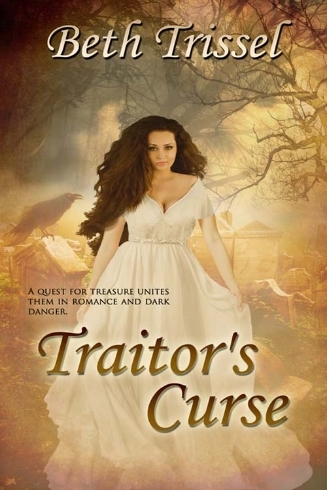 Ghostly, Gothic, historical romance novel, Traitor's Curse, the sequel to Traitor's Legacy, and the third novel in the series, came out in print and eBook autumn 2015 from The Wild Rose Press.


