Showing posts with label bluebells. Show all posts

Tuesday, February 28, 2017

Herbs and Flowers For A Fairy Garden

Who doesn’t want to attract fairies to their garden? Of all the herbs associated with the little folk, the most important one is thyme, which I love. I’m forever planting more varieties of thyme. In Shakespeare’s A Midsummer Night’s Dream, Titania, the fairy queen, sleeps in a bed of wild thyme growing on a bank. Sure. Why not?

(Thyme in our garden)

Foxglove is also essential for a fairy garden. According to legend, fairies sleep in the bell-shaped flowers, and wear them as gloves. Which use they choose, probably depends upon the size of the fairy. Other common names for foxglove include fairy fingers, fairy thimbles, and fairy cap. However, I'm extremely challenged in growing foxglove in my farm garden(s). The plants soon figure out they're not in their native dappled woodlands. 


(Foxglove)

Another favorite herb is saffron, also known as the saffron crocus, which bloom in the fall. Fairies are said to be especially fond of this culinary herb/spice used for flavoring cakes and dyeing cloth. Other recommended plants are fragrant rosemary and roses. Roses are much loved by fairies for their beauty and divine scent, and by me. And I am never without rosemary. I bring these herbs indoors in pots in late fall. They’re not exuberant about life in my sunspace but generally survive to glory again in summer. Wood anemones are beautiful plants preferred by fairies because the flowers close at the onset of bad weather and at night and offer the tiny beings a safe spot to rest or wait out the bad weather. I have some anemones, also called windflowers. These beauties grace the spring garden.

(Rosemary, Geraniums, and Lavender in my garden)

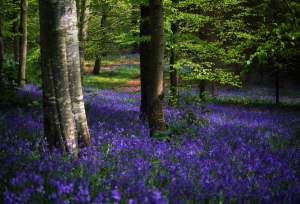
Not to neglect bluebells, also beloved by fairies. These beautiful blue flowers that carpet woodlands in spring are also known as harebell, Scottish bellflower, and fairies thimble. It was, and maybe still is, widely believed that fairies live among the flowers. Another name for bluebells is Dead Man's bells because fairies were thought to cast spells on those foolish enough to pick or damage the delicate blossoms.

When meandering through drifts of bluebells, it’s wise to stick to the path, or you may stir up the wrath of fairies and release the spells trapped in the blooms. Never a good idea, and one that would be echoed by our resident fairy expert, my 12-year-old niece, Cailin, who warns never step into a circle of flowers or go anywhere without the fairies' permission, or they will get very upset. And you do not want an upset fairy, or fairies, on your hands. Particularly the furious wind fairies, but that’s another story.

(Virginia bluebells and narcissus in my garden) 

A dear author friend of mine who is quite knowledgeable about fairies says they love many kinds of herbs and flowers. She has spotted some tiny ones in photographs of my garden. I’ve read they are drawn to the same plants that attract butterflies and hummingbirds. Keep watch, you never know where they may be.

Saturday, September 10, 2016

The Magick of Fairy Thimbles by Author Patty Koontz

Do you believe in fairies? Wee Darby and I most certainly do! Have you ever noticed a sparkle of tiny lights or gotten a quick glimpse of flickering movements from inside flower petals or beneath a cluster of wildflowers? Or even “thought” you just “might have heard” some giggling or sounds of  flutes playing soft whimsical tunes, while taking a stroll by fragrant, colorful flowers, that made you smile for no reason? If so, the next time you decide to go outside and enjoy the beauty of nature, you might want to take a closer look . . .
chapter-4-copyright
Glens of Antrim, Bluebells, Portglenone Forest, Ireland

Have you ever heard the legend of the Bluebell Fairy Thimbles – then you’re in for a grand surprise when you read about the fairies that live in the fields of bluebells, which grow wild in Ireland and Scotland. Wee Darby and his fairy niece, Pantera, are delighted to share a wee bit about the magical lore...The legend tells of fairies that live among the bluebells growing in charming meadows and visited by hares (rabbits).  And humans, (or Krindles, as the fairies call us from what I’ve learned from Wee Darby), should be careful not to disturb or pick these flowers – you never want to anger the fairies – as they can play tricks on you.  Its been told how people even believed that witches turned themselves into the hares and hid among the precious plants to keep out of sight and danger. Make sure you ask permission first – the next time you get the urge to pick the precious plants . . . .
You might be surprised at just “what” or “who”  you might find...
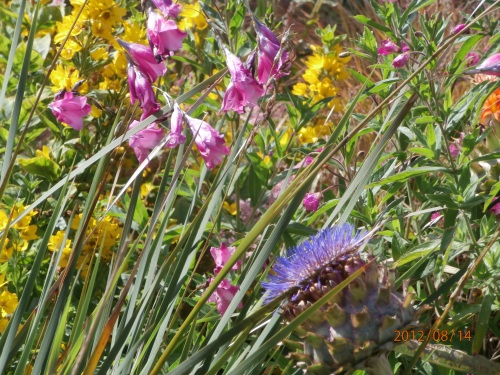
Here’s some lovely flowers I took photos of on my visits to Ireland and Scotland – I felt certain the fairies would love to hide in these...take a closer look, you never know. . .20150927_061611fairy-flowers
OLYMPUS DIGITAL CAMERA
Wee Darby and I are delighted you stopped by, and encourage you to please feel free to leave us comments, and let us know if you enjoy the site. We hope everyone decides to join us again in October, to help us celebrate the release of “The Magick of Wee Darby”! We have quite a few surprises coming up next month – just in time for a Fall Harvest celebration and Halloween! We promise, you won’t want to miss it....Bye for now
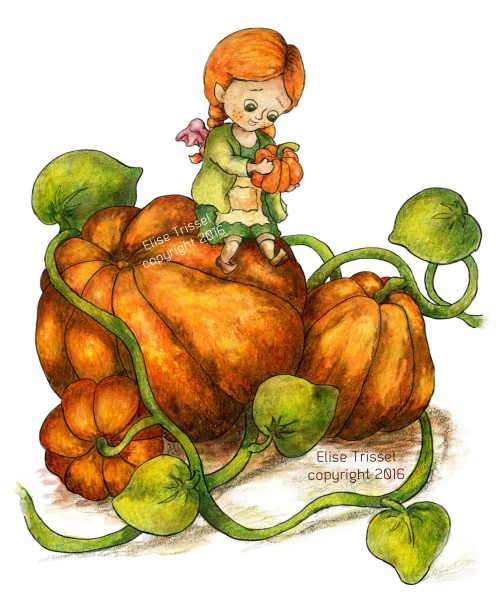
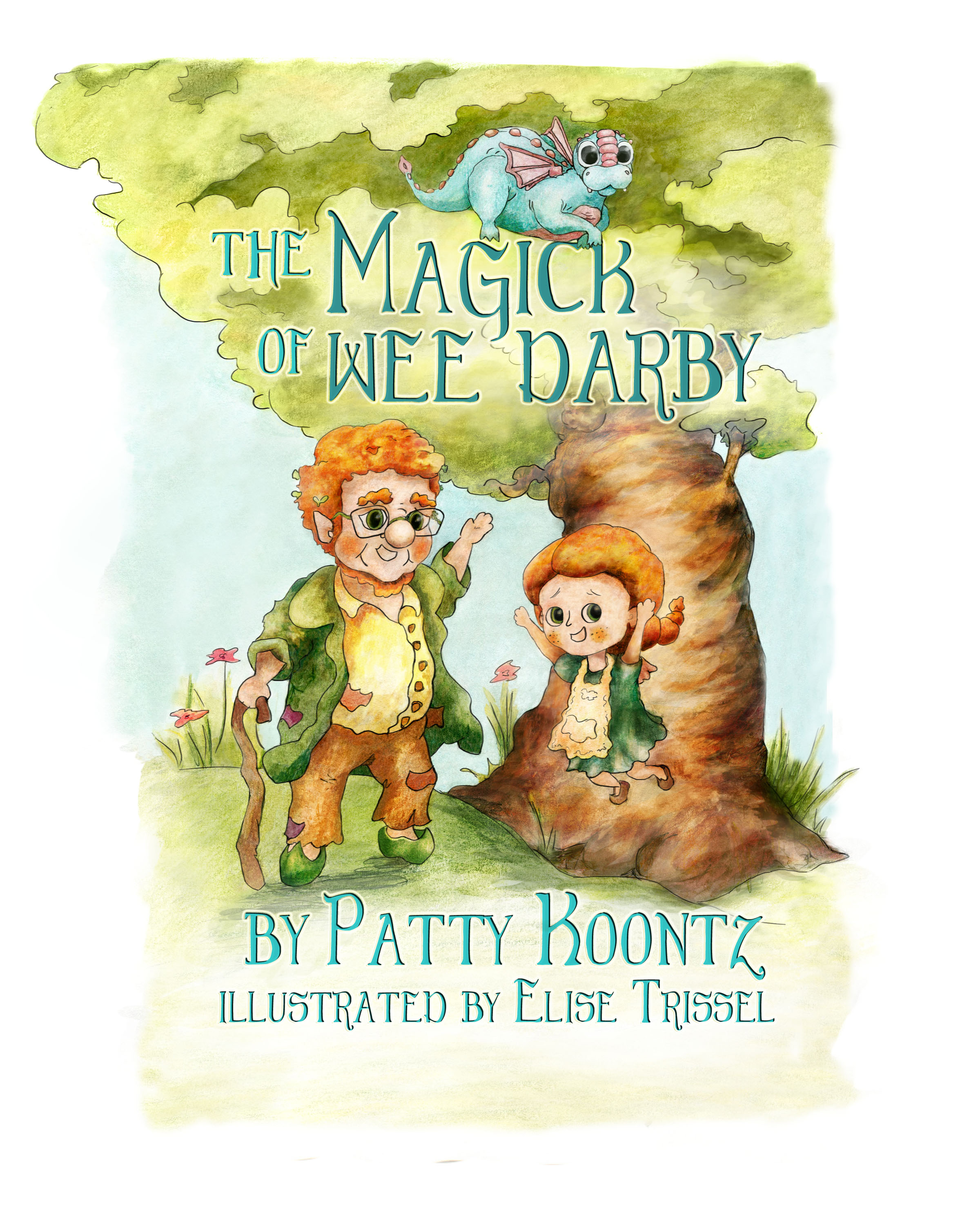
(A Lovely illustration of my wee Pantera, (a fairy with tiny wings, who can’t fly), on her first official visit to a pumpkin patch in America) (drawn by the talented, Elise Trissel)
chapter-7-copyright


To pre-order a copy of The Magick of Wee Darby, click here:
cover_full trim_


Saturday, May 2, 2015

The Darling Buds of May

A soft spring day in the Shenandoah Valley of Virginia is scented with the sweetest blossoms. Many of our best loved flowers bloom in spring. Perhaps because they come after a long, cold winter, and are nature's reward. Or God's. Either way, I thought you might enjoy seeing some images my talented daughter Elise took of our garden(s) recently. I say gardens, plural, because we have many beds. Beyond the yard and gardens, we gaze down to the green meadow surrounding the pond like a gem from the Emerald Isles. And up above the glistening grass and green rye fields, are the wooded hills. Tender new leaves flushed with rose blend in with the many shades of green coloring the trees. Beyond the hills are the Allegheny Mountains. On a clear day, we can see the ridges tinged in green rising in the distance. Spring comes later in the mountains, but it comes in all its wealth and beauty. But back to the farm.

Below are some lovely quotes to accompany these images, with insightful commentary.


"I love spring anywhere, but if I could choose I would always greet it in a garden." ~Ruth Stout


I totally agree with Ruth Stout, and have her gardening book. A real treasure.


"If we had no winter, the spring would not be so pleasant; if we did not sometimes taste of adversity, prosperity would not be so welcome." ~Anne Bradstreet


Amen, Anne Bradstreet. 


"Our spring has come at last with the soft laughter of April suns and shadow of April showers." ~Byron Caldwell Smith, letter to Kate Stephens


What a beautiful romantic thing to write.


"The year’s at the spring
And day’s at the morn;
Morning’s at seven;
The hillside’s dew-pearled;
The lark’s on the wing;
The snail’s on the thorn;
God’s in His heaven -
All’s right with the world!"

~Robert Browning

Robert Browning is quite the optimist, which one can better aspire to be if one spends a great deal of time in a garden. The world has run mad, but love still shines brightly. And he was deeply in love with the talented poet who became his wife, Elizabeth Barrett Browning.

"And Spring arose on the garden fair,
Like the Spirit of Love felt everywhere;
And each flower and herb on Earth’s dark breast
rose from the dreams of its wintry rest."
~Percy Bysshe Shelley, "The Sensitive Plant"


I do love the English Romantic Poets. Now, we must have some Keats.


"A thing of beauty is a joy for ever:
Its loveliness increases; it will never
Pass into nothingness; but still will keep
A bower quiet for us, and a sleep
Full of sweet dreams, and health, and quiet breathing." ~John Keats


Why did Keats value quiet breathing? Because he died young of consumption. But he knew love, and was in love with a wonderful woman. He also deeply loved nature and flowers.


"Every spring is the only spring — a perpetual astonishment." ~Ellis Peters


This is so true. I never weary of the delights of spring.


"The naked earth is warm with Spring,
And with green grass and bursting trees
Leans to the sun’s kiss glorying,
And quivers in the sunny breeze."
~Julian Grenfell


I can't say it any better than this.


Flowers in order are bleeding heart, tulips in front of the old red barn, Virginia bluebells, violets arranged in an old bottle we found on the farm that turned lavender in the kitchen window, cherry blossoms, and a bouquet of lilac beside the large potted geraniums on our sunspace. Elise made the arrangements and took all of the images herself.


For more on me, please visit my blog at:  https://bethtrissel.wordpress.com/