Showing posts with label Red Bird's Song. Show all posts

Friday, November 7, 2014

The Wonder of Sassafras


sassafras leaf in autumnIn need of a tonic? Sassafras comes to mind and figures prominently in my colonial American historical romances set in the Alleghenies among the Native Americans. Think the colonial frontier–The Last of the Mohicans–and you’re there.
Back to sassafras. I love the tree’s varied mitten shaped leaves and its distinctive, aromatic scent. My parents have a sassafras tree growing in their yard, but I’d have to head into the mountains to get my fix, or buy sassafras from the small local grocery store.
*Note to self, plant sassafras trees. Maybe if I put in an entire grove some would survive. Our challenge is the cows which occupy much of our land and eat anything not protected behind secure fencing. Saplings are among their favorite delicacies.
You might be interested to learn, as was I, that Christopher Columbus is said to have quelled mutinous seamen by the sudden sweet smell of sassafras which indicated the nearness of land. Not only did it aid in the discovery of the New World, but was an important export to Europe in the early days of colonial American, even exceeding shipments of tobacco.
Wine made from the darkly blue berries has been imbibed for colds. During the spring-flowering period, the blossoms were simmered to make a tea for reducing fevers. A blood purifying spring tonic was and still is imbibed from a tea made by brewing the roots. A tea distilled from the bark was believed to aid in the treatment of bronchitis, respiratory ailments and tummy upset. Chewing the bark was thought to help break the tobacco habit, a problem even in the early days of this country. The roots were distilled and the oil from them used to flavor many products including ginger ale, sarsaparilla, cream soda, root beer, toothpaste…
Sassafras leaves in autumn
A poultice made from the leaves and laid on wounds was used to stop bleeding and aid in healing. Native Americans steeped in the many uses of sassafras passed their knowledge along to European settlers in the colonial frontier. A tea from the bark was also thought to be beneficial in the treatment of venereal disease, needed by both Indians and colonists alike. If you wonder what ailments afflicted folk in the early days of this country, you need only read what they were most interested in finding treatments for and cancer doesn’t make the top ten.
How to make sassafras tea: One method is to vigorously scrub several roots, a couple of inches long, and use the whole root, or cut them in into pieces, and bring to a boil in three pints of water. Reduce heat and simmer for fifteen minutes. Remove from heat, cover, and steep for another ten minutes before straining and serving. Yet another method is to drop several roots into a quart of boiling water, remove from heat and steep then serve. A pound of roots will make 4 quarts of tea and can be used several times before they lose their strength.
For the bark, especially used as a spring tonic, cut or grind a teaspoon of bark and steep in a cup of boiling water for ten minutes, strain and sip. The tea from either root or bark should have a yellowish red hue, rich smell and pleasing taste. It can be thinned with milk or cream and sweetened. I would add some honey, but those of you who like it plain, enjoy.
And good health to us all.

Sunday, June 3, 2012

The Story Behind Award Winning Colonial Native American Romance Novel Red Bird’s Song

Quantcast2012 EPIC eBook Award Finalist

Red Bird’s Song is the story of my heart for many reasons.  The initial encounter between Charity and Wicomechee at the river (in the Colonial Frontier) was inspired by a dream I had on New Year’s Eve–a highly propitious time for dreams–about a young warrior taking an equally young woman captive at a river and the unexpected attraction between them.  That dream had such a profound impact on me that I took the leap from writing non-fiction essays (by hand back then) to historical romance novels and embarked on the most amazing journey of my life.  That was years ago and the saga continues.  I also met the prophetic warrior, Eyes of the Wolf, in another vivid dream at the advent of this adventure, so when I describe him in the book I’m envisioning a character I feel I know.
The setting for much of Red Bird’s Song is the same asThrough the Fire, the spectacularly beautiful Alleghenies, part of the colonial frontier.  Much of the history and events depicted in the storywere inspired by accounts I came across while researching my early American English/Scots-Irish roots and the Border Wars.
Most of you have heard of The French and Indian War, the time period in Through the Fire, but there were others.  (Chief) Pontiac’s Warfollowed on the heels of the French and Indian and is the time frame of Red Bird’s Song.
Lord Dunmore’s War took place a decade later–all occurring in the colonial frontier.
Actually, life in the frontier was continually unsettled up through and even after The American Revolution had drawn to a close and warfare a reality. The boundaries of the frontier just kept shifting farther west.
In the early-mid 18th century, the Shenandoah Valleyof Virginia was the frontier and only hardy souls dared settle here.  The bulk of these were the tough Scots-Irish.  I think if the Indians had only had to fight regular British troops they might ultimately have won because they scared the s— out of men trained for conventional warfare, but the long knives were another matter.  They weren’t easily intimidated and soon learned from their cunning enemy.
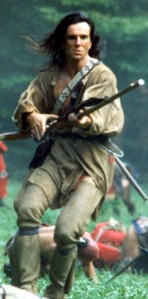
Although Hawk Eye in The Last of the Mohicans is an adopted Mohican, his lifestyle and behavior is that of a colonial frontiersman.  The more rugged of these men dressed as he did, much in the Indian way.  They hunted & fought with muskets, tomahawks, and their famous knives.   Indians acquired these knives as well.  They blended traditional weapons and ways of living with new found tools and weapons of Western man.  A highly adaptable people.
The attack at the opening ofRed Bird’s Song in the Shenandoah Valley is based on one that occurred to my ancestors at the tail end of Pontiac’s War and is recorded by Historian Joseph A. Waddell in The Annals of Augusta County. A renegade Englishman by the last name of Dickson lead the war party that attacked them.  Initially I’d intended to make the Colin Dickson in Red Bird’s Song a villain but as soon as he galloped onto the scene I knew differently.  He’s now one of my all time favorite characters.
Wicomechee, the hero in Red Bird’s Song, is based on the Shawnee warrior by that name who lived early in the nineteenth century and to whom I have ties.  The Moffett’s, an early Valley family I’m related to, include a reference to him in their genealogy.  Wicomechee’s father, John Moffett, was captured in Kentucky by the Shawnee at the age of eight and adopted into the tribe.  It’s said he was a boyhood companion to the great chief Tecumseh, a chief for whom I have enormous admiration.  The accounts of John Moffett and Wicomechee are recorded by Waddell.  It’s also noted that during the Black Hawk Wars Wicomechee recovered the captive daughters of a Dr. Hull and brought them safely into camp, which reminds me of Hawkeye in The Last of the Mohicans.  I’ve included more on this amazing warrior at the end of the novel as a bonus for those who read it.
Charity, the heroine in Red Bird’s Song, is drawn from a reference I came across of a young Scots-Irish woman captured along a river in the Virginia frontier.  Remember, early Virginia was enormous.  Augusta County, near where I live, encompassed present day states and was later sectioned off.  Nothing is known of what happened to that young woman.  Just a single line in an old account of captives taken during theIndian wars.
The same sort of capture and subsequent lack of information occurred to the sister of my great grandmother a number of greats back.  Both of these women may have made new lives with the Indians.  There are records of women who married into the tribes and did not want to leave their warrior husbands and adopted people.  Tragically, some those captives who wished to remain were later forced to return to their white families through treaties, causing great heartache.  There are also accounts of captives who couldn’t get out fast enough!  One such captive was Daniel Boone.
Charity’s cousin Emma inRed Bird’s Song is based on the young, very  pregnant wife carried off in that original attack.  In the actual account it’s uncertain whether or not her husband survived his injuries.  His last name was Estelle, as it is in the story, and we have early Estelle’s in our family tree.   However, that name is no longer common in the Shenandoah Valley but has vanished into the mist of time along with a mostly forgotten era and its people.  Few remember or care.  Perhaps you will come to.
James, the little boy in Red Bird’s Song, is drawn from the lively child taken in the original attack who lived to tell about it and did so with great relish.  He’s also modeled after several high spirited little boys I’ve known and loved.  James is a tribute to my young nephew, Matthew Trissel, killed in a farm accident, and my youngest daughter Elise’s close friend, Garry Keens, killed by a drunk driver.  Wonderful boys, gone before us but never forgotten.
Although Eastern woodland Indians had a reputation for brutality, once a captive was adopted they were well treated and regarded as equals.  Warriors were unpredictable and didn’t always behave in a certain manner anymore than all European men acted alike.  Warriors could be unexpectedly gentle or sadistic.
I’ve read accounts of warriors getting up in the night to stir up the campfire and cover captive women and children with blankets, even delay their journey while a woman gave birth.  These men protected and fed their captives while other warriors burnt them at the stake.  It all depended on who took you captive and why as to what your fate would be, and whether they kept, traded, or sold you.  Or killed you in retribution for a love done lost at the hands of the English.  
Of course, some warriors didn’t take captives.  Just scalps.  The warriors most feared in the Shenandoah Valley were the Shawnee, regarded as the fiercest of all.  The more I studied these remarkable people, the more engrossed I became, especially as they figure into our family roots.
The sources I used in researching Red Bird’s Song would take up pages, my list of reading material sizable, and I’m indebted to the long-suffering anthropologists and archeologists who answered my many questions and supplied me with research materials, also helpful reenactors, historians, and historical sites.  Most of all, I’m indebted to my own forebears.  Without these hardy souls, their faith in God and determination to forge a life in the New World, I wouldn’t be here.  Neither would many of you.
                                            ****
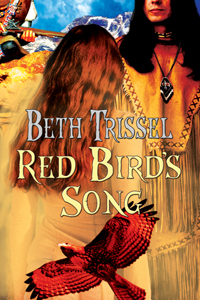
*Colonial Native American Romance Novel Red Bird’s Song is available in print and or digital download from The Wild Rose Press, Amazon,  Barnes & Noble, and many other online booksellers.  *Bookseller links at the right side of my blog.
To read excerpts from RED BIRD’S SONG~
*Image of Hawk Eye from the 1992 film, The Last of the Mohicans, and istock royalty free images. My mother Pat Churchman took the spectacular one of the Alleghenies and the old family musket, powder horn and hunting pouch.   *I am seeking a source for good quality Native American images to purchase. Please contact me: bctrissel@yahoo.com

Thursday, October 13, 2011

Terrific Review for Red Bird's Song from the Romance Studio!

“I liked this book so much. The author has done a magnificent job of creating both characters and setting. The descriptions of the area are wonderful and put the reader right in there with the characters. Wicomechee is a wonderful, loving and patient hero, one the reader will easily falls in love with. Charity is a spirited young woman who fights against her love for the Shawnee warrior, not willing to accept what could be her alienation from her own people, the English. Her willful spirit is depicted by her bouts of fleeing from Wicomechee and her fearlessness in standing up to him. The author gradually reveals hints of what will happen via the visions Charity experiences. The love between Charity and Wicomechee gradually grows to where Charity can no longer deny it and she becomes totally loyal to Wicomechee. The love scenes are sensuous and tasteful. Their love and lives are greatly tested at the end, and accompanied by a wonderful surprise."
"I will most certainly read other books by this author.”

Overall rating:
Sensuality rating: Very sensual
Reviewer: Jaye Leyel
October 12, 2011

Sunday, March 20, 2011

Native American Historical Romance


The opening to both of my Native American Historical romance novels, THROUGH THE FIRE and RED BIRD’S SONG were inspired by dreams, as were some of the subsequent scenes in them.  I also encountered several of the key secondary characters in that mystical realm.  Behind these stories lies an immense wealth of research.  Boggles the mind how much work went into them (into all my stories, really).  I have shelves of books and piles of manuscripts given to me by historians, old journals, etc, heaped here and there in my house.  Now, of course, there are all the online sources too, but back in the day, there weren’t.   And I began this research fifteen plus years ago.
Apart from all of these non-fiction sources, I’ve read very little NA based fiction.  And I’d already written Red Bird’s Song before I got around to seeing the superb 1992 film,  The Last of the Mohicans.  Granted I loved the movie, but never set out to reproduce it in any of my novels, only to say that they have that sort of flavor.
My admiration for Native American peopleand their culture is a long-standing one, as is my profound regret at the horrific treatment they suffered at the hands of Western man.  In my stories, I aim to depict both points of view with varying the shades of grey.  No one group is ever all bad or good–people are people the world over.
I tire of some readers telling me my hero, if he’s a warrior, wouldn’t do this or that.  First, he doesn’t have to fit a Native American cookie cutter mold.  He’s an individual.  And yes, I consulted historians, anthropologists, archeologists, reenactors and even some of the Shawnee themselves before and during the writing of these stories, so I had a good idea what comprised traditional behavior for that era, and there’s no one size fits all for warriors.  It just all depended.
Bear in mind that Eastern Woodland warriors intermingled heavily with the whites, or could have, through trade, acting as guides…not to mention the inevitable warfare and captive situations that threw the two groups together.  Many warriors spoke at least some English and possessed an awareness of Western ways.   Again, to various degrees.   Some were educated.  The eloquence of their words are with us still, at least in those instances where they’ve been preserved.
Back to the interaction, remember, the first settlers to the New World arrived  in the late 1500′s (think Roanoke Island and The Lost Colony), and Jamestown was established  in the early 1600′s.   So, Eastern  Woodland Tribes had a lot of experience  with Europeans by the time period my stories take place.  Unlike western and Plains tribes, some of whom hadn’t even seen whites until the mid 1800′s.   Makes an enormous difference.
I’m at work on the sequel to Through the Fire, a story that also builds on the history of Red Bird’s Song and follows closely on its heels time wise.