Showing posts with label New World. Show all posts

Saturday, September 29, 2012

If You Like Historical Romance with a The Last of the Mohican's Flavor


THE FRENCH AND INDIAN WAR, A SHAWNEE WARRIOR, AN ENGLISH LADY, BLOOD VENGEANCE, DEADLY PURSUIT, PRIMAL, POWERFUL, PASSIONATE…THROUGH THE FIRE
June 1758, the Colonial Frontier, the Allegheny Mountains of Western Virginia, the Shawnee Warrior Camp. 
Mild breezes caressed Rebecca’s face, wafting the tang of wood smoke and the meaty aroma of roasting venison, nudging her from a place of no dreams. Water gurgled over stones. She must lie  near a stream. Earthy humus cushioned her beneath, and a woolen blanket covered her. She traced the cloth with her fingertips.
The ache in her head made it hard to think. Groaning softly, she opened her eyes to the branches of a great oak silhouetted against the saffron sky.  Sunset. How had she come to be lying sore and bruised on the forest floor? Was Kate here?
Men’s voices drew her. She strained to understand their words. Bewildered and frightened, she shifted gingerly onto her side, peering through smoky shadows at a series of campfires.
Dear God. Warriors, not soldiers, encircled each blaze—dozens of them. Memories of the ambush rushed back as she covered her mouth in a futile effort to stifle a cry.
All heads turned, and a host of dark eyes glinted at her.
She went rigid with dread, her heart pounding. She was as good as dead. Why did she yet live?
After an agonizing moment, the men resumed their banter, some smoking pipes. One tall warrior rose from the cluster seated around the nearest campfire. His muscular body was clad only in an elk skin breechclout, blue cloth leggings, and buckskin moccasins that reached well up his calves; the same skins fashionable men wore with a far more primitive use. A sheathed knife hung from the woven belt at his waist. He’d slung a tomahawk at his side. The blade protruded above his belt and the carved handle below, ready to grasp in an instant.
She watched him intently. Her life hung on his every move. But he didn’t reach for either weapon.Rather, he bent to dip a cupful of steaming liquid from the kettle near the fire then walked to her.
Icy fingers clenched, every muscle taut, she stared up at him. Even without dry-mouthed fear, her eyes would have been fastened on this formidable male, like some New World god sprung from this wild land. A shudder coursed through her rigid body as he knelt beside her.
“I’ll not harm you.”
His assurance in clear English took her by surprise. Not only that, but there was a familiar quality about his face, his voice. Striving to remember, she searched every contour: eyes as black as a night without stars, high cheekbones, sculpted nose, strong chin. His lightly tanned skin was unstreaked by red and black paint. No silver cones hung from his ears. No ornament pierced his nose. Instead of the scalp lock worn by most braves, his black hair hung loose around his shoulders.
She shifted her gaze to the muscled planes of his bare chest, an eye-opening sight for a woman accustomed to long-sleeved shirts, waistcoats, and cravats.
She let her eyes drop lower. His narrow breechclout revealed a great deal of masculine thighs. She hurriedly returned her widened stare to his dark scrutiny. Gaping at a man, even a potentially deadly warrior, wasn’t her nature.
For a moment, he simply looked at her. What lay behind those penetrating eyes?
Through the Fire  is available in print and ebook at Amazon Kindle, The Wild Rose Press, Barnes & Noble and other online booksellers.

Saturday, July 7, 2012

Anyone Up For Buried Treasure?


To quote Shakespeare, ‘All that glitters Is not gold,’ but SOME of it is.  The lure of buried treasure, an occasional flight of fancy for some and a soul-selling obsession for others, is an ageless fascination.  No soul bartering here, but I’ve done some research for would be treasure hunters and discovered  there are many yet undiscovered troves in America.  Apparently in every state according to the book Buried Treasures You Can Find by Robert F. Marx.  An interesting and informative read, however the font size decreases to minuscule proportions when Mr. Marx reaches the part of the book where he actually lists possible sites, so don’t expect me to recap without a magnifying glass.  Instead I’ll touch on some of his general  guidelines.  I, for one, would be happy to discover even a single gold doubloon , but it would have to wash ashore.  I’m not scuba diving.
Author Robert Marx has been treasure-seeking ever since he quit his newspaper route as a youth and has recovered an astonishing array of lost, hidden, or mislaid treasure both on land and plucked from the depths of the sea. First of all, he says you need a good metal detector and devotes pages to weighing the merits of various kinds.  Agreed, a premier detector would be fun to have, and considering I live in historic Virginia, I might actually find a Civil War button or something from the past which would thrill me.  Bear in mind that I’m easily delighted.  I once unearthed what I thought were shards of old pottery while planting a peach tree that turned out to be the remnants of an antiquated septic system.  Not very exciting.  However, my determination to dig the hole deeper in search of my imagined find got the tree planted in a hurry.  The most I’ve ever unearthed on our farm are old medicine bottles, but I’m fond of old bottles and have a kitchen windowsill filled with them.
The next step Mr. Marx advises after you’ve conducted a thorough study of metal detectors (I haven’t) and made your purchase is to learn how to use it properly and practice, practice.  Yada, yada,  we’re up to page 63 now–this book is for serious seekers–when he describes some of the most famous still to be discovered caches, also discussing WHY people bury treasure.  I assumed because they didn’t want thieves to find it, but there’s more.  In Colonial America banks were rare and often unavailable so most people buried money on their property.  Indians might suddenly attack  or the British were coming, so they prepared for calamities, possibly dying before recovering their money.
During the Civil War people in the South buried their treasures not only to keep them out of enemy hands but to avoid having to donate to the Confederate Treasury for the war effort.  As before, the ‘safest bank’ was a hole in the ground or some other secret location.  Some of the largest undiscovered treasures occurred during the Civil War: Excerpted from the book Civil War Gold & Other Lost Treasures by W. Craig Gaines. ”The really big lost treasure is that of the Confederate Treasury in custody of Jeff Davis upon leaving Richmond, fleeing the Yankee hordes. Portions of it are believed to be in Greene & Morgan Counties of Georgia. The combined hoard is believed to be between $500,000 and $600,000 in gold, the combined values of the Richmond Bank & Confederate Treasury. Most made it to Washington, Georgia, but an untold amount remains unaccounted for.”
On the Western frontier, there were many cutthroats who preyed on hapless pioneers, and Lord knows those gold prospectors were justifiably paranoid.  So they kept their big strikes secret, some taking that knowledge with them to the grave.  And there were the gamblers, soldiers, saloon keepers…who hid their earnings.  Not to mention the stage-coach robbers who hid their  loot while escaping from the posse,  thinking to return for it later. But they didn’t all.   Get the picture?  Untold treasure is still out there–somewhere.
If you’re seeking a specific cache, and there are some famous ones, Mr. Marx says to first be certain it truly exists and isn’t the stuff of legend.  Would you believe some disreputable people will  try to sell you treasure maps that aren’t actually genuine.  *Shakes head.
Mr. Marx suggests seeking documentation recorded as closely to the time of the original event as possible and that old newspapers and books are a valuable resource.  If you’re just searching out potential historic sites, then he suggests ports, river banks, anywhere construction is moving earth, old homes, ghost towns, abandoned trash dumps from bygone days… Mr. Marx has oodles of suggestions and lists them by state.
I’d love a really good metal detector…

Sunday, March 20, 2011

Native American Historical Romance


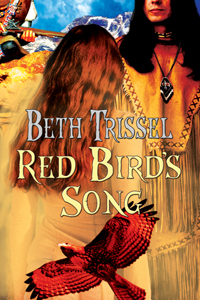
The opening to both of my Native American Historical romance novels, THROUGH THE FIRE and RED BIRD’S SONG were inspired by dreams, as were some of the subsequent scenes in them.  I also encountered several of the key secondary characters in that mystical realm.  Behind these stories lies an immense wealth of research.  Boggles the mind how much work went into them (into all my stories, really).  I have shelves of books and piles of manuscripts given to me by historians, old journals, etc, heaped here and there in my house.  Now, of course, there are all the online sources too, but back in the day, there weren’t.   And I began this research fifteen plus years ago.
Apart from all of these non-fiction sources, I’ve read very little NA based fiction.  And I’d already written Red Bird’s Song before I got around to seeing the superb 1992 film,  The Last of the Mohicans.  Granted I loved the movie, but never set out to reproduce it in any of my novels, only to say that they have that sort of flavor.
My admiration for Native American peopleand their culture is a long-standing one, as is my profound regret at the horrific treatment they suffered at the hands of Western man.  In my stories, I aim to depict both points of view with varying the shades of grey.  No one group is ever all bad or good–people are people the world over.
I tire of some readers telling me my hero, if he’s a warrior, wouldn’t do this or that.  First, he doesn’t have to fit a Native American cookie cutter mold.  He’s an individual.  And yes, I consulted historians, anthropologists, archeologists, reenactors and even some of the Shawnee themselves before and during the writing of these stories, so I had a good idea what comprised traditional behavior for that era, and there’s no one size fits all for warriors.  It just all depended.
Bear in mind that Eastern Woodland warriors intermingled heavily with the whites, or could have, through trade, acting as guides…not to mention the inevitable warfare and captive situations that threw the two groups together.  Many warriors spoke at least some English and possessed an awareness of Western ways.   Again, to various degrees.   Some were educated.  The eloquence of their words are with us still, at least in those instances where they’ve been preserved.
Back to the interaction, remember, the first settlers to the New World arrived  in the late 1500′s (think Roanoke Island and The Lost Colony), and Jamestown was established  in the early 1600′s.   So, Eastern  Woodland Tribes had a lot of experience  with Europeans by the time period my stories take place.  Unlike western and Plains tribes, some of whom hadn’t even seen whites until the mid 1800′s.   Makes an enormous difference.
I’m at work on the sequel to Through the Fire, a story that also builds on the history of Red Bird’s Song and follows closely on its heels time wise.