Monday, June 18, 2012

The Wealth of Stories in Old Homes


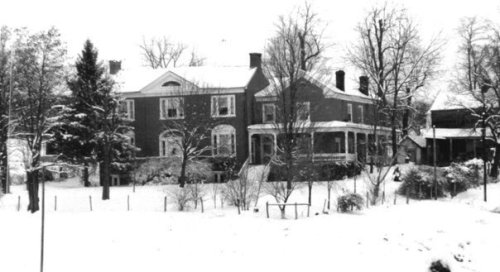
My fascination with old homes and plantations, a theme that figures regularly in much of my writing, is partly inspired by my father’s family home place, circa 1816, located outside the historic town of Staunton, Virginia in the lovely Shenandoah Valley.  

*Note I did an earlier post on Staunton.
Called Chapel Hill (old homes invariably have names) this Georgian style brick house has been in the family for eight generations.
Sadly, the old kitchen, a separate building from the main house, no longer stands but I remember it 
from my childhood. Some outbuildings still remain, among them the smokehouse and stable.  The house itself is filled with a wonderful collection of heirlooms. The miniature china dogs I played with as a child turn up in my Revolutionary War adventure romance novel Enemy of the King.

My ghostly, light paranormal romance novella, Somewhere the Bells Ring, is set at Chapel Hill at Christmas, the season I remember best there. Although I also visited at many other times of the year.

The home in my light paranormal romance novel Somewhere My Love is a compilation of Berkeley and Shirley plantations with flavors of Chapel Hill, and lord only knows what else considering all the old  homes I’ve toured or lived in over the years.  The curved staircases I favor in my novels are replicas of the one at Chapel Hill that winds from the foyer in the front hall up to the second floor.


As a child, I’d anxiously wander up and down those stairs in the moonlight in my white nightgown, no doubt looking like a ghost girl, because I wanted to be with my parents asleep downstairs, but hated to admit it during the day when my cousins were about.  So, I’d be tucked in with them upstairs, far from asleep, and worries of the night would settle in. Then I’d wandered the steps until I finally made a bolt for mom and dad, feeling quite foolish in the bright sunshine of morning with birds singing.  However, nighttime in that house was quite another matter.

*Image of stairs in far hall


            
The ‘snake thing’ in Chapter One of Enemy of the King is drawn from an incident that happened to me at Chapel Hill when I was a girl during my night wanderings.  Back in my contest circuit days, more than one judge told me a snake couldn’t possibly get into a house and wind around the antlers of a buck mounted up on the wall.  They can and one did; a rather horrifying discovery for a child to make in the wee hours.  
And then there’s the fact that I always suspected the house was haunted…not sure by whom.  But I’m not entirely certain I was alone on those stairs, though whoever kept me company was benign.

To clarify, I do not live at Chapel Hill. My aunt does, but it’s not far from where my husband and I live on the family farm in nearby Rockingham County.

My time travel romance Somewhere My Lass opens in an old Victorian home in the historic town of Staunton, (mentioned above).  
I also love homes of the Victorian era.  Our farm-house dates back into the 1800’s. Old homes from the nineteenth or eighteenth centuries (and beyond) have character, charm, mystery, and sometimes, ghosts.   

Beneath the staircase at Chapel Hill is a deep closet, long rumored to be the site of a secret passage now closed from view.  Whether any truth exists to this family legend I do not know and apart from tearing out the back of the recessed closet can’t think how else to make this determination.  But I assure you, there’s a secret passage in the story I set there.

The Joshua Wilton house in Harrisonburg VA is a beautifully restored Victorian home operating as an Inn and Restaurant.  They also serve tea in the afternoons if visitors wish to come only for that lovely occasion.

For more on the Joshua Wilton house visit: http://joshuawilton.com/
Shirley Plantation and Berkeley Plantation homes pictured in that order.
Chapel Hill is pictured first in color and then black and white.

Saturday, June 9, 2012

Scintillating Sample from The Bearwalker's Daughter--Historical-Paranormal Romance


Excerpt from Chapter Three

Autumn, 1784, the Allegheny Mountains of Western Virginia, the Scots-Irish Gathering in the McNeal Homestead

Guilt pricked Karin’s conscience. Stealth was at odds with her nature, but an inner voice summoned her, an irresistible melody. She instinctively knew where the music came from and that she must heed the age-old rhythm.

She crept into the main room. The dancers had succumbed to grogginess. Shadowy figures slumbered before the reddish-orange logs in the hearth, rolled up in blankets and deerskins on the floor boards. Other dark forms were bedded down in the loft overhead. Some hardy souls had ventured out into the wind-tossed night after the startling end to the celebration. They’d headed home, but many folks remained within the stout walls of the homestead.

Popping wood settled in the hearth with a shower of orange sparks. Karin paused in mid-step.

No one stirred, except to snore and grunt in their sleep. Generous draughts of strong drink contributed to their unresponsive stupor. Saint Peter himself would have been hard-pressed to wake them. Like a vagrant spirit, she easily stole through the sprawled assembly and into the chamber where they’d taken Jack McCray.

A single candle burned on the circular bedside stand. The fringed pouch which laid on its walnut surface had been stained with use and the horn worn translucent so that it revealed the black powder within. The potentially lethal tomahawk gleamed in the flickering light. 

That same glow illuminated its owner stretched out in Joseph’s place, his long torso and legs spread the length of the mattress.

She needn’t worry that Jack grew chilled. Two brown striped wool blankets snugly wrapped him. She stopped beside his slumbering form, trembling with the cold and shaken by her daring in being where none would want her, except possibly the recipient of her scrutiny. Thankfully, he was unaware of her presence.

Had Jack even known what words escaped his lips when he’d whispered that strange message to her? Likely it was simply the wanderings of a confused mind borne of injury, but mystery veiled everything about the handsome stranger. Even lying there senseless, he drew her as if on the keenest wind.

She trailed her eyes over his face, pale beneath his bronzed skin, though not as drained of color as she’d feared. The covers rested partway down his muscular shoulders and chest. White linen swathed his upper   right arm where she’d applied the bandage. As far as she knew the only clothing he wore was an elkskin breechclout and a woven belt at his waist. He wouldn’t part with his knife. Grandpa had stripped off all else.

The restraints of modesty posed no hindrance to Neeley who’d sponged more of their guest than was seemly for Karin to do. An herbal scent clung to Jack’s clean skin and his freshly combed chestnut hair spread over the pillow. Unaccustomed to a man in this state of undress, Karin returned her close study to his face, disturbingly attractive with a familiar quality in his youthful but ruggedly masculine features.
His even brow and nose bore a strong resemblance to Joseph’s, not so large as to be out of proportion, but distinctive and definitely McCray. Beneath the dark whiskers roughening his firm chin she saw the same small cleft, a family trait. Jack lacked his brother’s reddish tones, though, and was a warm brown from his sun-kissed skin to his hair. More like Uncle Thomas.

Here lay no boy newly sprung to manhood, but a well-honed frontiersman and Lord only knew what else. Joseph paled in comparison with his striking brother, partly because Jack was new and different. Wonderfully so. But she couldn’t stand and stare at him all night.

She laid her hand on his forehead, relieved to find no sign of fever. Neeley was familiar with all the healing herbs and had taught Karin well. Jack’s robust health would also aid his recovery. Confident he was on the mend, Karin let her curious inspection drift to the white stone suspended from the leather cord around his neck. Pink lights in the quartz shimmered with rosy iridescence. Intrigued, she reached out her hand to the polished surface—freezing as he groaned.

His eyes opened. In that instant, any resemblance between the brothers vanished. Jack’s seeing, yet not seeing, gaze fixed on her with a feral gleam.
Fear rushed through her. Snatching her hand away, she spun around.

Not fast enough.

She gasped as he snagged her wrist and jerked her down onto the bed. Snaking his sound arm around her chest, he pinned both arms at her sides. His injured limb was equally able—the pain seemingly forgotten in his craze.

Whipping out his knife, he poised it at her throat. Just like that, she was a heart-pounding slice away from death. Surely her chest would burst.
“What do you want?” he demanded hoarsely.~


***The powder horn and pouch pictured above once belonged to Daniel Boone but has been stolen.  For more on that visit: http://www.boonesociety.org/articles/danielboonpowderhorn.htm

The Bearwalker’s Daughter is available in Amazon Kindle for .99!

Tuesday, June 5, 2012

For Protection Against Spells and Enchantment

The sacred herb, Angelica, as its name alone implies, has a lofty status in the world of herbal lore. I used this herb in my historical fantasy romance novel The Bearwalker’s Daughter. 

I’ve grown Angelica in the garden, a large aromatic plant with lacy white umbels, but it died out and needs to be replaced. An ornamental, angelica makes a nice addition to a perennial herb and flower border, but be certain to allow plenty of room; it reaches a height of 4 to 6 feet.  The flowers are also appealing to butterflies, another plus. This year, I’d like to put in some plants.  I tend to overlook it in the spring planting madness.

“According to one legend, (European-angelica) Angelica was revealed in a dream by an angel to cure the plague (hence the name Angelica or Archangel). All parts of the plant were believed effective against evil spirits and witchcraft. It was held in such esteem that it was called ‘The Root of the Holy Ghost.’

In America it was used by the Iroquois and other tribes as Witchcraft Medicine, an infusion of smashed roots were used as wash to remove ghosts from the house.”  This quote is from an interesting site called Alternative Nature Online Herbal.  You can also view lovely pics of Angelic there.
From Real Magick: Magickal Use and Lore:
“As seen by its name, angelica has been associated with the Archangel Michael. It comes into bloom near his feast day and has been connected to the Christian observance of the Annunciation. Angelica is known for its protection against evil spells.”

From Rodale’s Illustrated Encyclopedia of Herbs: “Throughout history angelica has been a standout herb…supposed to ward off evil spirits and witches. Peasants would weave necklaces of the leaves for their children to wear to protect them. The juice of the roots was used to make Carmelite water, considered a ‘sovereign remedy’ and drunk to endure a long life and to protect against the poisons and spells of witches.”
Here I want to point out that the hysteria over witchcraft peaked in the Middle Ages, but endured well beyond.  


How many unfortunates were burnt at the stake as a result of witch hunts is uncertain but they numbered in the thousands.  Most confessions were gained as the result of torture, although the suggestion has been made that the side effects of some potent herbs made people think they could actually fly and that they possessed special powers.  

And who’s to say that some individuals didn’t have special powers.  But once condemned, few were powerful enough to keep themselves from a bad end.  Note that no witches were ever burned in North America, not even at the Salem Witch Trials.  By then, hanging was the preferred method of execution, far more civilized.  Burning was so sixteenth century.

From A Modern Herbal: (Bear in mind that this was written in the early 20th century, so not all that ‘modern.’  Ms. Grieve has a great deal to say about Angelica–I’ve touched on portions.)
Garden Angelica. Archangelica officinalis.

Parts Used: root, leaves, seeds.

History: Its virtues are praised by old writers, and the name itself, as well as the folk-lore of all North European countries, testify to the great antiquity of a belief in its merits as a protection against contagion, for purifying the blood, and for curing every conceivable malady: it was held a sovereign remedy for poisons agues and all infectious maladies.

The author goes on to say, “After the introduction of Christianity, the plant became linked in the popular mind with some archangelic patronage, and associated with the spring-time festival of the Annunciation. According to one legend, Angelica was revealed in a dream by an angel to cure the plague. Another explanation of the name of this plant is that it blooms on the day of Michael the Archangel (May 8, old style), and is on that account a preservative against evil spirits and witchcraft: all parts of the plant were believed efficacious against spells and enchantment. It was held in such esteem that it was called ‘The Root of the Holy Ghost.’

*Medieval herb garden pictured above

Angelica is unique amongst the Umbelliferae (*which means plants with umbel shaped flowers, think Queen Ann’s Lace) for its pervading aromatic odour, a pleasant perfume, entirely differing from Fennel, Parsley, Anise, Caraway or Chervil. One old writer compares it to Musk, others liken it to Juniper. Even the roots are fragrant, and form one of the principal aromatics of European growth- the other parts of the plant have the same flavour, but their active principles are considered more perishable.

Cultivation: Cultivate in ordinary deep, moist loam, in a shady position, as the plant thrives best in a damp soil and loves to grow near running water.

Parts Used: The roots and leaves for medicinal purposes, also the seeds. The stems and seeds for use in confectionery and flavouring and the preparation of liqueurs.  The dried leaves, on account of their aromatic qualities, are used in the preparation of hop bitters.  Angelica roots should be dried rapidly and placed in air-tight receptacles. They will then retain their medicinal virtues for many years.


The flavour of Angelica suggests that of Juniper berries, and it is largely used in combination with Juniper berries, or in partial substitution for them by gin distillers.

Medicinal Action and Uses: 
Angelica is a good remedy for colds, coughs, pleurisy, wind, colic, rheumatism and diseases of the urinary organs, though it should not be given to patients who have a tendency towards diabetes, as it causes an increase of sugar in the urine.  It is generally used as a stimulating expectorant, combined with other expectorants the action of which is facilitated, and to a large extent diffused, through the whole of the pulmonary region.  It is a useful agent for feverish conditions, acting as a diaphoretic.

An infusion may be made by pouring a pint of boiling water on an ounce of the bruised root, and two tablespoonsful of this should be given three or four times a day, or the powdered root administered in doses of 10 to 30 grains. The infusion will relieve flatulence, and is also of use as a stimulating bronchial tonic, and as an emmenagogue…used for indigestion, general debility and chronic bronchitis. For external use, the fresh leaves of the plant are crushed and applied as poultices in lung and chest diseases.
The following is extracted from an old family book of herbal remedies:
‘Boil down gently for three hours a handful of Angelica root in a quart of water; then strain it off and add liquid Narbonne honey or best virgin honey sufficient to make it into a balsam or syrup and take two tablespoonsful every night and morning, as well as several times in the day. If there be hoarseness or sore throat, add a few nitre drops.’

Angelica stems are also grateful to a feeble stomach, and will relieve flatulence promptly when chewed. An infusion of Angelica leaves is a very healthful, strengthening tonic and aromatic stimulant, the beneficial effect of which is felt after a few days’ use.

The yellow juice yielded by the stem and root becomes, when dry, a valuable medicine in chronic rheumatism and gout.

Taken in medicinal form, Angelica is said to cause disgust for spirituous liquors.  (*It occurs to me that this might be beneficial to alcoholics). It is a good vehicle for nauseous medicines and forms one of the ingredients in compound spirit of Aniseed. Gerard, among its many virtues that he extols, says ‘it cureth the bitings of mad dogs and all other venomous beasts.’~

Cadfael, starring Derek Jacobi, is a fascinating mystery series set in the old Norman England town of Shrewsbury featuring a Crusader turned monk, skilled in the use of herbs and solving murders. A healer atoning for the lives he took as a soldier, Brother Cadfael is often in his herborium at the monastery, busy with his mortar and pestle or distilling some potent elixir. Dried herbs hang in bunches from the rafters overhead, fill baskets and shelves alongside glass vials, crocks and other medicinal vessels made of pottery… kewl stuff.  He also loves to be among the herbs in his garden.  But mysteries often summon him from these simple joys.

The opening theme features sacred Medieval music, haunting voices from ages past. The show is available at netflix, some in instant streaming.  Listen to the clip below…intriguing.


Sunday, June 3, 2012

The Story Behind Award Winning Colonial Native American Romance Novel Red Bird’s Song

Quantcast2012 EPIC eBook Award Finalist

Red Bird’s Song is the story of my heart for many reasons.  The initial encounter between Charity and Wicomechee at the river (in the Colonial Frontier) was inspired by a dream I had on New Year’s Eve–a highly propitious time for dreams–about a young warrior taking an equally young woman captive at a river and the unexpected attraction between them.  That dream had such a profound impact on me that I took the leap from writing non-fiction essays (by hand back then) to historical romance novels and embarked on the most amazing journey of my life.  That was years ago and the saga continues.  I also met the prophetic warrior, Eyes of the Wolf, in another vivid dream at the advent of this adventure, so when I describe him in the book I’m envisioning a character I feel I know.
The setting for much of Red Bird’s Song is the same asThrough the Fire, the spectacularly beautiful Alleghenies, part of the colonial frontier.  Much of the history and events depicted in the storywere inspired by accounts I came across while researching my early American English/Scots-Irish roots and the Border Wars.
Most of you have heard of The French and Indian War, the time period in Through the Fire, but there were others.  (Chief) Pontiac’s Warfollowed on the heels of the French and Indian and is the time frame of Red Bird’s Song.
Lord Dunmore’s War took place a decade later–all occurring in the colonial frontier.
Actually, life in the frontier was continually unsettled up through and even after The American Revolution had drawn to a close and warfare a reality. The boundaries of the frontier just kept shifting farther west.
In the early-mid 18th century, the Shenandoah Valleyof Virginia was the frontier and only hardy souls dared settle here.  The bulk of these were the tough Scots-Irish.  I think if the Indians had only had to fight regular British troops they might ultimately have won because they scared the s— out of men trained for conventional warfare, but the long knives were another matter.  They weren’t easily intimidated and soon learned from their cunning enemy.
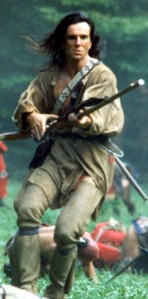
Although Hawk Eye in The Last of the Mohicans is an adopted Mohican, his lifestyle and behavior is that of a colonial frontiersman.  The more rugged of these men dressed as he did, much in the Indian way.  They hunted & fought with muskets, tomahawks, and their famous knives.   Indians acquired these knives as well.  They blended traditional weapons and ways of living with new found tools and weapons of Western man.  A highly adaptable people.
The attack at the opening ofRed Bird’s Song in the Shenandoah Valley is based on one that occurred to my ancestors at the tail end of Pontiac’s War and is recorded by Historian Joseph A. Waddell in The Annals of Augusta County. A renegade Englishman by the last name of Dickson lead the war party that attacked them.  Initially I’d intended to make the Colin Dickson in Red Bird’s Song a villain but as soon as he galloped onto the scene I knew differently.  He’s now one of my all time favorite characters.
Wicomechee, the hero in Red Bird’s Song, is based on the Shawnee warrior by that name who lived early in the nineteenth century and to whom I have ties.  The Moffett’s, an early Valley family I’m related to, include a reference to him in their genealogy.  Wicomechee’s father, John Moffett, was captured in Kentucky by the Shawnee at the age of eight and adopted into the tribe.  It’s said he was a boyhood companion to the great chief Tecumseh, a chief for whom I have enormous admiration.  The accounts of John Moffett and Wicomechee are recorded by Waddell.  It’s also noted that during the Black Hawk Wars Wicomechee recovered the captive daughters of a Dr. Hull and brought them safely into camp, which reminds me of Hawkeye in The Last of the Mohicans.  I’ve included more on this amazing warrior at the end of the novel as a bonus for those who read it.
Charity, the heroine in Red Bird’s Song, is drawn from a reference I came across of a young Scots-Irish woman captured along a river in the Virginia frontier.  Remember, early Virginia was enormous.  Augusta County, near where I live, encompassed present day states and was later sectioned off.  Nothing is known of what happened to that young woman.  Just a single line in an old account of captives taken during theIndian wars.
The same sort of capture and subsequent lack of information occurred to the sister of my great grandmother a number of greats back.  Both of these women may have made new lives with the Indians.  There are records of women who married into the tribes and did not want to leave their warrior husbands and adopted people.  Tragically, some those captives who wished to remain were later forced to return to their white families through treaties, causing great heartache.  There are also accounts of captives who couldn’t get out fast enough!  One such captive was Daniel Boone.
Charity’s cousin Emma inRed Bird’s Song is based on the young, very  pregnant wife carried off in that original attack.  In the actual account it’s uncertain whether or not her husband survived his injuries.  His last name was Estelle, as it is in the story, and we have early Estelle’s in our family tree.   However, that name is no longer common in the Shenandoah Valley but has vanished into the mist of time along with a mostly forgotten era and its people.  Few remember or care.  Perhaps you will come to.
James, the little boy in Red Bird’s Song, is drawn from the lively child taken in the original attack who lived to tell about it and did so with great relish.  He’s also modeled after several high spirited little boys I’ve known and loved.  James is a tribute to my young nephew, Matthew Trissel, killed in a farm accident, and my youngest daughter Elise’s close friend, Garry Keens, killed by a drunk driver.  Wonderful boys, gone before us but never forgotten.
Although Eastern woodland Indians had a reputation for brutality, once a captive was adopted they were well treated and regarded as equals.  Warriors were unpredictable and didn’t always behave in a certain manner anymore than all European men acted alike.  Warriors could be unexpectedly gentle or sadistic.
I’ve read accounts of warriors getting up in the night to stir up the campfire and cover captive women and children with blankets, even delay their journey while a woman gave birth.  These men protected and fed their captives while other warriors burnt them at the stake.  It all depended on who took you captive and why as to what your fate would be, and whether they kept, traded, or sold you.  Or killed you in retribution for a love done lost at the hands of the English.  
Of course, some warriors didn’t take captives.  Just scalps.  The warriors most feared in the Shenandoah Valley were the Shawnee, regarded as the fiercest of all.  The more I studied these remarkable people, the more engrossed I became, especially as they figure into our family roots.
The sources I used in researching Red Bird’s Song would take up pages, my list of reading material sizable, and I’m indebted to the long-suffering anthropologists and archeologists who answered my many questions and supplied me with research materials, also helpful reenactors, historians, and historical sites.  Most of all, I’m indebted to my own forebears.  Without these hardy souls, their faith in God and determination to forge a life in the New World, I wouldn’t be here.  Neither would many of you.
                                            ****
*Colonial Native American Romance Novel Red Bird’s Song is available in print and or digital download from The Wild Rose Press, Amazon,  Barnes & Noble, and many other online booksellers.  *Bookseller links at the right side of my blog.
To read excerpts from RED BIRD’S SONG~
*Image of Hawk Eye from the 1992 film, The Last of the Mohicans, and istock royalty free images. My mother Pat Churchman took the spectacular one of the Alleghenies and the old family musket, powder horn and hunting pouch.   *I am seeking a source for good quality Native American images to purchase. Please contact me: bctrissel@yahoo.com

Thursday, May 31, 2012

Three Amazon Bestsellers in Native American Romance!

Triple woot!  Happy dancing.  My short story, The Lady and the Warrior, and both novels, The Bearwalker's Daughter and Red Bird's Song (as of this moment) are in the top 24 in the Amazon bestsellers list for Native American Romance.  Also, Red Bird's Song is in the top 12 in Native American fiction and literature. 

What I don't get is why my award-winning NA historical romance novel Through the Fire isn't on the list.  Come on readers, it's super swell, if I do say so myself.  Others have said the same, though not in those particular words. :)  How about riveting and powerful?

Or:

"Ms. Trissel has captured the time period wonderfully.... I felt I was there through her descriptions and settings. An excellent story where there is so much happening."  ~Two Lips Review by Shelia

"The storyline of Through the Fire is well-written and uncommonly descriptive. Ms. Trissel took great time and effort to research Indian beliefs and their way of life. Anyone who buys this book will take great pleasure in it." ~You Gotta Read by Laura

"Through the Fire is full of interesting characters, beautifully described scenery, and vivid action sequences. It is a must read for any fan of historical romance." ~Long and Short Reviews by Poinsettia


2008 Golden Heart® Finalist
Publisher's Weekly BHB Reader's Choice Best Books of 2009 

Blurb for Through the Fire:
At the height of the French and Indian War, a young English widow ventures into the colonial frontier in search of a fresh start. She never expects to find it in the arms of the half-Shawnee, half-French warrior who makes her his prisoner in the raging battle to possess a continent––or to be aided by a mysterious white wolf and a holy man.~


Blurb for Red Bird's Song:

 Taken captive by a Shawnee war party wasn't how Charity Edmondson hoped to escape an unwanted marriage. Nor did Shawnee warrior Wicomechee expect to find the treasure promised by his grandfather's vision in the unpredictable red-headed girl.

George III's English Red-Coats, unprincipled colonial militia, prejudice and jealousy are not the only enemies Charity and Wicomechee will face before they can hope for a peaceful life. The greatest obstacle to happiness is in their own hearts.

As they struggle through bleak mountains and cold weather, facing wild nature and wilder men, Wicomechee and Charity must learn to trust each other. ~

2012 EPIC Ebook Award Finalist

This is a beautifully written story filled with adventure and suspense...This book touched my soul even as it provided a thrilling fictional escape into a period of history I have always found fascinating. --Night Owl Book Review by Laurie-J

I loved the descriptions...I felt I was there...Many mystical episodes are intermingled with the events...The ending is a real surprise, but I will let you have the pleasure of reading it for yourself.  --Seriously Reviewed

With Red Bird's Song, Beth Trissel has painted an unforgettable portrait of a daring and defiant love brought to life in the wild and vivid era of Colonial America. Highly recommended for lovers of American history and romance lovers alike!~Virginia Campbell

"I liked this book so much. The author has done a magnificent job of creating both characters and setting. The descriptions of the area are wonderful and put the reader right in there with the characters...I will most certainly read other books by this author." Overall rating 5 out of 5 hearts Reviewer: Jaye Leyel for The Romance Studio

The Bearwalker's Daughter:

~The strange awareness inside Karin grew, like a summons urging her to an untamed place. His gaze drew her almost against her will. She leaned toward him.

"Someone seeks you, Shequenor's dahnaithah."

The message rippled through her. And she knew--his was the inviting summons in the wind.~

Karin McNeal hasn't grasped who she really is or her fierce birthright. A tragic secret from the
past haunts the young Scots-Irish woman longing to learn more of her mother's death and the mysterious father no one will name. The elusive voices she hears in the wind hint at the dramatic changes soon to unfold in the mist-shrouded Alleghenies in Autumn, 1784.

Jack McCray, the wounded stranger who staggers through the door on the eve of her twentieth birthday and anniversary of her mother's death, holds the key to unlock the past. Will Karin let this handsome frontiersman lead her to the truth and into his arms, or seek the shelter of her fiercely possessive kinsmen? Is it only her imagination or does someone, or something, wait beyond the brooding ridges--for her?


(A revised version of Daughter of the Wind)

"Ms. Trissel's alluring style of writing invites the reader into a world of fantasy and makes it so believable it is spellbinding." -Long and Short Reviews

"I loved the plot of this story, oh, and the setting was wonderful."
-Mistress Bella Reviews

"I found this book fascinating." -Bitten By Books

Blurb for The Lady and the Warrior:

An abused young wife stranded in the Alleghenies in 1783 is rescued from drowning by a rugged frontiersman who shows her kindness and passion. But is he more than he seems? And can they ever be together?

About The Lady and the Warrior:  A short historical romance story with a The Last of the Mohican's flavor to give readers a taste of my full-length American historical romance novels.  If you like The Lady and the Warrior, chances are you will enjoy Red Bird's Song and Through the Fire.  Both have a strong Native American theme interwoven with the plot.

 All of my books are at Amazon. Several of these titles are also available in Nookbook. 


Monday, May 28, 2012

Herbs Enhance Historical/Paranormal Romance


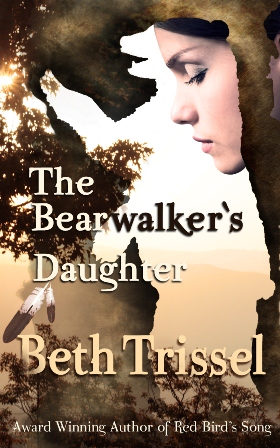
As my earlier posts feature herbs and the lore surrounding these age-old plants, I’m sharing several herbal related excerpts from my recent release, historical fantasy romance novel The Bearwalker’s Daughter.

Set among the clannish and superstitious Scots-Irish in the Allegheny Mountains, the story is similar to others of mine with a colonial frontier flavor and also features Native American characters, with the addition of an intriguing paranormal thread.

Remember, the herbs didn’t have to originate in America for the settlers to use them. They brought seeds, cuttings, and rootstock with them from the Old World and learned about native plants from the Indians.

 This first excerpt is from the old Scots-Irish woman, Neeley’s, point of view:
 
A brooding darkness hovered over the McNeal homestead. Of that, Neeley was certain. And she sensed from where it came. She needed all her wisdom now to prevail against it. 

She’d limped stiffly through the home sprinkling a sweetly aromatic decoction of angelica root into every corner, the most powerful herb for warding off spells and enchantment. Then she’d hung a bough of rowan wood above the doorway to lend protection from evil. The leafless branch dripped with clusters of orange-red berries, pleasant to behold as she sat by the hearth.~

And later in the chapter: 

Her needle winking in the firelight, Neeley sewed the blue fringe on the cape collar and around the long hem. The fragrance of angelica, the most sacred of herbs, rose from the linen. She’d sprinkled a decoction of the holy root over the cloth to bring protection to the wearer. Jack would need all the defense he could get.

As for Karin, her innate goodness would aid her, but Neeley wasn’t taking any chances. An herbal bath of angelica mingled with the purifying power of agrimony, redolent of ripe apricots, awaited the girl. Jack too, if Neeley managed to coax him in.~
This excerpt is from the heroine, Karin’s, point of view:

Neeley rose stiffly from her chair and shuffled forward, her stooped figure a head shorter than Karin’s. “You’ll want my help, John McNeal. Fetch the woundwort, Karin. Sarah, steep some comfrey in hot water and bring fresh linens. Joseph, the poor fellow could do with a spot of brandy,” the tiny woman rapped out like a hammer driving nails. Old, she might be, and as wizened as a dried apple, but Neeley took charge in a medical emergency whether folks liked it or not.

Sarah dashed to the cupboard to take down the brown bowl. Karin flew beside her and grabbed the crock reeking of salve. Sarah snatched a towel and they spun toward the hearth as the men made their way past the gaping crowd. The stranger lifted his head and looked dazedly at both women. Karin met vivid green eyes in a sun-bronzed face stubbled with dark whiskers. A fiery sensation shot through her—and not just because he was devastatingly handsome.~

The two following excerpts are from the hero, Jack’s, point of view.

The matriarch called Neeley bustled into the room with a steaming basin of what Jack supposed, from the herbal scent wafting in the mist, was a medicinal wash.

“Thomas, see Sarah gets to bed and brew her a cup of betony. That’ll calm her,” Neeley directed.

“Come on, Sarah. You’ll do better with a rest and some tea.” Thomas helped his stepmother to her feet and guided the unsteady woman from the room and through the assembly clustered beyond the door.  Murmurs of sympathy accompanied her departure.

Then Neeley set the white porcelain bowl on the washstand and squinted down at Jack like a hen hunting for spilt grain. She gestured with bent fingers at the girl peering from behind John McNeal’s bulk. “Karin, come closer. You’re my hands, lass.”

Her eyes, too, Jack suspected.~

And later in that scene: 

Karin dabbed his shoulder dry, then dipped her small hand into the pungent crock. Pursing rose-tinged lips, she smeared the aromatic paste on his wound. “I’ll give the salve a while to work before I dig the ball out and stitch you up. Ever had woundwort, sir?”

“Dulls the pain right well,” Jack managed, hiding a grimace. Even her soft touch stung like the devil, but he wouldn’t push her away for anything.~

I interweave herbs and other plants through all of my stories, though some more than others.

***Striking book cover by my daughter Elise~
***The Bearwalker's Daughter is available at Amazon in kindle for .99