Showing posts with label Witchcraft. Show all posts

Sunday, October 20, 2013

Herbal Lore and The Blackthorn


From The Scots Herbal by Tess Darwin:
Grows wild throughout Scotland. Sloe or blackthorn berry, might be classified as a food rather than a medicine, but has a bitter, acrid taste (perhaps more familiar to us today in sloe gin than in the fruit) and was eaten from prehistoric times for its vitamin and mineral content. It has occasionally been found in ancient graves. 

Long associated with dark forces and sometimes used in rites of black witches. The hard, strong wood and shape of blackthorn made it ideal for walking sticks and weapons and may have led to the belief that, like other prickly plants (which would catch and hold malevolent spirits), the tree had protective powers against evil. It was planted around fields as much for this as for the thorns, and the protection more pleasantly absorbed through drinking sloe gin, also a remedy for diarrhea. A slightly purgative tea made from the leaves, flowers, and bark was used to reduce fever. The berries and bark were also used for dye.

The blackthorn is a widely distributed native tree of Britain, Europe and parts of Asia. It grows abundantly in hedgerows, thickets and on waste ground. It is unpopular with farmers because of its suckers and vicious black thorns which make it impenetrable. It is a small tree which grows to a height of around 13 ft. The black, thorn studded twigs carry alternate winter buds that are oval and purplish- black or reddish in colour. In April the blackthorn produces clouds of white blossom which are followed by the leaves, the first of the hedgerow trees to flower. They are small, pale green and oval shaped on opening but later become longer, narrower and dull green. The small, round fruits, known as sloes, ripen slowly throughout the year and only sweeten after the first frosts. It is the ancestor of the cultivated damson and plum. The bark is black and on old trees it becomes broken to form small square plates.

The white flowers can be collected during April and the sloes in autumn. They should not be collected until after the first frosts. It is considered unlucky to bring Blackthorn indoors while in blossom.


November 11th is recognized in Ireland as the day of the blackthorn sprites, the lunantishees, Otherworldly beings who guard the sacred blackthorn from any human foolhardy enough to profane the sacred tree by cutting the wood now. The blackthorn has an ominous image. The thorns of the blackthorn were used for pricking wax images for cursing. Witches were thought to carry black rods of blackthorn which could cause miscarriages. When witches were burned blackthorn sticks were thrown onto the fire. The sorcerer Major Weir was burned at the stake in 1670 with a blackthorn rod, which was described as the chief agent of his magic. Some traditions say that Christ's crown of thorns was made from blackthorn. The shillelagh, or Irish club is made from the dense, heavy blackthorn. The usher of the house of lords and the Order of the Garter is called Blackrod because he knocks on the doors of the house of parliament with a blackthorn rod to demand its opening.

On the other hand, the sloe could sometimes be an instrument of blessing. In the north of England people would make a blackthorn globe and gather round a bonfire to chant "Auld cider" to bless the apple trees on January 1st. On New Year’s morning a crown of blackthorn and mistletoe was hung up for luck. Also at New Year in Worcestershire a baked crown of blackthorn was scattered on the fields to bless them.

The blossoming of the blackthorn marks the time for sowing barley. In Scotland it is said:
‘When the slae tree is white as a sheet
Sow your barley, wither it be drey or wet.’
Which, roughly translated into Gloucestershire, meant:
‘When the blackthorn blossom’s white
Sow your barley day and night.’


For more on the medicinal uses of Blackthorn visit: http://www.herbs2000.com/herbs/herbs_blackthorn.htm


Tuesday, October 16, 2012

A Scots-Irish Healer in the Alleghenies Finds Herself Accused of Witchcraft--Beth Trissel


My fascination with the supernatural, whether real or imagined, played an important role in my new historical romance novel, Kira, Daughter of the Moon. Murmurings against the unusual, young Scots-Irishwoman, Kira McClure, grow into accusations of witchcraft. Never a good thing, but especially not in the colonial Virginia frontier. Acceptance in a close-knit community could mean the difference between life and death. The highly superstitious Scots settled in the rugged Alleghenies on the heels of The French and Indian War were already wary. The dangers these dark woods held heightened their fear of the supernatural. Sick livestock, children struck down with illness, and other misfortunes might be blamed on witchcraft. Settlers were alert to anyone in their midst they could point to as the culprit. The farther people ventured from more civilized society, the deeper their superstitions ran. And taking the law, such as it was, into their own hands was often how they dealt with miscreants in the frontier .
Late Shenandoah Valley historian, John Heatwole, much respected and a family friend, put together a wonderful collection of accounts from valley and mountain people regarding their experiences with and feelings toward so-called witches. His book deals with beliefs lingering into the 20th century, but they’re still present among some rural Virginians today. Fear best sums up their sentiments. In his book, Shenandoah Voices, Mr. Heatwole says, “Witches have not been tried, jailed or executed in America since the early 18th century, but tales of their activities persist. During that period in our history, superstitious practices invoked for self-protection were considered prudent dabbling in the occult and virtually harmless. Powers or practices called upon for mean-spirited or evil purposes were attributed to malevolent people in the community who wielded demonic powers. Despite the perception of evil, people suspected of being witches, who were mostly women, were often tolerated in society because of their family ties or from fear of retribution—no one wanted to get on the wrong side of a witch.”
True. However, ‘often tolerated,’ doesn’t mean those perceived as witches were popular. He shares accounts and I’ve read others, of outspoken or in some way unique females, perhaps even deformed, thought to be in league with the devil who were ostracized. Not being accepted and possibly even tormented by your neighbors was harsh, particularly for the poor and elderly. On the one hand, a woman might gain power over others, even men, in a historically male dominated society, through the fear she intentionally or unintentionally provoked, but the danger that people would shun her was always present–unless she was well-to-do. The rich were always better tolerated.
Spells and hexes were countered by witch doctors, usually men, although ‘Granny women’ were also known for battling the dark arts with magical incantations. I have friends who grew up ‘back in the holler’ and remember bringing in the Granny woman when home remedies failed. One common protection prudent mothers undertook for children was to sew little ‘acifidity’ bags filled with pungent herbs, garlic and asafetida,  to hang around their necks. “Oh my, did these kids stink,’ one friend told me. The stench was to drive away illness and evil. These stinky bags may be out of favor now, but the fear that lay behind them is still quite real among some folk.
You may ask if any of the women, and occasionally men, thought to be witches actually were? Yes. And some of them sound pretty darn scary.
For my recent post on that visit:
***Royalty free images

Tuesday, June 5, 2012

For Protection Against Spells and Enchantment

The sacred herb, Angelica, as its name alone implies, has a lofty status in the world of herbal lore. I used this herb in my historical fantasy romance novel The Bearwalker’s Daughter. 

I’ve grown Angelica in the garden, a large aromatic plant with lacy white umbels, but it died out and needs to be replaced. An ornamental, angelica makes a nice addition to a perennial herb and flower border, but be certain to allow plenty of room; it reaches a height of 4 to 6 feet.  The flowers are also appealing to butterflies, another plus. This year, I’d like to put in some plants.  I tend to overlook it in the spring planting madness.

“According to one legend, (European-angelica) Angelica was revealed in a dream by an angel to cure the plague (hence the name Angelica or Archangel). All parts of the plant were believed effective against evil spirits and witchcraft. It was held in such esteem that it was called ‘The Root of the Holy Ghost.’

In America it was used by the Iroquois and other tribes as Witchcraft Medicine, an infusion of smashed roots were used as wash to remove ghosts from the house.”  This quote is from an interesting site called Alternative Nature Online Herbal.  You can also view lovely pics of Angelic there.
From Real Magick: Magickal Use and Lore:
“As seen by its name, angelica has been associated with the Archangel Michael. It comes into bloom near his feast day and has been connected to the Christian observance of the Annunciation. Angelica is known for its protection against evil spells.”

From Rodale’s Illustrated Encyclopedia of Herbs: “Throughout history angelica has been a standout herb…supposed to ward off evil spirits and witches. Peasants would weave necklaces of the leaves for their children to wear to protect them. The juice of the roots was used to make Carmelite water, considered a ‘sovereign remedy’ and drunk to endure a long life and to protect against the poisons and spells of witches.”
Here I want to point out that the hysteria over witchcraft peaked in the Middle Ages, but endured well beyond.  


How many unfortunates were burnt at the stake as a result of witch hunts is uncertain but they numbered in the thousands.  Most confessions were gained as the result of torture, although the suggestion has been made that the side effects of some potent herbs made people think they could actually fly and that they possessed special powers.  

And who’s to say that some individuals didn’t have special powers.  But once condemned, few were powerful enough to keep themselves from a bad end.  Note that no witches were ever burned in North America, not even at the Salem Witch Trials.  By then, hanging was the preferred method of execution, far more civilized.  Burning was so sixteenth century.

From A Modern Herbal: (Bear in mind that this was written in the early 20th century, so not all that ‘modern.’  Ms. Grieve has a great deal to say about Angelica–I’ve touched on portions.)
Garden Angelica. Archangelica officinalis.

Parts Used: root, leaves, seeds.

History: Its virtues are praised by old writers, and the name itself, as well as the folk-lore of all North European countries, testify to the great antiquity of a belief in its merits as a protection against contagion, for purifying the blood, and for curing every conceivable malady: it was held a sovereign remedy for poisons agues and all infectious maladies.

The author goes on to say, “After the introduction of Christianity, the plant became linked in the popular mind with some archangelic patronage, and associated with the spring-time festival of the Annunciation. According to one legend, Angelica was revealed in a dream by an angel to cure the plague. Another explanation of the name of this plant is that it blooms on the day of Michael the Archangel (May 8, old style), and is on that account a preservative against evil spirits and witchcraft: all parts of the plant were believed efficacious against spells and enchantment. It was held in such esteem that it was called ‘The Root of the Holy Ghost.’

*Medieval herb garden pictured above

Angelica is unique amongst the Umbelliferae (*which means plants with umbel shaped flowers, think Queen Ann’s Lace) for its pervading aromatic odour, a pleasant perfume, entirely differing from Fennel, Parsley, Anise, Caraway or Chervil. One old writer compares it to Musk, others liken it to Juniper. Even the roots are fragrant, and form one of the principal aromatics of European growth- the other parts of the plant have the same flavour, but their active principles are considered more perishable.

Cultivation: Cultivate in ordinary deep, moist loam, in a shady position, as the plant thrives best in a damp soil and loves to grow near running water.

Parts Used: The roots and leaves for medicinal purposes, also the seeds. The stems and seeds for use in confectionery and flavouring and the preparation of liqueurs.  The dried leaves, on account of their aromatic qualities, are used in the preparation of hop bitters.  Angelica roots should be dried rapidly and placed in air-tight receptacles. They will then retain their medicinal virtues for many years.


The flavour of Angelica suggests that of Juniper berries, and it is largely used in combination with Juniper berries, or in partial substitution for them by gin distillers.

Medicinal Action and Uses: 
Angelica is a good remedy for colds, coughs, pleurisy, wind, colic, rheumatism and diseases of the urinary organs, though it should not be given to patients who have a tendency towards diabetes, as it causes an increase of sugar in the urine.  It is generally used as a stimulating expectorant, combined with other expectorants the action of which is facilitated, and to a large extent diffused, through the whole of the pulmonary region.  It is a useful agent for feverish conditions, acting as a diaphoretic.

An infusion may be made by pouring a pint of boiling water on an ounce of the bruised root, and two tablespoonsful of this should be given three or four times a day, or the powdered root administered in doses of 10 to 30 grains. The infusion will relieve flatulence, and is also of use as a stimulating bronchial tonic, and as an emmenagogue…used for indigestion, general debility and chronic bronchitis. For external use, the fresh leaves of the plant are crushed and applied as poultices in lung and chest diseases.
The following is extracted from an old family book of herbal remedies:
‘Boil down gently for three hours a handful of Angelica root in a quart of water; then strain it off and add liquid Narbonne honey or best virgin honey sufficient to make it into a balsam or syrup and take two tablespoonsful every night and morning, as well as several times in the day. If there be hoarseness or sore throat, add a few nitre drops.’

Angelica stems are also grateful to a feeble stomach, and will relieve flatulence promptly when chewed. An infusion of Angelica leaves is a very healthful, strengthening tonic and aromatic stimulant, the beneficial effect of which is felt after a few days’ use.

The yellow juice yielded by the stem and root becomes, when dry, a valuable medicine in chronic rheumatism and gout.

Taken in medicinal form, Angelica is said to cause disgust for spirituous liquors.  (*It occurs to me that this might be beneficial to alcoholics). It is a good vehicle for nauseous medicines and forms one of the ingredients in compound spirit of Aniseed. Gerard, among its many virtues that he extols, says ‘it cureth the bitings of mad dogs and all other venomous beasts.’~

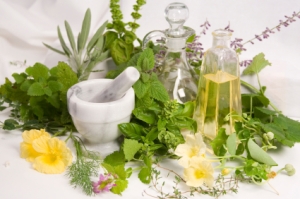
Cadfael, starring Derek Jacobi, is a fascinating mystery series set in the old Norman England town of Shrewsbury featuring a Crusader turned monk, skilled in the use of herbs and solving murders. A healer atoning for the lives he took as a soldier, Brother Cadfael is often in his herborium at the monastery, busy with his mortar and pestle or distilling some potent elixir. Dried herbs hang in bunches from the rafters overhead, fill baskets and shelves alongside glass vials, crocks and other medicinal vessels made of pottery… kewl stuff.  He also loves to be among the herbs in his garden.  But mysteries often summon him from these simple joys.

The opening theme features sacred Medieval music, haunting voices from ages past. The show is available at netflix, some in instant streaming.  Listen to the clip below…intriguing.