Showing posts with label Willow. Show all posts

Monday, October 7, 2013

The Amazing Willow Tree


From The Scot’s Herbal by Tess Darwin: “Willows were one of the first trees to appear in Scotland after the last Ice Age and no doubt this versatile species has been used since prehistoric times for a great variety of purposes.

In addition to many practical uses of willows for basketry, rope, house building, fencing, beehives, lobster pots and coracle frames, it was a magic tree. A willow wand symbolized the goddess, and was used for divination—the original magic wand. Willow was one of the druids sacred woods…the word wicca (the craft and wisdom of witches) is said to be derived from the use of willow to make a wicker frame to build an effigy of the Celtic God Balder, king/consort to the queen/goddess, ceremonially sacrificed on Beltane.

Fear of the power of willow persisted long into Christian times: witches’ broomsticks sometimes had a willow shaft, and persecuted witches from North Berkshire were said to sail in willow winnowing riddles. In central Perthshire willow wands were reportedly used to work the evil eye. Black magic worked with willow could be counteracted by rowan.

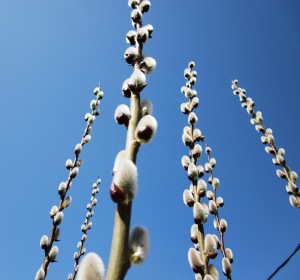
On the other hand, a branch of willow catkins in the home is still believed to bring good health; this may relate to its medicinal uses. The bark contains acetylsalicylic acid (the main constituent of aspirin) and has long been used as a pain killer.”

In America, the willow is considered “one of Nature’s most valuable gifts to mankind.” From Field Guide to Medicinal Wild Plants by Bradford Angier. He goes on to say, “The North American Indians soon discovered that tea decocted and steeped from the cambium of the majority of willows was important for arthritis and for reducing fever and many pains—this centuries before the isolating and marketing of aspirin. The ashes of burned willow twigs were blended with water and used for gonorrhea. Willow roots were powdered with stones and turned to in an effort to dry up sores from syphilis. The settlers soon joined the Indians in using potent teas brewed from the cambium or inner bark of the bitter willows to treat venereal disease.

The dried and powdered bitter bark, astringent and detergent, was applied to the navels of newborn babies. It was utilized to stop severe bleeding, as were the crushed young green leaves, the bark, and the seeds, also stuffed up the nostrils to stop nosebleeds. These were also used for toothache.”

 And the uses go on, including a spring tonic made of steeped willow roots, an Indian practice adopted by the settlers. The roots were used to kill and expel worms and willow tea to bathe sore eyes. Some settlers also shared in the Indian practice of using pussy willow catkins as an aphrodisiac. Probably in the form of a bark tea, but it doesn’t say.


Wednesday, April 10, 2013

An Adventure in Planting Pussy Willows--Beth Trissel


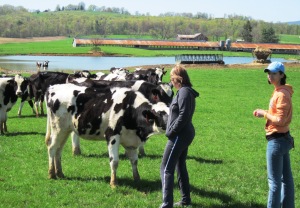
Pussy WillowLast evening as the sun dipped behind the trees on the wooded hills above our farm, I set off with my trusty wheelbarrow heaped with pussy willows we’d rooted last year and wintered over in the garden–where they could not possibly remain–and a shovel. My aim, the farm pond in the meadow. Highly curious heifers with no regard for personal space followed at my heels like pet dogs. If I turned around, they were breathing down my neck. A little disconcerting, so I waved them back. Repeatedly. I was also slightly concerned about chancing upon a coyote, but decided with this lot keeping me company that wasn’t likely. Might not have been anyway, but coyotes do visit the meadow when making their rounds late in the evening or at night. Rarely in the day.

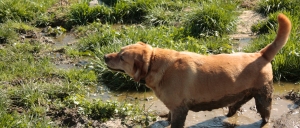
lab mix, our farm dog LanceMy two farm dogs chose not to go with me on this particular venture. Wise. I had to toss the pussy willows, contained in feed sacks after I dug them out of the garden, and my shovel over not one, but two, electric fences and then roll beneath the wire to reach the grassy edge of the water. For those of you who think it’s easy to dig in wet muck sucking at your shovel and your boots, I can assure you that it’s not. Already worn out after a day of overdoing it in the garden, this final endeavor took the last of my reserves. And I sank in the squelchy mud up to my boot tops.  Then my knees. Digging and clawing my way along, I shifted clumps of saturated grass and oook to get my plants into place. Then heaved myself back up the bank to the meadow and pushed my barrow home. A task I desired to accomplish before dark so I could still see the electric fences, installed, btw, to keep the cows out of the pond.

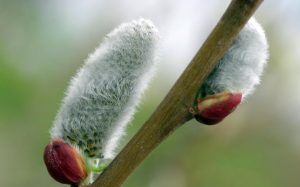
beth252celise252candcowsIf the pussy willows are happy there, we will have lovely catkins next spring. Supposedly, they prefer swampy places and the edges of streams, so this spot ought to suit them. But I reserved one to plant someplace else, just in case.

As ever, I am in pursuit of Eden on earth. My own bit of heaven. And I have the aching back to prove it.

(***Images of Lance in the muddy creek near the pond, and daughter Elise on a different outing. And our oh so friendly cows. To be expected, really, as they were hand raised and bottle fed, etc).

pussy-willow-hatsI did a search on pussy willow quotes and found this rather unusual one: ““Everything that anyone would ever look for is usually where they find it.”
― Margaret Wise Brown


I have no idea how that relates to pussy willows, but liked the quote. I hope to find my willows where I planted them, growing happily. I shall report back.