Showing posts with label Christmas card. Show all posts

Monday, November 28, 2016

Vintage Christmas Cards Found In An Old Family Trunk


Vintage Santa Christmas CardSeveral years ago, my mother came across an antiquated box of family Christmas cards reaching back into the early 20th century. For those of you who enjoyed the British television series, Downton Abbey, this would encompass the Edwardian era before WWI (Season One). Other cards were sent during the Great War and soon after its conclusion. Some cards may extend even further back in time. This window into the past makes me very nostalgic. Reading the messages included in these holiday greetings transport me back to an age forgotten by many, but shouldn’t be.
I’ve often heard about these ancestors, fine people, and even remember some of them from my childhood. Others lived far later into my life, but began theirs when America was quite a different place. Some cards from family friends are people not known to me, but glimpsed through their greetings. These gentle folk wouldn’t be trampling each other at Walmart on Black Friday. There is a graciousness in this era, despite the World Wars, that we are losing. Hearken back with me to earlier days.
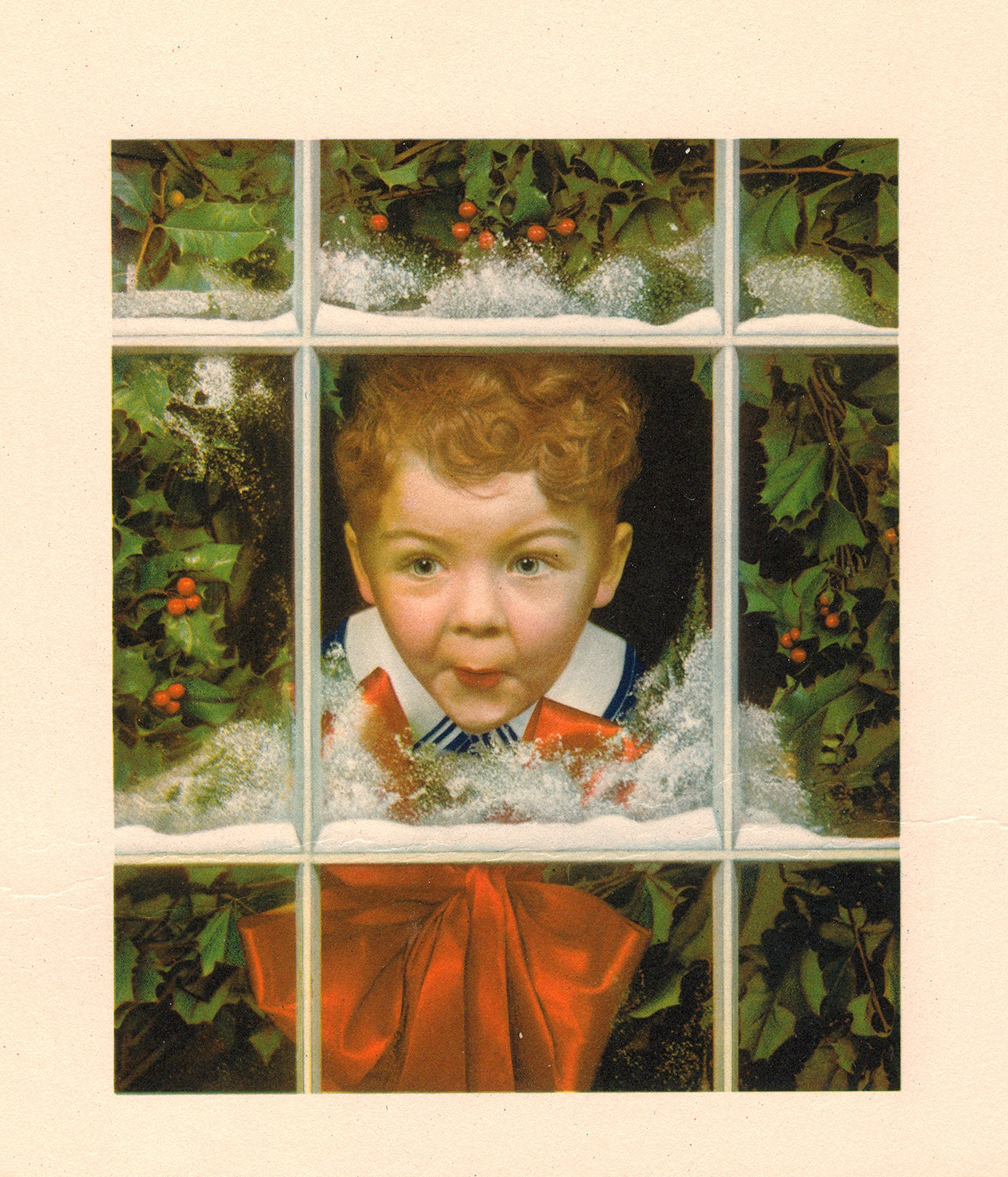
Vintage American Christmas Card--excited boy peering through windowThese cards Mom scanned are among the most colorful. Because the cost of ink was high in that era, many only had small colored images or were in black and white. To receive a truly colorful greeting would have been a real treat. I’m grateful my family saved these images and messages from a simpler, more refined time. Many of these folks lived in Virginia. Our roots in the Old Dominion go back several hundred years.
Because of my fascination with these bygone days, I’ve written two Christmas romance novellas: A Warrior for Christmas (set in Colonial America) and Somewhere the Bells Ring (set in the old Virginia family homeplace in the 1960’s with flashbacks to 1918). Both eBooks are on sale at Amazon and Barnes & Noble. A Warrior for Christmas is also out in audio.
“Christmas is the gentlest, loveliest festival of the revolving year – and yet, for all that, when it speaks, its voice has strong authority.”  ~W.J. Cameron
Old Christmas Card Family Scene
“Our hearts grow tender with childhood memories and love of kindred, and we are better throughout the year for having, in spirit, become a child again at Christmas-time.”  ~Laura Ingalls Wilder
“This is the message of Christmas:  We are never alone.”  ~Taylor Caldwell
Vintage American Christmas Card with Carolers
“I will honor Christmas in my heart, and try to keep it all the year.”  ~Charles Dickens
“Christmas is the season for kindling the fire of hospitality in the hall, the genial flame of charity in the heart.”  ~Washington Irving
“Christmas is the day that holds all time together.”  ~Alexander Smith
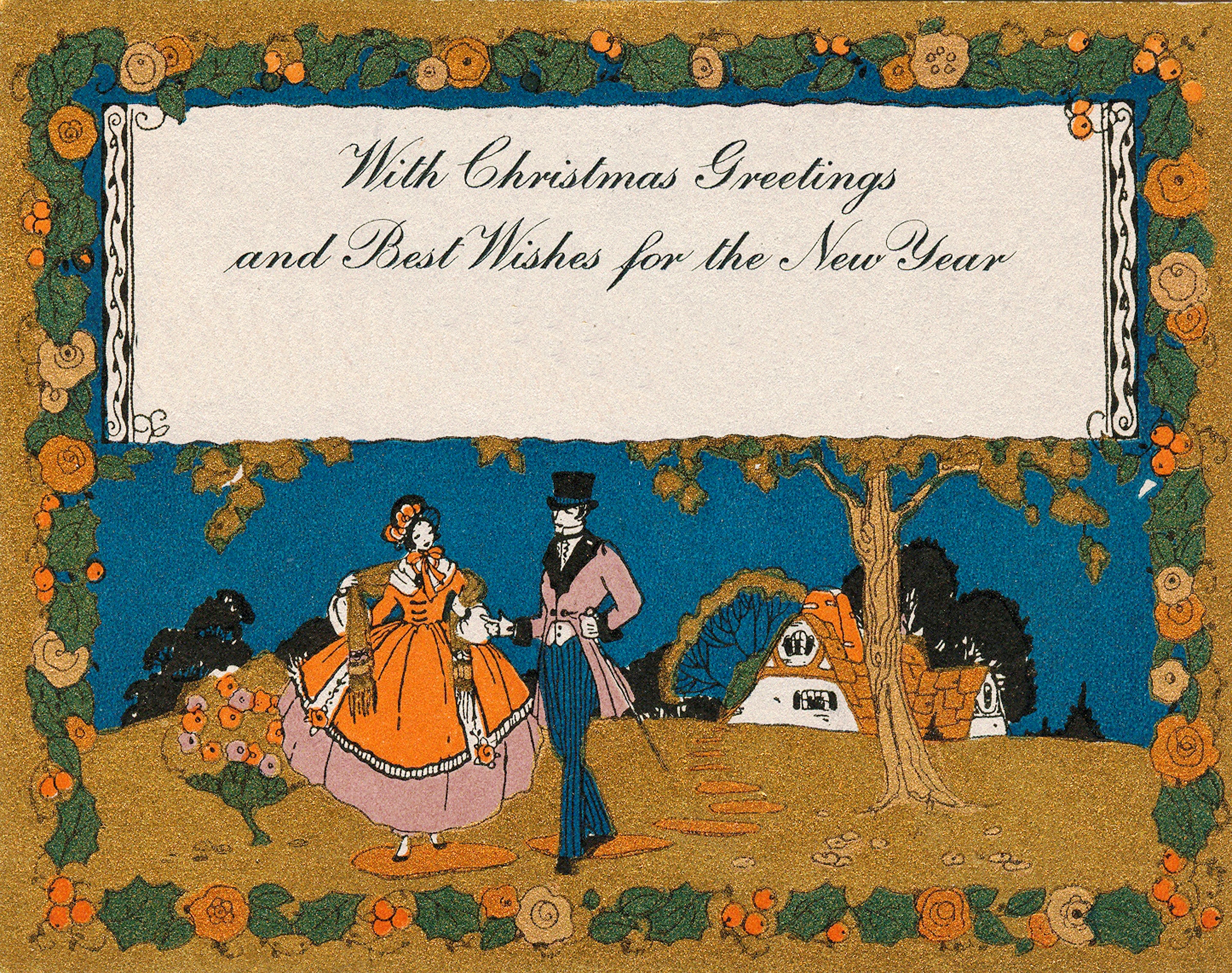
Early American Christmas Card--Romantic Couple
“A Christmas candle is a lovely thing;
It makes no noise at all,
But softly gives itself away.” ~Eva Logue
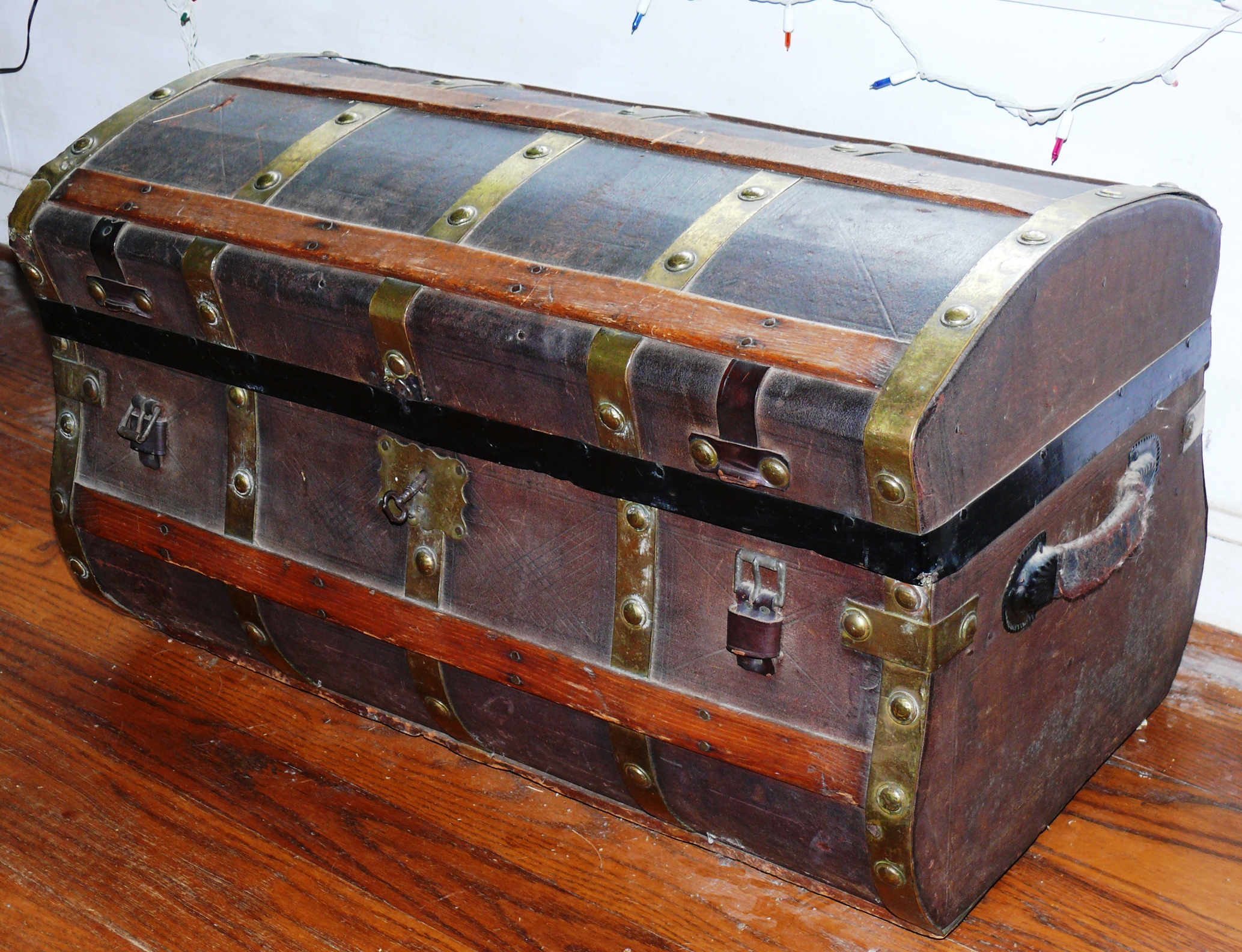
***For those of you interested in old trunks. The one containing these cards and other family memorabilia is pictured below. We think it dates from about 1870, but are not certain. If you have a better guess let me know.
old family trunk


Saturday, November 26, 2016

Vintage Christmas Cards & A Colonial American Christmas Romance


Ever wonder about the history of Christmas Cards in America? Here’s what I found.
From Something Olde: Christmas Card History
“In the late 1700’s merchants sent their customers best wishes for the new year. The cards were created on lithographs and hand-colored. A lithograph is an etching on a stone that can be reproduced on paper. Sending Christmas cards first became popular in England over 150 years ago.  In the 1840’s John Calcott Horsely was a curator at the royal museum.  He was late sending his usual holiday letters to his friends and relatives for Christmas.  He asked the artist, Sir Henry Cole, to design and hand-color 1,000 cards.  He wanted the card to show people being fed and clothed to remind his friends of the needs of the poor during this season.”
Holiday Cards
The first American to print and sell Christmas cards was Louis Prang of Roxbury, Massachusetts, who began publishing cards in 1875.
(In 1953) President Dwight D. Eisenhower is given credit for sending the first “official” Christmas card from the White House. An art print also became the standard Christmas gift for the president’s staff, a practice continued to this day.
Vintage Santa Christmas CardFrom Idea Finder: “A relatively recent phenomenon, the sending of commercially printed Christmas cards originated in London in 1843. Previously, people had exchanged handwritten holiday greetings. First in person. Then via post. By 1822, homemade Christmas cards had become the bane of the U.S. postal system. That year, the Superintendent of Mails in Washington, D.C., complained of the need to hire sixteen extra mailmen. Fearful of future bottlenecks, he petitioned Congress to limit the exchange of cards by post, concluding, “I don’t know what we’ll do if it keeps on.”
Not only did it keep on, but with the marketing of attractive commercial cards the postal burden worsened. The first Christmas card designed for sale was by London artist John Calcott Horsley. A respected illustrator of the day, Horsley was commissioned by Sir Henry Cole, a wealthy British businessman, who wanted a card he could proudly send to friends and professional acquaintances to wish them a “merry Christmas.”
Christmas sleigh rideFrom The History of Christmas Cards: At Christmastime, many people would send letters to friends and family far away, and children at boarding school would decorate paper and write letters to show off the writing skills they’d improved upon that term at school. However, the first official Christmas card was created in 1843 in Britain.
Sir Henry Cole, director of London’s Victoria and Albert Museum, would write letters to family and acquaintances at Christmastime. He and others could buy decorative paper on which to pen greetings and good wishes, but he found it to be a cumbersome task. So Cole commissioned an artist friend, John Calcott Horsley to create a card with a simple message that could be duplicated and sent to all his acquaintances. Horsley lithographed and hand-colored 1,000 copies of this first commercial card. It was a three-panel card – the center panel showed a family celebrating and the two wing panels depicted people feeding the hungry and clothing the naked. The card bore the simple greeting, “A Merry Christmas and a Happy New Year to You,” which would become the standard sentiment of the mass-produced Christmas cards.
old time SantaCHRISTMAS CARDS RISE IN POPULARITY
“Christmas cards were quite elaborate and though the lithograph printing process helped in producing cards, they first became popular among the upper-class in England. However, the development and improvement of the postal system, making sending cards more affordable, was a big part of the rise in the popularity of Christmas cards. Early cards were not necessarily religious Christmas cards but favored images such as beautiful flowers, birds, scenery and other pretty things.
In 1875 Louis Prang brought the commercial Christmas card to the United States. Prang, a German lithographer, had developed a new innovative way of printing that made the process of creating Christmas and other cards much simpler and more affordable. Like British Christmas cards, Prang’s cards included various images that were simply pretty and tasteful, not truly having much to do with Christmas or even necessarily winter. However, some cards did include holly, snow and some other wintry or Christmas images. His cards became extremely popular in the U.S.; his company printed almost five million cards a year by 1881.”
christmas-holly
Well, you get the idea. In my holiday release, A Warrior For Christmas, (also in audio) I journeyed farther back in early America to the colonial time period and the holiday celebration in a wealthy household. However, the hero, a former Shawnee captive, would rather return to his adopted people in the colonial frontier.
Blurb: Reclaimed by his wealthy uncle, former Shawnee captive Corwin Whitfield finds life with his adopted people at an end and reluctantly enters the social world of 1764. He plans to return to the colonial frontier at his first opportunity–until he meets Uncle Randolph’s ward, Dimity Scott.
Deaf since a childhood bout of Scarlet fever, Dimity Scott intends to be cherished for herself, not her guardian’s purse, even if it means risking spinsterhood. Then the rugged newcomer arrives, unlike any man she’s ever known. Dimity has learned to manage her silent world, but unaccustomed to the dangers of the frontier, can she expect love and marriage from Corwin, who longs to return to his Shawnee life?~
***A Warrior for Christmas is available from all major online booksellers including Amazon and Barnes & Noble.
Christmas Bells“I will honor Christmas in my heart, and try to keep it all the year.”  ~Charles Dickens


Monday, November 25, 2013

Early American Christmas Cards and My Colonial Christmas Romance


Ever wonder about the history of Christmas Cards in America? Here’s what I found.
From Something Olde: Christmas Card History
“In the late 1700’s merchants sent their customers best wishes for the new year. The cards were created on lithographs and hand-colored. A lithograph is an etching on a stone that can be reproduced on paper. Sending Christmas cards first became popular in England over 150 years ago.  In the 1840’s John Calcott Horsely was a curator at the royal museum.  He was late sending his usual holiday letters to his friends and relatives for Christmas.  He asked the artist, Sir Henry Cole, to design and hand-color 1,000 cards.  He wanted the card to show people being fed and clothed to remind his friends of the needs of the poor during this season.”
Holiday Cards
The first American to print and sell Christmas cards was Louis Prang of Roxbury, Massachusetts, who began publishing cards in 1875.
(In 1953) President Dwight D. Eisenhower is given credit for sending the first “official” Christmas card from the White House. An art print also became the standard Christmas gift for the president’s staff, a practice continued to this day.
From Idea Finder:   “A relatively recent phenomenon, the sending of commercially printed Christmas cards originated in London in 1843. Previously, people had exchanged handwritten holiday greetings. First in person. Then via post. By 1822, homemade Christmas cards had become the bane of the U.S. postal system. That year, the Superintendent of Mails in Washington, D.C., complained of the need to hire sixteen extra mailmen. Fearful of future bottlenecks, he petitioned Congress to limit the exchange of cards by post, concluding, “I don’t know what we’ll do if it keeps on.”
Not only did it keep on, but with the marketing of attractive commercial cards the postal burden worsened. The first Christmas card designed for sale was by London artist John Calcott Horsley. A respected illustrator of the day, Horsley was commissioned by Sir Henry Cole, a wealthy British businessman, who wanted a card he could proudly send to friends and professional acquaintances to wish them a “merry Christmas.”
From The History of Christmas Cards: At Christmastime, many people would send letters to friends and family far away, and children at boarding school would decorate paper and write letters to show off the writing skills they’d improved upon that term at school. However, the first official Christmas card was created in 1843 in Britain.
Sir Henry Cole, director of London’s Victoria and Albert Museum, would write letters to family and acquaintances at Christmastime. He and others could buy decorative paper on which to pen greetings and good wishes, but he found it to be a cumbersome task. So Cole commissioned an artist friend, John Calcott Horsley to create a card with a simple message that could be duplicated and sent to all his acquaintances. Horsley lithographed and hand-colored 1,000 copies of this first commercial card. It was a three-panel card – the center panel showed a family celebrating and the two wing panels depicted people feeding the hungry and clothing the naked. The card bore the simple greeting, “A Merry Christmas and a Happy New Year to You,” which would become the standard sentiment of the mass-produced Christmas cards.
CHRISTMAS CARDS RISE IN POPULARITY
“Christmas cards were quite elaborate and though the lithograph printing process helped in producing cards, they first became popular among the upper-class in England. However, the development and improvement of the postal system, making sending cards more affordable, was a big part of the rise in the popularity of Christmas cards. Early cards were not necessarily religious Christmas cards but favored images such as beautiful flowers, birds, scenery and other pretty things.
In 1875 Louis Prang brought the commercial Christmas card to the United States. Prang, a German lithographer, had developed a new innovative way of printing that made the process of creating Christmas and other cards much simpler and more affordable. Like British Christmas cards, Prang’s cards included various images that were simply pretty and tasteful, not truly having much to do with Christmas or even necessarily winter. However, some cards did include holly, snow and some other wintery or Christmas images. His cards became extremely popular in the U.S.; his company printed almost five million cards a year by 1881.”
Well, you get the idea. In my holiday release, A Warrior For Christmas, (also in audio now!) I journeyed farther back in early America to the colonial time period and the holiday celebration in a wealthy household.  However, the hero, a former Shawnee captive, would rather return to his adopted people in the colonial frontier.
Blurb: Reclaimed by his wealthy uncle, former Shawnee captive Corwin Whitfield finds life with his adopted people at an end and reluctantly enters the social world of 1764. He plans to return to the colonial frontier at his first opportunity–until he meets Uncle Randolph’s ward, Dimity Scott.
Deaf since a childhood bout of Scarlet fever, Dimity Scott intends to be cherished for herself, not her guardian’s purse, even if it means risking spinsterhood. Then the rugged newcomer arrives, unlike any man she’s ever known. Dimity has learned to manage her silent world, but unaccustomed to the dangers of the frontier, can she expect love and marriage from Corwin, who longs to return to his Shawnee life?~
***A Warrior for Christmas is available from all major online 
booksellers including Amazon and Barnes & Noble.

Tuesday, November 13, 2012

Early American Christmas Cards--Beth Trissel


Ever wonder about the history of Christmas Cards in America? Here’s what I found.
From Something Olde: Christmas Card History
“In the late 1700’s merchants sent their customers best wishes for the new year. The cards were created on lithographs and hand-colored. A lithograph is an etching on a stone that can be reproduced on paper. Sending Christmas cards first became popular in England over 150 years ago.  In the 1840’s John Calcott Horsely was a curator at the royal museum.  He was late sending his usual holiday letters to his friends and relatives for Christmas.  He asked the artist, Sir Henry Cole, to design and hand-color 1,000 cards.  He wanted the card to show people being fed and clothed to remind his friends of the needs of the poor during this season.”
From The Old Farmer’s Almanac: Holiday Cards
The first American to print and sell Christmas cards was Louis Prang of Roxbury, Massachusetts, who began publishing cards in 1875.
(In 1953) President Dwight D. Eisenhower is given credit for sending the first “official” Christmas card from the White House. An art print also became the standard Christmas gift for the president’s staff, a practice continued to this day.
From Idea Finder:   “A relatively recent phenomenon, the sending of commercially printed Christmas cards originated in London in 1843. Previously, people had exchanged handwritten holiday greetings. First in person. Then via post. By 1822, homemade Christmas cards had become the bane of the U.S. postal system. That year, the Superintendent of Mails in Washington, D.C., complained of the need to hire sixteen extra mailmen. Fearful of future bottlenecks, he petitioned Congress to limit the exchange of cards by post, concluding, “I don’t know what we’ll do if it keeps on.”
Not only did it keep on, but with the marketing of attractive commercial cards the postal burden worsened. The first Christmas card designed for sale was by London artist John Calcott Horsley. A respected illustrator of the day, Horsley was commissioned by Sir Henry Cole, a wealthy British businessman, who wanted a card he could proudly send to friends and professional acquaintances to wish them a “merry Christmas.”
From The History of Christmas Cards: At Christmastime, many people would send letters to friends and family far away, and children at boarding school would decorate paper and write letters to show off the writing skills they’d improved upon that term at school. However, the first official Christmas card was created in 1843 in Britain.
Sir Henry Cole, director of London’s Victoria and Albert Museum, would write letters to family and acquaintances at Christmastime. He and others could buy decorative paper on which to pen greetings and good wishes, but he found it to be a cumbersome task. So Cole commissioned an artist friend, John Calcott Horsley to create a card with a simple message that could be duplicated and sent to all his acquaintances. Horsley lithographed and hand-colored 1,000 copies of this first commercial card. It was a three-panel card – the center panel showed a family celebrating and the two wing panels depicted people feeding the hungry and clothing the naked. The card bore the simple greeting, “A Merry Christmas and a Happy New Year to You,” which would become the standard sentiment of the mass-produced Christmas cards.
CHRISTMAS CARDS RISE IN POPULARITY
“Christmas cards were quite elaborate and though the lithograph printing process helped in producing cards, they first became popular among the upper-class in England. However, the development and improvement of the postal system, making sending cards more affordable, was a big part of the rise in the popularity of Christmas cards. Early cards were not necessarily religious Christmas cards but favored images such as beautiful flowers, birds, scenery and other pretty things.
In 1875 Louis Prang brought the commercial Christmas card to the United States. Prang, a German lithographer, had developed a new innovative way of printing that made the process of creating Christmas and other cards much simpler and more affordable. Like British Christmas cards, Prang’s cards included various images that were simply pretty and tasteful, not truly having much to do with Christmas or even necessarily winter. However, some cards did include holly, snow and some other wintery or Christmas images. His cards became extremely popular in the U.S.; his company printed almost five million cards a year by 1881.”
Well, you get the idea. In my upcoming release, A Warrior For Christmas, (out Dec. 5th) I journeyed farther back in early America to the colonial time period and the holiday celebration in a wealthy household.  However, the hero, a former Shawnee captive, would rather return to his adopted people in the colonial frontier.
Blurb: Reclaimed by his wealthy uncle, former Shawnee captive Corwin Whitfield finds life with his adopted people at an end and reluctantly enters the social world of 1764. He plans to return to the colonial frontier at his first opportunity–until he meets Uncle Randolph’s ward, Dimity Scott.
Deaf since a childhood bout of Scarlet fever, Dimity Scott intends to be cherished for herself, not her guardian’s purse, even if it means risking spinsterhood. Then the rugged newcomer arrives, unlike any man she’s ever known. Dimity has learned to manage her silent world, but unaccustomed to the dangers of the frontier, can she expect love and marriage from Corwin, who longs to return to his Shawnee life?~