Showing posts with label Gardens. Show all posts

Thursday, October 3, 2013

The History of Gardening in the British Isles

Monastery Cloister Abbey Ruin with Garden: 


“In common with English and European Gardens of the period, medieval Scottish gardens were primarily practical; extensions of agriculture, with the aim of providing special additions to the table and curatives for the sick. However, the concept of the garden as a benefit to the spirit rose with the power of the Church, and the nobility began to add gardens of contemplation to existing kitchen and physic gardens wherever possible, as an aid to saving their souls.
Of course, in Scotland, most noble houses of the period were fortified, if not fortresses, so such gardens were often created simply from a small field away from the main dwelling, given over to wild flowers and bee hives, where it was possible to have some privacy from the bustle of everyday life.”
Medieval Gardens: 

“Monasteries and manor houses dictated the garden style of the medieval period. Monastic gardens provided medicine and food for the monks and the local community. Herbs were cultivated in the ‘physic’ garden, composed of well-ordered rectangular beds, while orchards, dovecotes, and fish ponds, ensured there would be food for all.”

The secluded garden, or  ‘Hortus Conclusus’, was associated with the Virgin Mary in the monastery garden but in royal palaces and manor houses it represented a garden of earthly delights. Enclosed within wattle fences, raised beds were filled with scented flowers and herbs. Trellis arbors ensured privacy and provided shade while the sound of fountains and bird song filled the air.”


 Image of a medieval garden:


 Physic Gardens (from a designer):

“The Medieval Monastic garden was an important place to be self-sufficient, enabling food, medicine and herbs for flavouring, healing & fragrance to be grown. Dye plants were used to colour fabric for clothes.”


From: Dreaming of the Medieval Physic Garden:

Physic gardens were kept by apothecaries and their apprentices, as well as by monasteries. Apothecaries were traders and dispensers of medicinal herbs, trained in identification and quality purchasing of herbs, to avoid adulteration, poisoning, and ineffective treatment. Physic gardens were established to train apprentices to recognize each herb and grow them for the production of medicines. As mentioned before, physic gardens were also established at monasteries. Each monastery had an infirmary where treatment was available with herbal medicines from plants cultivated in their physic gardens. Although herbalism was practiced and hospitals existed prior to the establishment of the churches.

“In 1164CE The House Of The Holy Trinity At Soutra was founded in Scotland near Edinburgh by King Malcolm IV as an Augustinian hospital, monastery and church complete with physic gardens.”


Glasgow’s oldest house: Provand’s lordship


Provand's lordship, the oldest house in Glasgow. It is a medieval building built  in 1471 by Bishop Andrew Muirhead. The house is now a Museum and is near the Glasgow Cathedral.Behind the house is the St. Nicholas garden, built in 1997. It is a medical herb garden, containing medicinal plants in use in the fifteenth century, designed to reflect the original purpose of the house.

Early Gardens in Great Britain:

The earliest gardens known in Britain were built by the Roman Conquerors in the 1st century. The best known ones are associated with large villas and palaces. “The best example of the latter is probably Fishbourne Roman Palace in Sussex, where an early garden has been partly reconstructed. We know very little about the gardens of Anglo-Saxon England, which is another way of saying that the warlike Anglo-Saxons probably did not hold gardening to be important. It was not until the Middle Ages that gardens once more became important in British life. Monasteries had both kitchen gardens and herb gardens to provide the practicalities of food and medicine. [For a look at the role of herbs in monastic life, read one of the excellent Brother Cadfael mysteries by Ellis Peters}.”

“The monastery cloister provided an open green space surrounded by covered walks, generally with a well, or fountain at the center. 

Castles sometimes made room for small courtyard gardens, with paths through raised flower beds. Other common features of medieval castle gardens include turf seats and high mounds, or mounts, which provided a view over the castle walls.”


Garden Styles at a glance:
  • Roman Britain: formal, low hedges
  • Medieval: small enclosed, with turf seats and mounds
  • Tudor: knot gardens, enclosed in hedges or walls
  • Stuart: formal Italianate and French styles
  • Georgian: informal, landscaped, open parkland
  • Victorian: bedding plants, colourful, public gardens
  • 20th Century+: mixed styles, herbaceous borders
For more of the evolution of gardens in Britain, visit the above link.


From Captivating Cottage Gardens at: http://www.amyziffer.com/?p=165


I love cottage gardens best of all and endeavor to have my own. However, there are drawbacks. I live in a boxy white farm house, not a cottage, and our yard and gardens are rather sprawling for that overflowing, filled to the brim, in a compact sort of way look. Like mine, these small gardens are (and were) a mix of flowers, vegetables, and herbs. I strongly associate cottage gardens with the British Isles, because of our shared history and the influence of the Mother Country on the New World. But other countries have them too.

In this fabulous post, the gardening specialist says: “The origins of the cottage garden go back hundreds of years to a time when most people grew a significant amount of their own food and made a great deal of their own household products—from soaps and dyes to medicines—mostly from plants. Cottage gardens are named for the country cottages around which they were found.”

People acquired the plants for their cottage gardens from friends and family in the form of ‘starts’ (root divisions) cuttings, and seeds. Very much as I do today, only I have the added benefit of seed catalogues. They are called passalong plants.


Monday, April 1, 2013

Who Doesn't Love Ducklings?


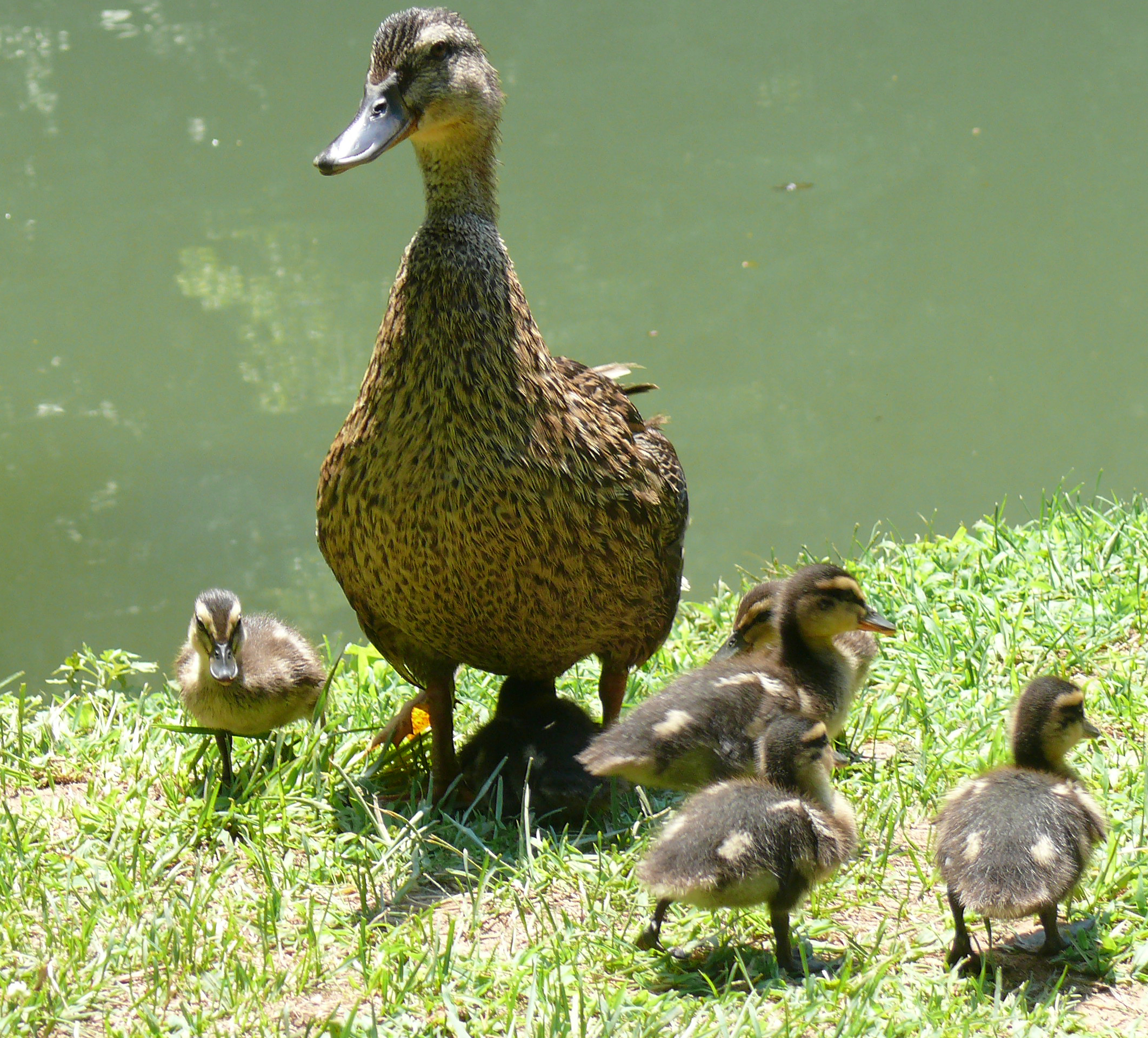
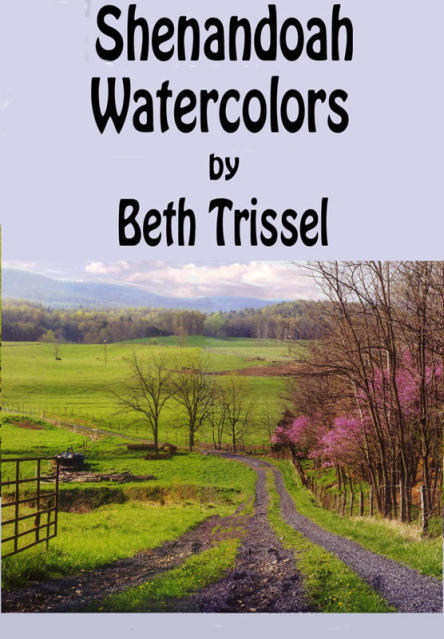
I'm excited about all the migrating ducks on our farm pond this spring. And, once again, I'm debating the possibility and advisability of mail ordering some garden friendly ducklings and raising them to be my garden pals. Some varieties eat grubs and other pesky insects while not destroying the plants. But ducks need a pool of some sort as they love water, so I must provide that while figuring out a way to keep them from heading down to the 'big water'--our pond. I also envision the need for a pen for their protection, and am pondering where it might be located, who would build it, plus how to care for them in the winter....Meanwhile, here's an excerpt from my nonfiction book about gardening and country life, Shenandoah Watercolors, available at Amazon in kindle and print with lovely images of the valley and mountains. (*A 2012 EPIC eBook Finalist)
~When the world was new and I was young, I ordered a dozen Rouen ducklings (resemble large mallards) from a game farm and began my love affair with ducks, blessed by its moments of joy and cursed with inevitable tragedy.  The box of downy babies was delivered directly to my door much earlier in the day than our mail normally comes as the mailman had wearied of their incessant peeping.  I took the new arrivals from the grateful carrier and transferred them to a corner of the family room under a warm light bulb.  My two oldest children, in grade school then, were delighted with their new playmates, but soon joined me in the discovery that these tiny creatures were incredibly messy.
The ducklings reveled in their food, spewing a mixture of feed and water on themselves, the box, and the walls.  This led to their speedy removal to an unoccupied rabbit hutch in an outbuilding.  Here they grew in sheltered bliss until we deemed them ready for life on the pond, unaware that our charges needed parental guidance. The unchaperoned youngsters soon slipped under the fence and lost themselves in the neighbor’s grassy meadow.  We tracked their frantic quacks and carried them home, only to have them forget and stray again and again.
Sadly, unwary ducklings do not know to be on guard against snapping turtles, something their mama would have taught them.  By summer’s end, just two grown ducks remained and were fondly named Daphne and Darlene. They were inseparable and divided their day between the cows and geese in the barnyard and forays to the pond.

(*Our pond, calm on this day but often filled with ducks and geese)
The next spring Daphne and Darlene built a mutual nest inside a clump of gold-button tansy at the edge of the garden and patiently sat on the eggs that would never hatch.  It was time to find them a suitable spouse.  One fall evening “Don” arrived in my hubby’s pickup truck.
(*Little creek that meanders through our meadow and under the fence to the neighbors)
The girls took an instant liking to the handsome drake, and he to them, though he showed a slight preference for Darlene.  As spring neared again, we noticed a wild mallard drake observing our little band.  He would dash forward for a bite of grain at feeding time, only to be driven away by Don.  We pitied Dwayne, as he soon became known, and tossed a handful far to the side for him.  Besides the free lunch, it seemed that Dwayne was attracted to our Daphne, much to Don’s strong disapproval.
The small male was undeterred and eventually won acceptance, amusing us by his attempts to mate with Daphne, twice his size.  Persistence won out though.  That year the girls had separate nests, Darlene at the base of a bittersweet vine, while Daphne went back to the tansy.  Don and Dwayne bonded, swapping stories as they awaited imminent fatherhood.
The ducklings hatched in late spring and grew quickly.  All survived with excellent care from their mothers.  By fall we could see Dwayne’s influence on the flock.  His offspring were considerably smaller. It was a golden, happy time. Late afternoons we quacked loudly, calling our ducks for feeding.  Heads popped up from the seeding grass and they answered back then waddled single file behind Don, their noble leader.  If we were late with dinner, they gathered to complain about the lack of service and were not averse to heading up to the house to fetch us if necessary.
Autumn in all its splendor passed into a winter that was our most severe in years.  We tromped faithfully through the deep snow every day to scatter feed on the frozen pond.  Then one morning after fresh snowfall we could not find a single duck.  Our anxious calls came back to us empty on the wind…searching revealed spatters of blood and dog tracks in the snow, the silent witness to their grim fate.   Still, we hoped that some birds had escaped the attack and combed the neighborhood, finally locating a pair of Dwayne’s offspring.  Only the smaller ducks could fly well.  We had unwittingly fed the others up to be “sitting ducks,” an expression I understand too well now.  A week later Dwayne returned on his own, but it was a bleak time.  How empty the pond seemed without the gang.
That May, Betty, our lone remaining female, hatched a fuzzy brood.  Familiar quacks again filled the air and gladdened our spirits.  It just isn’t spring without ducklings.  ~
All of this took place eons ago, but we still have ducks on our pond and an ample flock fussy barnyard geese who make daily visits down to the water. The small town of Dayton, Virginia, not far from us, has a lovely body of water called Silver Lake (the size of a large pond) and a stream that attracts so many ducks the town has installed a duck crossing sign.
*Pics of our farm and ducks, also my mom and dad’s ducks…it’s a family thing this love of ducks. *Images by my mom, Pat Churchman.  *The one of the creek by daughter Elise.
*This story about ducklings is the one that really got me started in writing. It was ‘almost’ published in Southern Living Magazine and that editor gave me much encouragement about my writing, then she referred me to an editor at Progressive Farmer who accepted it and several more nonfiction pieces about rural life, but their free-lance column got axed before publication.
(Tame duck swimming in 'duck weed' in my parent's water garden)

Monday, February 11, 2013

"The fragrance always stays in the hand that gives the rose." ~George William Curtis


“The rose speaks of love silently, in a language known only to the heart.”
*Roses from my garden
“You are responsible, forever, for what you have tamed. You are responsible for your rose.”  Antoine de Saint-Exupery
I'd rather have roses on my table than diamonds on my neck.  ~Emma Goldman
To be overcome by the fragrance of flowers is a delectable form of defeat.  ~Beverly Nichols

“A single rose can be my garden...a single friend, my world.” ~Leo Buscaglia

"Perfumes are the feelings of flowers."
 ~Heinrich Heine, The Hartz Journey

"Give me odorous at sunrise a garden of beautiful flowers where I can walk
undisturbed." ~Walt Whitman

"I perhaps owe having become a painter to flowers."

“Love is like the wild rose-briar; Friendship like the holly-tree. The holly is dark when the rose-briar blooms, but which will bloom most constantly?” 
― Emily Brontë, The Complete Poems

"A profusion of pink roses bending ragged in the rain speaks to me of all gentleness and its enduring."  ~The Collected Later Poems of William Carlos Williams

'"People from a planet without flowers would think we must be mad with joy the whole time to have such things about us."


“But he that dares not grasp the thorn Should never crave the rose.”~Anne Bronte

"And she was fair as is the rose in May." ~ Geoffrey Chaucer

“They are not long, the days of wine and roses. Out of a misty dream, our path emerges for a while, then closes, within a dream.” 
― Ernest Dowson, The Poems and Prose of Ernest Dowson

Wednesday, May 2, 2012

'Poison Plant' Garden in Honor of Agatha Christie


The great Agatha Christie favored poison as her preferred means of dispatching unfortunate characters in many of her murder mysteries. One of the deadliest herbs, Monkshood, also called Aconite and Wolfsbane, certainly played a part.  Torre Abbey in Torquay has a garden devoted to the plants that rear their heads in her work. Torre Abbey, built in 1196, is the largest surviving medieval monastery in Devon and Cornwall.

“Agatha Christie’s Potent Plants is the creation of Torre Abbey Head Gardener Ali Marshall, who in true crime writing style researched around 80 of Agatha Christie’s novels and short stories in just six months to come up with the Abbey’s own unique commemoration. The new feature links the author’s interest in poisonous plants, her wartime work as a pharmacy dispenser and the medicinal plants that Torre Abbey’s medieval canons might have used.

With Poirot-esque determination and attention to detail Ali Marshall, with the help of experts at Torquay’s Agatha Christie Shop, has designed a garden with a central display of potent plants surrounded by plants that serve as Agatha Christie clues, solved only with a knowledge of the plots of some of the author’s short stories. What better way could there be for Agatha Christie fans to exercise their ‘little grey cells’?”
“Do not touch is the warning for all visitors to the new garden and a skull-rating denotes the level of toxicity of each of the plants. Ali Marshall explains: “While this might sound extremely dangerous for staff and public alike we have been very careful in our choice of plants, substituting less potent garden cultivars where possible.

This is a garden designed to entertain – not provide murderous opportunities!

The fruit stones of the Prunus family, for example, once processed, produce cyanide, used to lethal effect in “The Mirror Crack’d from Side to Side” and “A Pocketful of Rye” amongst others.  Monkshood and Foxgloves also play a big part, as do Poppies and Yellow Jasmine. Other plants however have a more positive purpose. A Kilmarnock Willow (aspirin) takes centre stage while Valerian and Fennel owe their inclusion to their reputed therapeutic benefits.”

For more on Torre Abbey~

*Royalty free images

Wednesday, March 21, 2012

My Love Affair With Ducks


An excerpt from my nonfiction book about gardening and country life, Shenandoah Watercolors, available at Amazon in kindle and print with lovely images of the valley and mountains. (A 2012 EPIC eBook Finalist)
~When the world was new and I was young, I ordered a dozen Rouen ducklings (resemble large mallards) from a game farm and began my love affair with ducks, blessed by its moments of joy and cursed with inevitable tragedy.  The box of downy babies was delivered directly to my door much earlier in the day than our mail normally comes as the mailman had wearied of their incessant peeping.  I took the new arrivals from the grateful carrier and transferred them to a corner of the family room under a warm light bulb.  My two oldest children, in grade school then, were delighted with their new playmates, but soon joined me in the discovery that these tiny creatures were incredibly messy.
The ducklings reveled in their food, spewing a mixture of feed and water on themselves, the box, and the walls.  This led to their speedy removal to an unoccupied rabbit hutch in an outbuilding.  Here they grew in sheltered bliss until we deemed them ready for life on the pond, unaware that our charges needed parental guidance.  The unchaperoned youngsters soon slipped under the fence and lost themselves in the neighbor’s grassy meadow.  We tracked their frantic quacks and carried them home, only to have them forget and stray again and again.
Sadly, unwary ducklings do not know to be on guard against snapping turtles, something their mama would have taught them.  By summer’s end, just two grown ducks remained and were fondly named Daphne and Darlene.  They were inseparable and divided their day between the cows and geese in the barnyard and forays to the pond.
(*Our farm pond, calm on this day but often filled with ducks and geese)
The next spring Daphne and Darlene built a mutual nest inside a clump of gold-button tansy at the edge of the garden and patiently sat on the eggs that would never hatch.  It was time to find them a suitable spouse.  One fall evening “Don” arrived in my hubby’s pickup truck.
(*Little creek that meanders through our meadow and under the fence to the neighbors)

The girls took an instant liking to the handsome drake, and he to them, though he showed a slight preference for Darlene.  As spring neared again, we noticed a wild mallard drake observing our little band.  He would dash forward for a bite of grain at feeding time, only to be driven away by Don.  We pitied Dwayne, as he soon became known, and tossed a handful far to the side for him.  Besides the free lunch, it seemed that Dwayne was attracted to our Daphne, much to Don’s strong disapproval.
The small male was undeterred and eventually won acceptance, amusing us by his attempts to mate with Daphne, twice his size.  Persistence won out though.  That year the girls had separate nests, Darlene at the base of a bittersweet vine, while Daphne went back to the tansy.  Don and Dwayne bonded, swapping stories as they awaited imminent fatherhood.
The ducklings hatched in late spring and grew quickly.  All survived with excellent care from their mothers.  By fall we could see Dwayne’s influence on the flock.  His offspring were considerably smaller. It was a golden, happy time. Late afternoons we quacked loudly, calling our ducks for feeding.  Heads popped up from the seeding grass and they answered back then waddled single file behind Don, their noble leader.  If we were late with dinner, they gathered to complain about the lack of service and were not averse to heading up to the house to fetch us if necessary.
Autumn in all its’ splendor passed into a winter that was our most severe in years.  We tromped faithfully through the deep snow every day to scatter feed on the frozen pond.  Then one morning after fresh snowfall we could not find a single duck.  Our anxious calls came back to us empty on the wind…searching revealed spatters of blood and dog tracks in the snow, the silent witness to their grim fate.   Still, we hoped that some birds had escaped the attack and combed the neighborhood, finally locating a pair of Dwayne’s offspring.  Only the smaller ducks could fly well.  We had unwittingly fed the others up to be “sitting ducks,” an expression I understand too well now.  A week later Dwayne returned on his own, but it was a bleak time.  How empty the pond seemed without the gang.
That May, Betty, our lone remaining female, hatched a fuzzy brood.  Familiar quacks again filled the air and gladdened our spirits.  It just isn’t spring without ducklings.  ~
All of this took place eons ago, but we still have ducks on our pond and an ample flock fussy barnyard geese who make daily visits down to the water.  The small town of Dayton, Virginia, not far from us, has a lovely body of water called Silver Lake (the size of a large pond) and a stream that attracts so many ducks the town has installed a duck crossing sign.
*Pics of our farm and ducks, also my mom and dad’s ducks…it’s a family thing this love of ducks. *Images by my mom, Pat Churchman.  *The one of the creek by daughter Elise.
*This story about ducklings is the one that really got me started in writing. It was ‘almost’ published in Southern Living Magazine and that editor gave me much encouragement about my writing, then she referred me to an editor at Progressive Farmer who accepted it and several more nonfiction pieces about rural life, but their free lance column got axed before publication