Sunday, July 18, 2010

Journey Back In Time With Colonial Frontier Romance Through the Fire

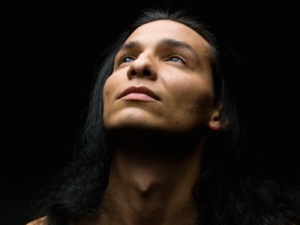
Native American Man Headshot

Quantcast best book of the week LASR“A heart well worth winning, and well won. A heart that, once won, goes through fire and water for the winner, and never changes, and is never daunted.” ~ Charles Dickens

Through the Fire ~ Finalist 2008 Golden Heart ® Contest

BHB Reader’s Choice Best Books of 2009 
“Captivating and beautiful.” Mistress Bella Reviews

When I wrote my historical romance novel Through the Fire I felt as though I’d been through the flames. My hero and heroine certainly had. This adventure romance with a strong The Last of the Mohicans flavor and a mystical weave was born in the fertile ground of my imagination, fed by years of research and a powerful draw to my colonial roots.

My fascination with stirring tales of the colonial frontier and Eastern Woodland Indians is an early and abiding one. My English/Scot-Irish ancestors were among the first settlers of the Shenandoah Valley and had family members killed and captured by the Indians. Some individuals returned and left intriguing accounts of their captivity, while others disappeared without a trace. On the Houston/Rowland side of the family, I have ties to Governor Sam Houston, President James Madison and Malcolm 1st of Scotland (that last one’s a stretch).

 Family annals list early names like Beale, Jordan, Madison, and Hite (a German connection I discovered). A brief account of my grandmother (six times removed) Elizabeth Hite, says her sister Eleanor was taken captive and sister Susan killed, though not by which tribe.  Their brother Jacob was killed by the Cherokee.  I’m not exactly certain of the dates regarding these captures and deaths, though more is known about Jacob Hite.

Another ancestor, Mary Moore, is the subject of a book entitled The Captives of Abb’s Valley.  She survived an amazing ordeal and was eventually restored to her family by her brother.
Another account came down to us  regarding a Moffett forebear captured as a child who became a boyhood companion of the revered Shawnee Chief Tecumseh.

000_waterfallforsite_1 When young Moffett grew up, he married into the tribe and had a son, but that’s the subject of a different novel, Red Bird’s Song, release date 9-10-2010 by The Wild Rose Press.

A Pennsylvanian ancestor on the Churchman side of the family was invited by the Shawnee/Delaware to help negotiate a treaty with the English because he was Quaker and they were more sympathetic to the plight of the Indians. Many accounts are left unrecorded, though. Historian Joseph Waddell says we know only a fraction of the drama that occurred during the Indian Wars. I invite you back to a time long forgotten by most.
****

Hear the primal howl of a wolf, the liquid spill of a mountain stream. Welcome to the colonial frontier where the men fire muskets and wield tomahawks and the women are wildcats when threatened.
The year is 1758, the height of the French and Indian War. Passions run deep in the raging battle to possess a continent, its wealth and furs. Both the French and English count powerful Indian tribes as their allies. The Iroquois League, Shawnee, and others bring age-old rivalries to the conflict—above all the ardent desire to hold onto what is theirs. Who will live, and who will fall?
****


The French and Indian War, a Shawnee warrior, an English lady, blood vengeance, deadly pursuit, primal, powerful, passionate…THROUGH THE FIRE.


SHOKA AND REBECCARebecca Elliot is an English lady, Shoka a half-Shawnee, half-French warrior. Rebecca fled an abusive father in London to elope to America with her young British captain. Shoka was a guide for English traders, befriended by an itinerant priest and betrayed by his wife. Rebecca left Philadelphia a widow, courtesy of the French and Indian War, to seek a beloved uncle in the colonial frontier. She has unwittingly entered a dangerous world of rugged mountains, wild animals, and even wilder men. The rules are different here and she doesn’t know them.

Shoka is the hawk, swift and sure, and silent as the moon. He knows all about survival in this untamed land and how deadly distraction can be. He makes Rebecca his prisoner, but the last thing he wants is to lose his head and already shredded heart to another impossibly beautiful woman…this one with blindingly blue eyes and a blistering temper.

Rebecca wants Shoka to guide her to Fort Warden where her uncle and cousins may be sheltering. Shoka wants to sell this furious Englishwoman to a Frenchman before she draws him under her spell, but if he lets her go he can no longer protect her. If he holds onto her can he safeguard his heart?
Rebecca is torn between a growing attraction to her magnetic captor and loyalty to her people. With dark forces gathering against them, will Rebecca and Shoka fight together or be destroyed?

****
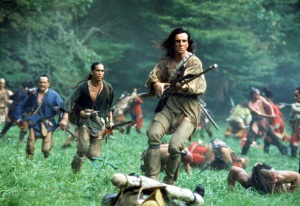
7925_2048630056

(Scene from the 1992 film The Last of the Mohicans with Daniel Day Lewis.  My favorite movie.)
For your listening pleasure, the opening ‘Elk Hunt’ score from The Last of the Mohicans Soundtrack, one of the best ever!  And yes, I wrote to this music amongst others.  Deeply stirring.  How could I not?


The Story Behind Colonial Native American Romance Novel Red Bird’s Song

Native American historical romance novel Red Bird’s Song is the story of my heart for many reasons.  The initial encounter between Charity and Wicomechee at the river was inspired by a dream I had on New Year’s Eve–a highly propitious time for dreams–about a young warrior taking an equally young woman captive at a river and the unexpected attraction between them.

That dream had such a profound impact on me that I took the leap from writing non-fiction essays (by hand back then) to historical romance novels and embarked on the most amazing journey of my life.  That was years ago and the saga continues. I also met the prophetic warrior, Eyes of the Wolf, in another vivid dream at the advent of this adventure, so when I describe him in the book I’m envisioning a character I feel I know.  I often think of him, and the others.  Writing this novel had a profound impact on me.

The setting for much of Red Bird’s Song is the same as Through the Fire, the spectacularly beautiful Allegheny Mountains.  Much of the history and events depicted in the story were inspired by accounts I came across while researching my early American English/Scots-Irish roots and the Border Wars.

Most of you have heard of The French and Indian War, the time period in Through the Fire, but there were others.  (Chief) Pontiac’s War followed on the heels of the French and Indian and is the time frame of Red Bird’s Song.  Lord Dunmore’s War took place a decade later–all occurring in the colonial frontier.  Actually, life in the frontier was continually unsettled up through and even after The American Revolution had drawn to a close and warfare a reality. The boundaries of the frontier just kept shifting farther west.


In the early-mid 18th century, the Shenandoah Valley of Virginia was the frontier and only hardy souls dared settle here.  The bulk of these were the tough Scots-Irish.  I think if the Indians had only had to fight regular British troops they might ultimately have won because they scared the s— out of men trained for conventional warfare, but the long knives were another matter. They weren’t easily intimidated and soon learned from their cunning enemy.

Although Hawk Eye in The Last of the Mohicans is an adopted Mohican, his lifestyle and behavior is that of a colonial frontiersman.  The more rugged of these men dressed as he did, much in the Indian way.  They hunted & fought with muskets, tomahawks, and their famous knives.   Indians acquired these knives as well.  They blended traditional weapons and ways of living with new found tools and weapons of Western man.  A highly adaptable people.

The attack at the opening of Red Bird’s Song in the Shenandoah Valley is based on one that occurred to my ancestors at the tail end of Pontiac’s War and is recorded by Historian Joseph A. Waddell in The Annals of Augusta County. A renegade Englishman by the last name of Dickson lead the war party that attacked them.  Initially I’d intended to make the Colin Dickson in Red Bird’s Song a villain but as soon as he galloped onto the scene I knew differently.  He’s now one of my all time favorite characters.


Wicomechee, the hero in Red Bird’s Song, is based on the Shawnee warrior by that name who lived early in the nineteenth century and to whom I have ties.  The Moffett’s, an early Valley family I’m related to, include a reference to him in their genealogy.

Wicomechee’s father, John Moffett, was captured in Kentucky by the Shawnee at the age of eight and adopted into the tribe.  It’s said he was a boyhood companion to the great chief Tecumseh, a chief for whom I have enormous admiration.  The accounts of John Moffett and Wicomechee are recorded by Waddell.

It’s also noted that during the Black Hawk Wars Wicomechee recovered the captive daughters of a Dr. Hull and brought them safely into camp, which reminds me of Hawkeye in The Last of the Mohicans.  I’ve included more on this amazing warrior at the end of the novel as a bonus for those who read it.


Charity, the heroine in Red Bird’s Song, is drawn from a reference I came across of a young Scots-Irish woman captured along a river in the Virginia frontier.  Remember, early Virginia was enormous.  Augusta County, near where I live, encompassed present day states and was later sectioned off.  Nothing is known of what happened to that young woman.  Just a single line in an old account of captives taken during the Indian wars.

The same sort of capture and subsequent lack of information occurred to the sister of my great grandmother a number of greats back.  Both of these women may have made new lives with the Indians.  There are records of women who married into the tribes and did not want to leave their warrior husbands and adopted people.  Tragically, some those captives who wished to remain were later forced to return to their white families through treaties, causing great heartache.  There are also accounts of captives who couldn’t get out fast enough!  One such captive was Daniel Boone.


Charity’s cousin Emma in Red Bird’s Song is based on the young, very  pregnant wife carried off in that original attack.  In the actual account it’s uncertain whether or not her husband survived his injuries.  His last name was Estelle, as it is in the story, and we have early Estelle’s in our family tree.   However, that name is no longer common in the Shenandoah Valley but has vanished into the mist of time along with a mostly forgotten era and its people.  Few remember or care.  Perhaps you will come to.


James, the little boy in Red Bird’s Song, is drawn from the lively child taken in the original attack who lived to tell about it and did so with great relish.  He’s also modeled after several high spirited little boys I’ve known and loved.  James is a tribute to my young nephew, Matthew Trissel, killed in a farm accident, and my youngest daughter Elise’s close friend, Garry Keens, killed by a drunk driver.  Wonderful boys, gone before us but never forgotten.

Although Eastern woodland Indians had a reputation for brutality, once a captive was adopted they were well treated and regarded as equals.  Warriors were unpredictable and didn’t always behave in a certain manner anymore than all European men acted alike.  Warriors could be unexpectedly gentle or sadistic.

I’ve read accounts of warriors getting up in the night to stir up the campfire and cover captive women and children with blankets, even delay their journey while a woman gave birth.  These men protected and fed their captives while other warriors burnt them at the stake.  It all depended on who took you captive and why as to what your fate would be, and whether they kept, traded, or sold you.  Or killed you in retribution for a love done lost at the hands of the English.  Of course, some braves didn’t take captives.  Just scalps. The warriors most feared in the Shenandoah Valley were the Shawnee, regarded as the fiercest of all.  The more I studied these remarkable people, the more engrossed I became, especially as they figure into our family roots.

The sources I used in researching Red Bird’s Song would take up pages, my list of reading material sizable, and I’m indebted to the long suffering anthropologists and archeologists who answered my many questions and supplied me with research materials, also helpful reenactors, historians, and historical sites.  Most of all, I’m indebted to my own forebears.  Without these hardy souls, their faith in God and determination to forge a life in the New World, I wouldn’t be here.  Neither would many of you.
****
RED BIRD'S SONG  is available in print and digital download (e-book) from THE WILD ROSE PRESS, AMAZON, BARNES&NOBLE and other online booksellers.